
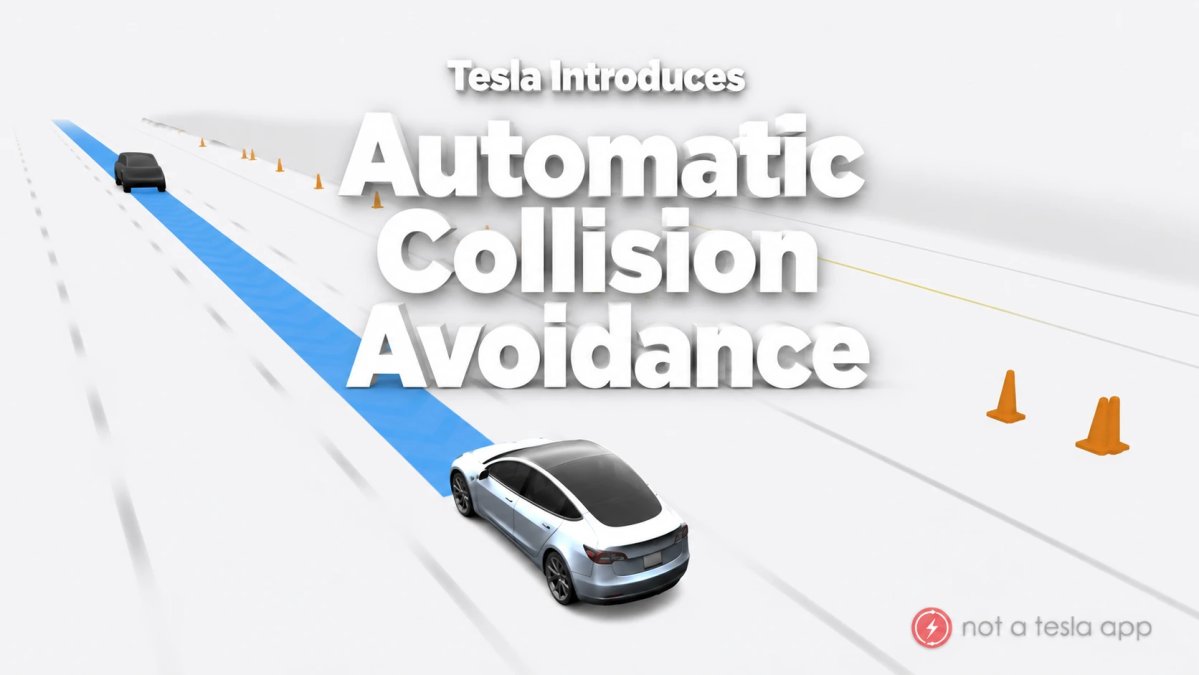
Tesla has quietly added a major new active safety capability to its vehicle fleet, transforming its autonomous driving software into an emergency crash-prevention tool. According to Tesla, it is introducing a dedicated feature called Automatic Collision Evasion that will automatically engage Full Self-Driving (Supervised) to take evasive maneuvers even when you are driving the vehicle manually.
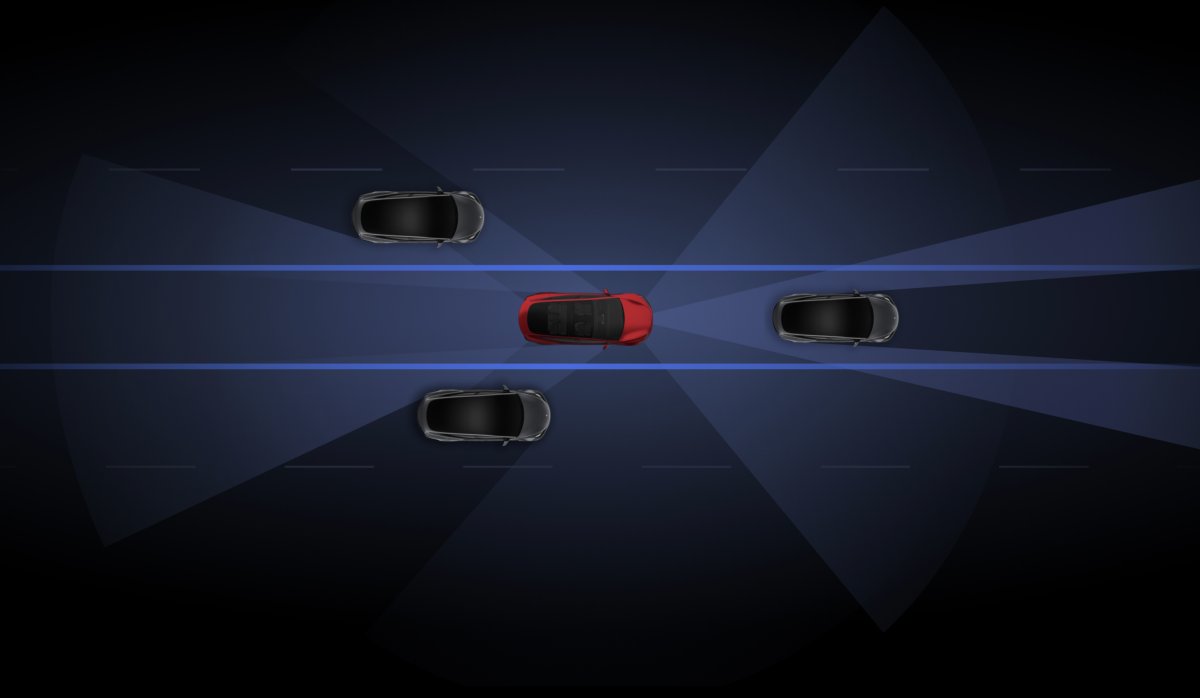
The addition marks a noticeable evolution in how Tesla uses its autonomy stack. Historically, FSD has exhibited an ability to detect, predict, and avoid crashes before they happened — even at highway speeds — but only when the driver-assistance system was already turned on. Now, Tesla appears confident enough in its neural networks to deploy them as an active intervention system on manual drives, working alongside existing technologies like Automatic Emergency Braking (AEB), Obstacle-Aware Acceleration, blind-spot detection, and lane monitoring.
Currently, Automatic Collision Evasion appears to only be available in North America, and not in other regions that include FSD like the Netherlands, which became the first EU country to approve the software earlier this spring.
Not a Tesla App
Two Triggers: Frontal Impacts and Inattentive Drivers
Automatic Collision Evasion comes into play under two specific real-world scenarios while driving manually.
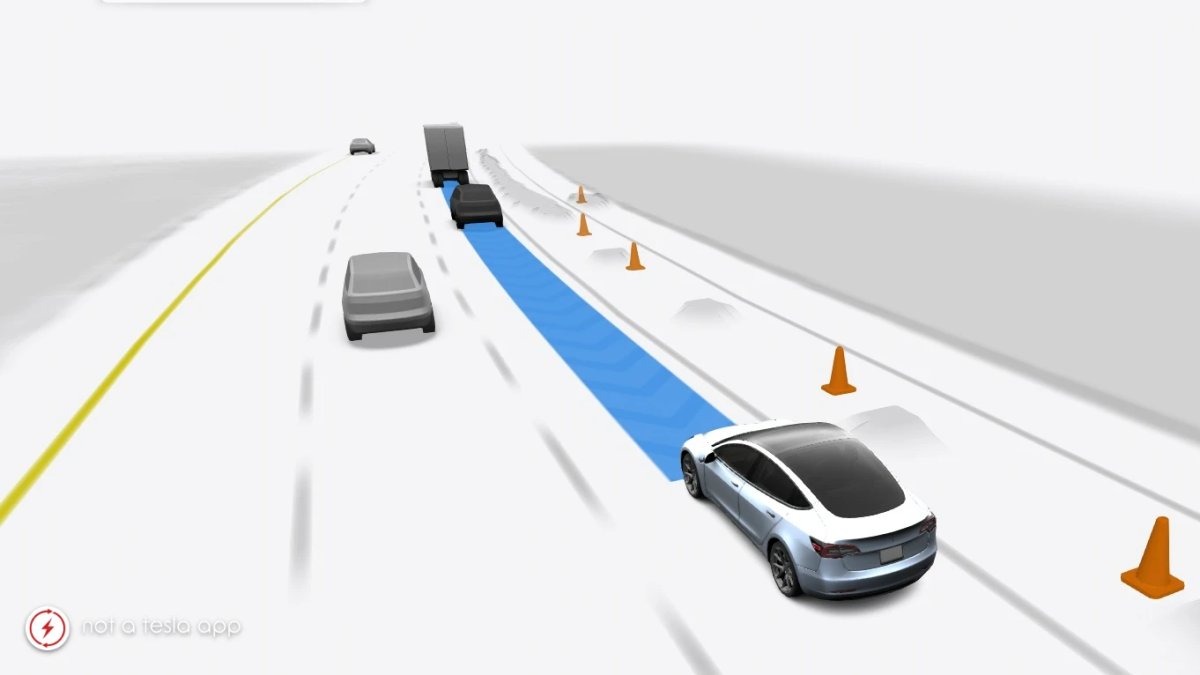
The first trigger is an imminent frontal collision. Rather than only braking in a straight line like standard AEB, the system determines whether swerving around a hazard offers a better chance of avoiding a crash. If it decides to intervene, the vehicle will enable FSD and steer around the obstacle by changing lanes or moving onto the road shoulder, braking or accelerating as needed before continuing to drive.
Several conditions must be satisfied for this frontal collision scenario to trigger:
A frontal collision with another vehicle is imminent, and braking alone can’t prevent it.
The vehicle is traveling on a controlled-access highway at less than 85 mph (137 km/h).
No pedestrians, cyclists, or vulnerable road users are detected in the travel path.
The steering system is functional, and roads aren’t wet or slippery.
Not a Tesla App
The second scenario activates when the vehicle detects the driver is no longer in control or paying attention to the road, such as when reaching into the back seat or looking away from the road, or if the vehicle concludes FSD was unintentionally disengaged. If the vehicle is operating between 22.5 mph and 85 mph across any roadway type in such a case, the vehicle automatically assumes control to guide the car to safety.
System Activation and Driver Override Rules
It looks like Automatic Collision Evasion operates only if you’ve purchased Full Self-Driving (Supervised) and it’s enabled in Controls > Self-Driving.
Interestingly, during an active evasive maneuver, Automatic Collision Evasion resists accidental driver intervention. The accelerator pedal is muted, and tapping the brake pedal slows the vehicle, but will not disable FSD or the evasive maneuver. To override FSD, drivers must apply firm, deliberate steering force against the wheel.
Once the immediate hazard clears, the vehicle sounds a chime and prompts the driver to take over from FSD.
Not a Tesla App
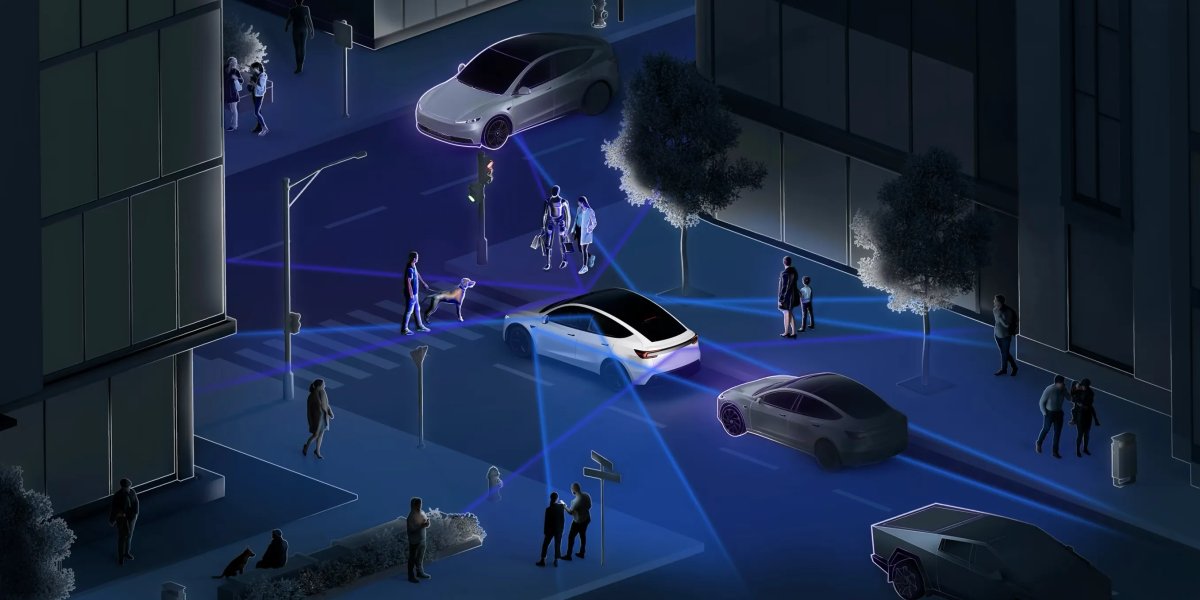
Tesla explicitly warns that Automatic Collision Evasion is not a general obstacle-avoidance or lane-change feature. It is a last-resort maneuver when the vehicle detects an emergency event, and does not replace the driver’s responsibility to stay alert and remain in control at all times.
Adding automatic swerving to manual drives proves consumer autonomy is evolving into a comprehensive safety net. It also goes to show how Tesla continues to introduce proactive capabilities as its neural networks mature. Elon Musk previously noted that pothole avoidance, a widely requested feature, is also coming soon to FSD. While consumer cars currently run FSD v14, Tesla Robotaxis have already moved to FSD v15, which is expected to bring major improvements to the system.