
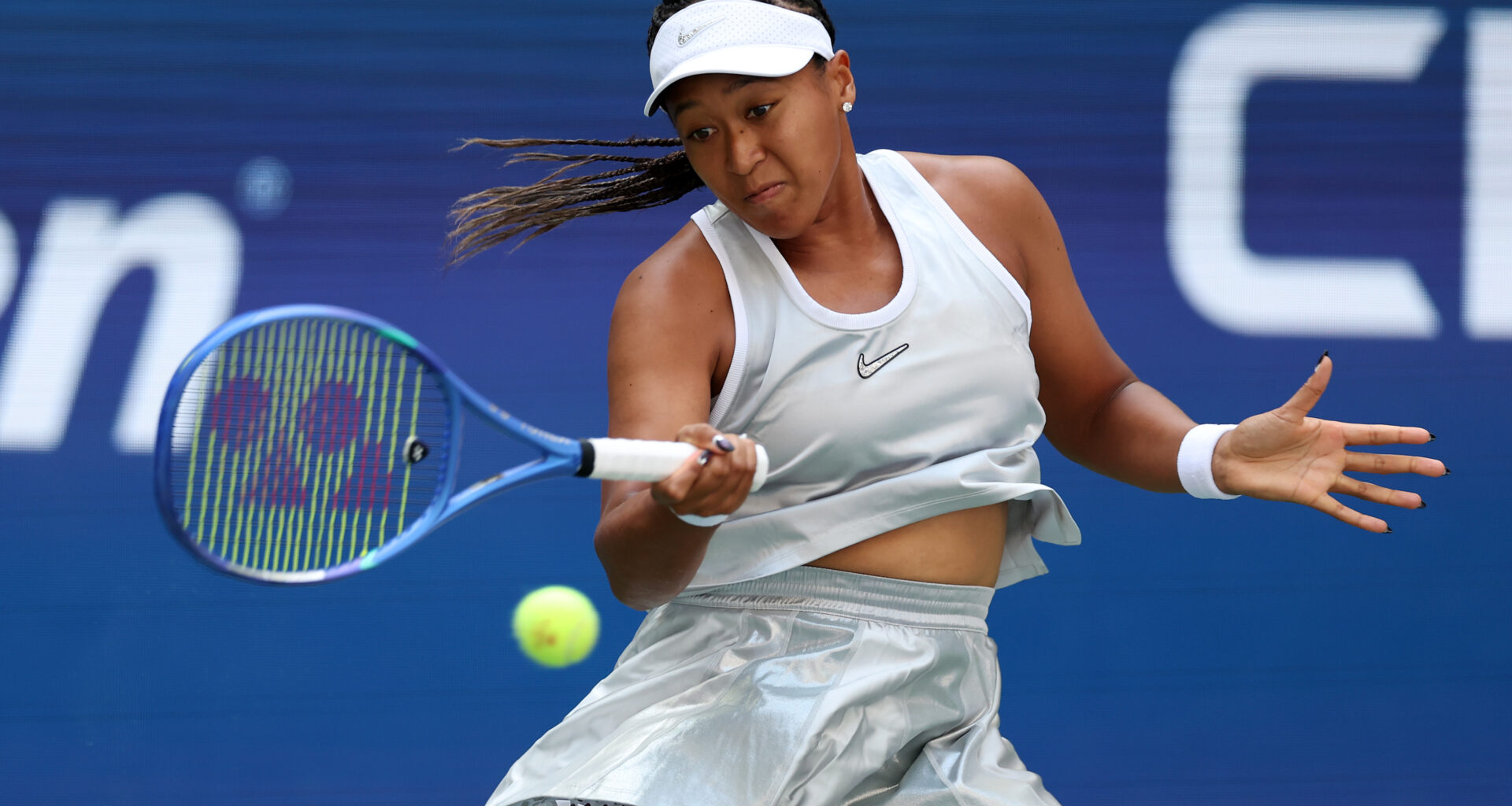
For the second straight match at the US Open, No. 13 seed Naomi Osaka had to work through a difficult stretch before finding her way forward.
The two-time champion let a 5-3 lead slip in the second set but regrouped to defeat Katerina Siniakova 6-2, 5-7, 6-1 in 2 hours, 2 minutes.
Osaka needed two tiebreaks to get past No. 101-ranked Anastasia Zakharova in the first round, when she was broken four times and later admitted she had been “so nervous.”
“I think, obviously she’s an amazing player, but I felt like I definitely had a lot of opportunities, that I was a little bit too frantic,” Osaka said in press afterward. “I was thinking too much about closing. I feel like if I played point by point, I wouldn’t have made some of the decisions that I did.”
Against Siniakova, Osaka did not face a break point across her first seven service games. But after failing to serve out the second set, she was broken three consecutive times before settling herself and taking control of the decider.
Shining bright ✨
Naomi Osaka becomes the second Japanese player in the Open Era with 80+ women’s singles Grand Slam main draw wins after Ai Sugiyama! pic.twitter.com/hJZao143vf
— US Open Tennis (@usopen) September 3, 2026
Osaka has reached the US Open third round for the eighth time in 10 main-draw appearances. After also making the third round at the Australian Open, the fourth round at Roland Garros and the quarterfinals at Wimbledon, the 28-year-old has reached at least the third round at all four majors in a season for the second time in her career, following 2018.
“I just felt like I had to fight,” Osaka said in her on-court interview. “I definitely felt like I had a couple opportunities in the second set and I think I was a little bit too hard on myself. I took the bathroom break, regrouped a little, came back and just tried to have no regrets.”
Osaka will next face No. 20 seed Elise Mertens for the 10th time in a rivalry dating back to 2017. Mertens, a two-time US Open quarterfinalist (2019 and 2020), defeated Uzbekistan’s Maria Timofeeva 6-3, 7-6(5) to book her place in the third round of a major for the 29th time in 39 Grand Slam main draws. The Belgian also had to steady herself after losing a 5-3 second-set lead, winning the past four points from 5-3 down in the tiebreak.
Osaka leads their head-to-head 6-3, including 4-3 on outdoor hard courts and 2-0 in 2026. Indeed, she has dropped just nine games in their two meetings this year, winning 6-3, 6-3 in the Bad Homburg second round and 6-1, 6-2 in the Toronto third round.
Here’s how her victory over Siniakova unfolded in three distinct chapters:
Part one: Osaka dominates for a set and a half
For a set and a half, Osaka was rarely under serious pressure. Not only was her serve impregnable — she dropped just six points behind it in the opening set — but her unforced error count was low (just four in the first set). By contrast, neither Siniakova’s serve nor the Czech’s forehand were at their best. Consecutive forehand errors handed Osaka the first break for 3-1, and consecutive double faults paved the way to another break in the last game of the first set.
Up 3-2 in the second set, Osaka didn’t wait for Siniakova’s mistakes, though. She hammered a brilliant off backhand winner on her third break point to move up 4-2, with the finishing line in sight.
Part two: Osaka dips, Siniakova seizes opportunity
Osaka held two points for a 5-2 lead, but repeated errors over the baseline suddenly began to creep into her game. One such backhand enabled Siniakova to gain the break back.
The World No. 42 continued to struggle with errors of her own, and was unable to take advantage immediately. Osaka broke again, and had a chance to serve out the win at 5-3 — but this time, consecutive errors into the net were her undoing.
Now, Siniakova sensed her opportunity. She played her finest tennis of the day to steal the second set, with her backhand down the line providing a trio of crucial — and crowd-pleasing — winners. Such was the improvement in her level that Siniakova closed the set out with a winner on the line from her forehand wing, the stroke that had caused her so much grief earlier on.
Part three: Osaka resets, grits out third set
The third-set scoreline belies how tightly contested it was: every game went to at least 30-30. Indeed, Osaka won each of the first three games of the set from a 15-30 deficit.
And she did so with some of her boldest, creative tennis of the day. Up break point at 1-0, a net cord pulled Siniakova out at an awkward angle, but also slowed Osaka’s ball and offered the 30-year-old a chance to put the point away on her backhand. But Osaka read it, and reflexed a superb lob over Siniakova’s head to break.
At 30-30 in the next game, Siniakova showed off her wheels with breathtaking defense against Osaka’s power — but it was Osaka who came forward to put away a volley on the 19th shot.
Osaka’s willingness to move up the court also paid off at 4-1, when she found a terrific angle on a backhand volley to bring up break point again — duly converted as she struck a hefty inside-out forehand.