
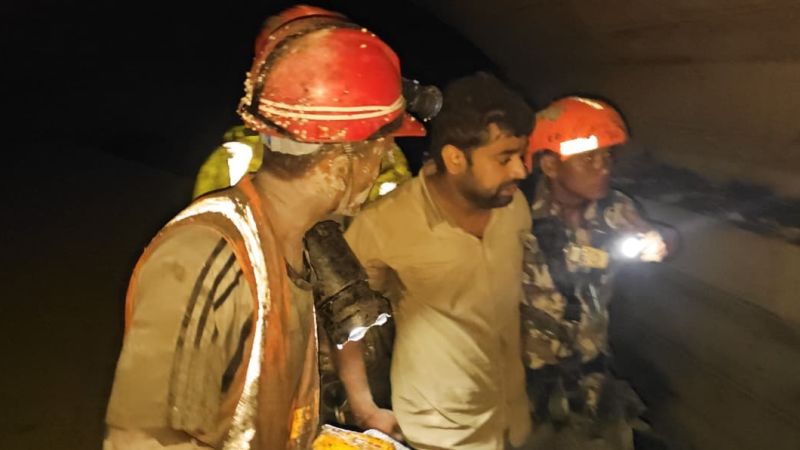
Arnold Dix, a disaster-response expert and tunnel engineering professor advising the rescue efforts, described the operation as a dangerous and unprecedented attempt to identify buried tunnel entrances.
“It appears we now have proof of concept for a methodology to perform a rescue, because this is a world first,” he said from Singapore, en route to Nepal.
“We’ve never done this before, and now we have a proof. And there’s other power stations we still haven’t got to.”
“Of course, we pause and celebrate. But it now also means we need to take a back step and go, ‘Okay, of the 500 reasons we all thought we could fail, we’ve been able to prove one method that works. Now, how can we apply that somewhere else?’” he told CNN.
Dix described the hydropower tunnels left as “full of water” in the aftermath of the floods. Teams have to make the high-risk decisions to blow up “rocks the size of cars” to reach people trapped inside, he said.
“So we’re tunneling along under the roof, and we know in our heads that underneath us are likely people who died. So there’s a whole lot of psychology and all of that,” he said.