
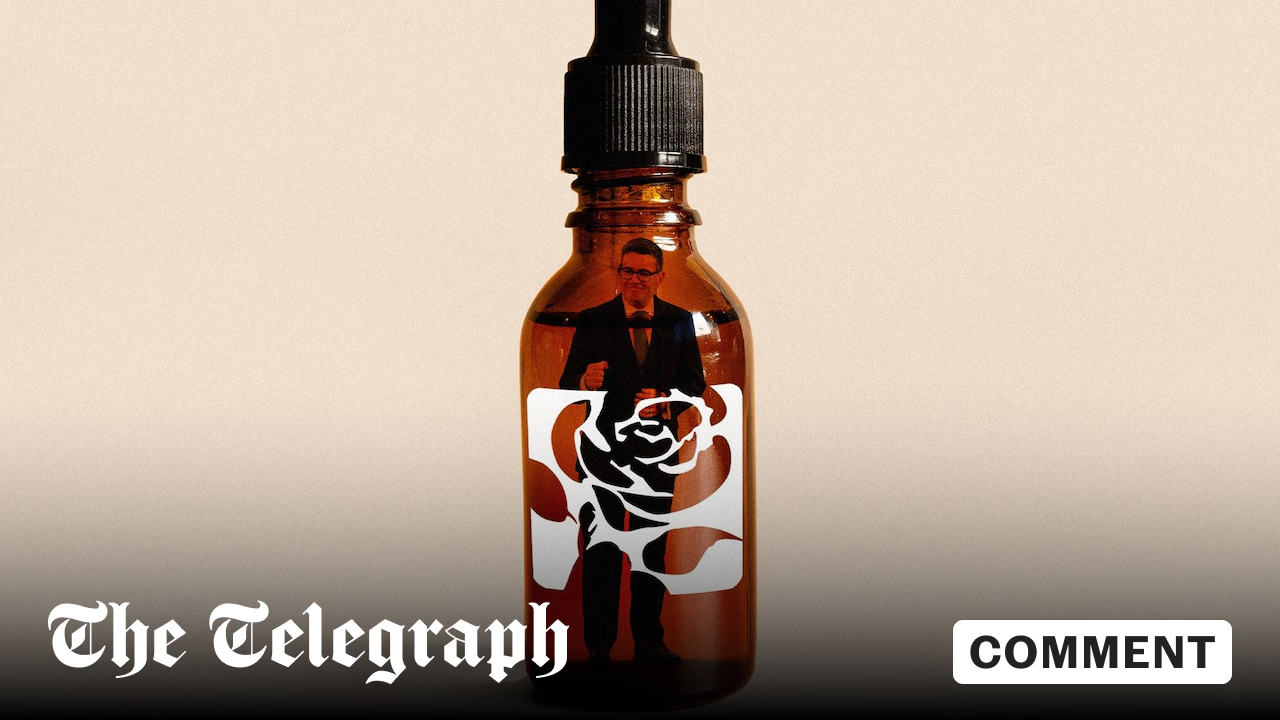
In defence of the inventor of homeopathy, an 18th-century German physician, Samuel Hahnemann, his practice was less damaging than many of the treatments then prescribed by doctors, such as mercury, or bloodletting. This was before the discovery of penicillin, streptomycin, antibiotics, or indeed germ theory. Hahnemann believed that almost all ailments were actually the manifestations of a suppressed “itch”, a kind of “miasma” – as he put it – or evil spirit.
“Dr” Burnham has a similar approach in his political and economic theorising (or what passes for that). In the Prime Minister’s model of pathology, the evil that has befallen this country can be entirely attributed to what he calls “40 years of neoliberalism”. This word is, essentially, a pretentious pejorative term used by those on the Left to describe free-market economics.
What he means is that everything started to go wrong when Margaret Thatcher abandoned the post-war statist consensus, in which government had controlled prices, wages, and much of business besides. In fact, the Conservative government at that time had inherited an economy in genuine crisis, and one which was underperforming against its European neighbours in terms of growth and productivity.
Not least by limiting the power of trade unions and also breaking down restrictive practices in the professions, the Thatcher governments – as Tony Blair was forced to appreciate – had revitalised Britain’s entrepreneurial spirit. My father, Nigel Lawson, was at the centre of this, both as chancellor, and earlier, in 1980, as the author of what he called the Medium Term Financial Strategy.
When he left office, the UK was actually running a budget surplus. There was no Public Sector Borrowing Requirement at all: the principal was being repaid. Overall, net debt in relation to GDP was around 25 per cent, a quarter of today’s level. So what the international bond markets might think was not a concern at Budget time.