
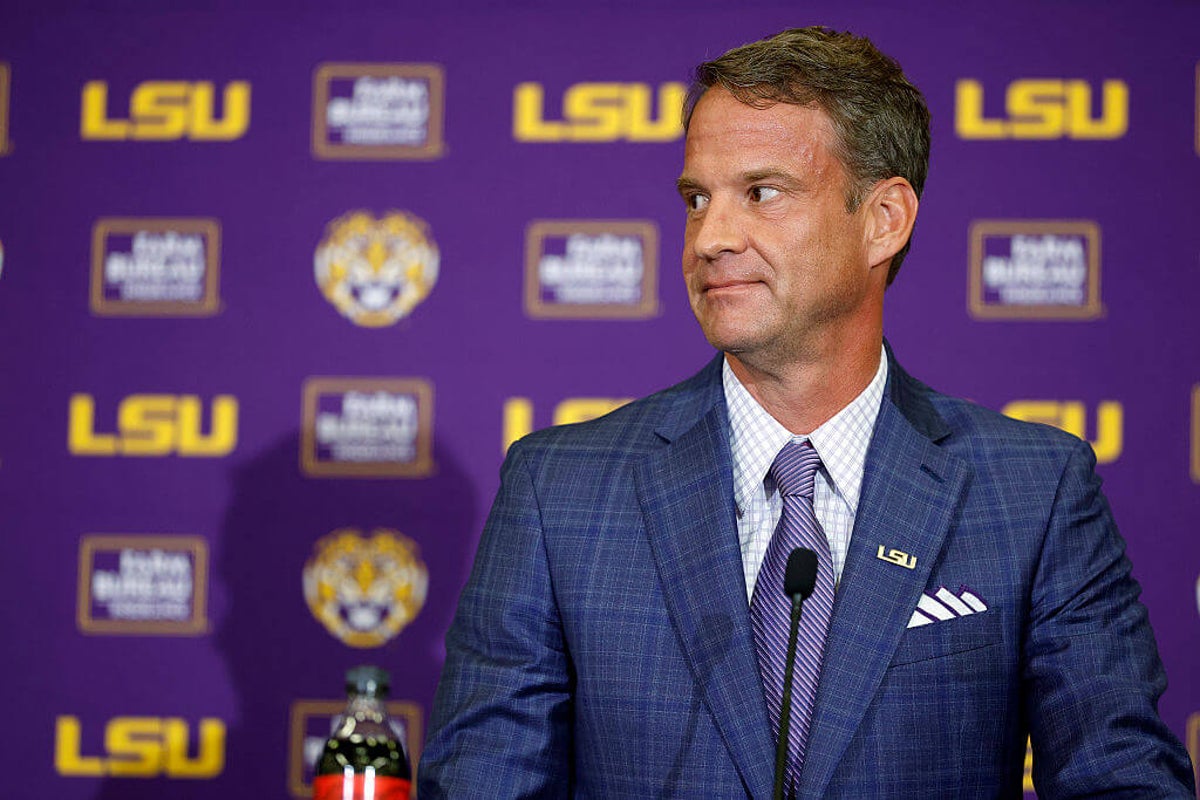
On Aug. 13, an insurance company placed a series of enormous transactions on Kalshi predicting LSU to have an amazing season. In fact, if the Tigers win the national championship, those wagers will pay off to the tune of $3 million.
Which just happens to match the amount LSU could owe coach Lane Kiffin in performance bonuses if that happened.
With athletic departments giving their football and basketball coaches increasingly lucrative contracts — Kiffin’s pays him a minimum of $13 million annually — some have been buying insurance policies in the event their coach wins so big they owe hefty incentives. Now, an insurance firm has found a creative, if controversial, method to limit its own risk: ride that team’s performance on a prediction market.
The Athletic confirmed five Kalshi trades — first reported by In Game — totaling $662,050, placed on LSU to reach the College Football Playoff, reach the quarterfinal, reach the semifinal, reach the national title game and win the national championship. The payouts for each trade, if they hit, roughly align with Kiffin’s bonus progression the deeper he goes in the postseason.
Kalshi spokesman Jack Such confirmed a third-party insurance company made the trades but declined to name the company. In February, Kalshi CEO Tarek Mansour announced a partnership with Game Point Capital, an industry leader in selling insurance policies to schools looking to hedge against potential bonuses. The company’s website says it works with pro sports and sponsors, too, citing clients in the SEC, Big Ten, MLB, PGA Tour and other leagues.
Game Point CEO Will Hall told The New York Times in June that his company had arranged millions of dollars’ worth of hedges through Kalshi, which he said are cheaper and more flexible than traditional hedges made with insurance companies. Hall said in an email he was unavailable to speak this week and did not respond to a list of questions. Game Point’s COO, Jack Hall, did not return a request for comment.
LSU did not respond to The Athletic’s requests for comment. It is unclear whether LSU itself took out an insurance policy, whether it was another entity, or even whether a school would know whether its insurance premiums were being hedged on Kalshi. LSU did previously take out a football bonus insurance policy in 2022 with HUB International, according to a commercial on Kiffin’s radio show.
The NCAA declined to comment.
Several athletic directors told The Athletic that insurance policies for coach bonuses have become more common in college sports in recent years. The Stamford Advocate reported in 2024 that UConn paid a $2.83 million premium to Game Point to insure the bonuses of all its basketball coaches. It paid out $5.6 million when the men won the national championship and the women reached the Final Four, saving the school almost $3 million.
“It’s a way to reduce your total cost if you believe you’re going to have success,” UConn athletic director David Benedict told The Athletic. “It’s basically a way to protect your downside from winning.”
Still, the Kalshi component is new in terms of how it is linking line items in athletic contracts to markets created by sprawling interest in sports betting.
There does not appear to be anything improper or illegal about a school’s insurer wagering on that team’s performance, said Steve Silver, the chairperson for Maine’s Gambling Control Board. But the connection leads to questions.
“What does the university know?” said Silver, who spoke personally and not on behalf of his state’s board. “It may be nothing. They may just have a simple contract. What that party does with reinsurance or hedging, that’s on them.”
The issue adds new facets to long-running quandaries within the industry about the rise of legalized sports gambling. The NCAA has asked for prediction markets to be barred from offering college sports markets. In May, the NCAA declared Texas Tech quarterback Brendan Sorsby permanently ineligible for betting on his former team.
One could argue the insurance policies make way for an institutional version of a similar choice. Game Point Capital sees prediction market hedging simply as a new form of a standard industry practice.
Kalshi presents itself as a financial vehicle in which customers enter into peer-to-peer “swaps.” (Martin Lelievre / AFP via Getty Images)
Prediction sites 101
Prediction market sites such as Kalshi and Polymarket were originally synonymous with politics, gaining massive attention during the 2024 U.S. presidential election cycle. Kalshi did not begin offering sports events until January 2025, but they now compose most of the site’s business. According to Ticker Tracker, Kalshi’s trading volume on this summer’s World Cup reached $40 billion.
Prediction markets say they are not gambling sites because they are not structured like typical sportsbooks. Kalshi and Polymarket present themselves as financial vehicles in which customers enter into peer-to-peer “swaps.” Someone who thinks LSU will beat Clemson on Saturday enters into a contract with someone who thinks Clemson will win. Their payoffs are tied to the event’s probability. As of Thursday, LSU’s chances were 77 percent, so a $100 trade on LSU’s winning would net a $26.25 profit. If LSU loses, the trader on the other side nets $312.52. Kalshi takes a commission on each trade.
Despite the close parallels to placing a bet on the game in Las Vegas, prediction markets have fallen under the purview of the Commodity Futures Trading Commission, the same federal agency that regulates oil futures and credit default swaps.
Kalshi brought lawsuits against two states, Nevada and New Jersey, for threatening to enforce their own gambling laws against the company. The 3rd U.S. Circuit Court of Appeals sided with Kalshi against New Jersey, but last week, the 9th U.S. Circuit Court of Appeals ruled in favor of Nevada. On Wednesday, New Jersey sent a petition to the U.S. Supreme Court, which might ultimately decide the matter.
What we know about the LSU, South Carolina trades
According to Kalshi’s publicly available trading data, five large trades were placed Aug. 13 for LSU to make the Playoff, reach the quarterfinal, reach the semifinal, reach the national title game and win the national championship. For example, 837,500 contracts to make the CFP were purchased at 41 cents, meaning they cost $343,375 and would pay out $837,500 if they hit. The five trades in total cost $662,050 and would pay out $3 million, far larger than any CFP trades placed on other teams.
Each trade payout totaled very close to what Kiffin’s performance bonus is at each step. If LSU wins the national championship this year, Kiffin is owed a $3 million bonus.
Because of the high dollar amount, a firm such as Game Point Capital would need to negotiate a private, off-book block trade with another financial firm and clear the contracts through Kalshi.
The Athletic also confirmed multiple high-wager trades on South Carolina made July 15, first reported by In Game, but the nature of those is unclear.
One trade on South Carolina’s making the CFP cost $4,400 and would pay out $40,000. Another on the Gamecocks’ winning at least eight games cost $27,000 and would pay out $100,000. Though there are two additional trades on South Carolina’s missing the CFP that would pay out at least $40,000 each, the high cost to purchase those, at an 89 cent value, would net only a few thousand dollars. Coach Shane Beamer’s contract, obtained by The Athletic, does not include a bonus for winning eight games, and his bonus for making the Playoff is at least $300,000.
“The University of South Carolina does not have agreements with Game Point Capital or any other third-party insurer related to coaching bonuses, nor is aware of any arrangements to use trading markets to hedge against future bonus payments,” university spokesman Jeff Stensland said.
South Carolina’s fundraising group, the Gamecock Club, did not respond to a request for comment.
The LSU and South Carolina trades were the only large-scale trades on college football, The Athletic found.
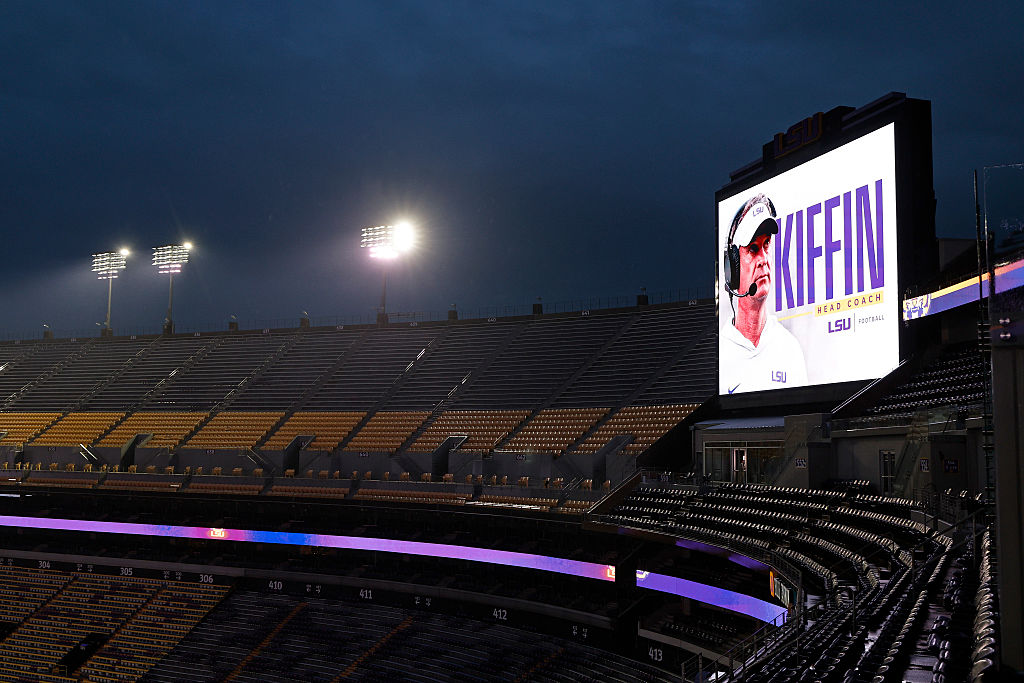
LSU will pay Lane Kiffin at least $13 million annually, but his contract incentives could provide a substantial boost if the Tigers advance in the CFP. (Tyler Kaufman / Getty Images)
Why schools want insurance policies for coaching contracts
Though the Kalshi element is unusual, multiple athletic directors told The Athletic the contract insurance space has grown dramatically in the last decade, and especially after the COVID-19 pandemic, when game insurance proved helpful, paying out for lost revenue from canceled games. Insurance exists in other areas such as halftime giveaway contests, too.
Coach bonus insurance is similar, especially if a school feels its team is better than projected. The lower the hype, the lower the premium.
Increased bonuses have become a new way to entice coaches, too, and insurance is a way to mitigate that cost. Former LSU coach Brian Kelly’s bonus for a national championship was $1 million, just one-third of what Kiffin’s is.
Companies such as Game Point historically hedge with insurance on their own policies through major insurance companies, but Kalshi has become a new vehicle this year.
Silver said optics are a concern if schools know about the wagers from their insurance companies. Another complicating factor: Some states have laws banning public employees from using prediction markets to wager on state-related topics.
“You get into a lot of thorny issues,” Silver said.
One high-ranking college sports official with expertise in prediction markets, speaking on condition of anonymity because they were not authorized to speak publicly, said though “there’s no question there’s an element to all this that is gambling,” the LSU example might bolster Kalshi’s assertion that its sports offerings should be regulated like commodities. Under federal definition, an event-based contract qualifies as a swap if associated with a “potential financial, economic, or commercial consequence.”
Like, say, a coaching-contract incentive.
Benedict said he was unaware of anything Game Point does to hedge UConn’s insurance policies. It’s a transaction separate from the schools that pay for the insurance, the same way health insurance companies have their own hedges the public might not be aware of.
Game Point additionally offers coach buyout insurance, essentially the opposite of bonus insurance if a school believes its team will have a bad season. According to Game Point’s website, premiums can be offered at various trigger points, such as losing nine games. Benedict and other athletic directors said they have not bought buyout insurance, not seeing much sense in it from a risk perspective, nor the negative connotation of such a hedge.
But a new space in bonus insurance has recently popped up: player incentives. With the amount of money paid to college players exploding after name, image and likeness rules in 2021 and then revenue sharing after the House v. NCAA settlement in 2025, Game Point and other companies have begun pitching schools on the same kind of bonus insurance as coaches. Schools already take out injury insurance policies for top players before a season.
Game Point laid out an NIL bonus example in a slideshow available on its website, which could include premiums to insure bonuses for team success or individual stats, depending on the contract.
“The way we think about it — the schools and the NCAA would hate this description — but it’s like base salary is rev-share,” Will Hall said in a February appearance on “The Insurance Guys” podcast. “Then these additional incentive bonuses like you see in any other industry or pro contract, because they say they’re not employees, but for all intents and purposes, it’s salaries plus extras.”
Benedict said UConn has not purchased insurance to hedge against performance incentives in a player’s contract as it has with coaches. Other athletic directors said it’s become the new pitch from companies such as Game Point, but they hadn’t yet determined whether they’re worth it. Larger incentives could become a way to entice players the same way they are coaches.
And companies such as Game Point aren’t just pitching schools. Anyone with financial risk tied to sports can take out insurance, a business growing alongside prediction markets.
Is it sports gambling, or is it just smart business?