
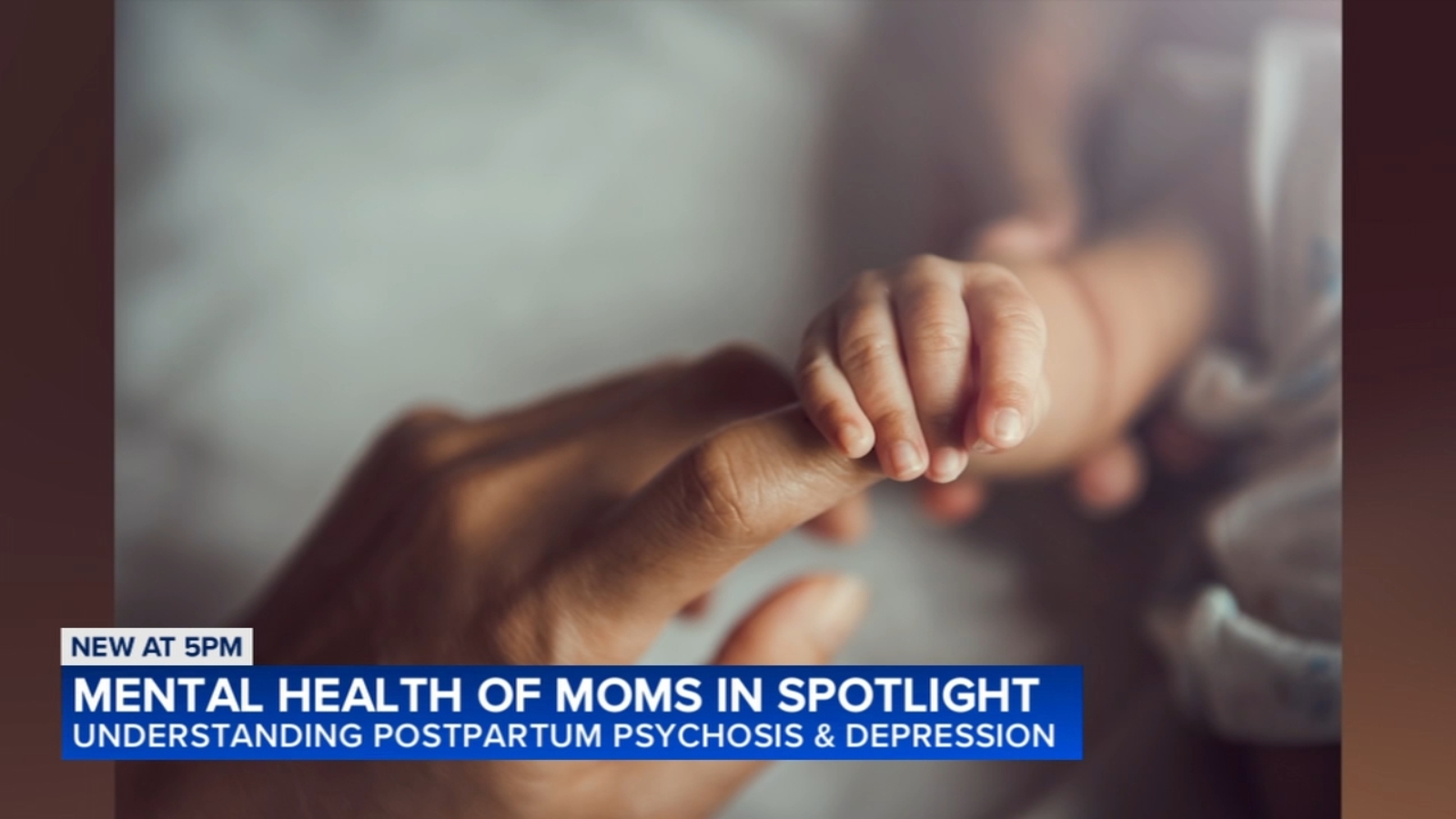
CHICAGO (WLS) — With a jury hung and Americans divided over the Lindsay Clancy murder trial, the conversation surrounding postnatal health is now at the forefront.
ABC7 spoke with Chicago-area medical and legal experts.
ABC7 Chicago is now streaming 24/7. Click here to watch
“The question of whether the jury, juror simply didn’t know what a reasonable doubt meant or deliberately ignored it, that’s an awfully hard thing to prove and get to the bottom of,” ABC7 Chief Legal Analyst Gil Soffer said.
Regardless of the outcome of the Clancy case, advocates said a better understanding of postpartum mental illness may prevent tragedies like this from happening again.
“Symptoms of postpartum depression are very varied,” Professor Darius Tandon in the Department of Medical Social Sciences at Northwestern University said. “I think the biggest misconception is that somebody who’s suffering from postpartum depression is going to have that same magnitude of symptoms as somebody with postpartum psychosis.”
According to the National Institutes of Health, up to 20% of new mothers in the United States experience postpartum depression, characterized by low mood, lack of pleasure, and loss of energy.
SEE ALSO | Frankfort mother charged in murder of toddler said he was ‘the anti-Christ’: court documents
“Postpartum psychosis is something much more severe, also much more rare, characterized by hallucinations, delusions, extreme insomnia,” Tandon said.
The first six weeks after childbirth are often the hardest, according to doula Rachel Williams, who says new moms are forced to juggle finances, child bonding, and outside pressures.
“Your hormones, again, are coming down off that high of pregnancy,” Williams told Eyewitness News. “I’ve had clients who have literally broken down and said, ‘I don’t know what’s wrong with me.'”
The renewed attention on postpartum depression from the Lindsay Clancy murder trial has doctors highlighting differences from postpartum psychosis.
At Northwestern’s “Mothers and Babies” program, researchers are studying new interventions for mothers suffering from postpartum depression.
“You do not have to do big things to be able to improve your mood. Little things like listening to a song that you enjoy, going for a walk, feeling sunshine on your face – all of these things can be things that improve your mood,” Tandon said.
With more Americans now talking about postpartum depression, Tandon hopes the page could be turning.
“We are at a place where this renewed attention is going to give folks who are interested in this work more opportunity to say, ‘we need to provide more resources to this issue,'” Tandon said.
“The question of whether the jury, juror simply didn’t know what a reasonable doubt meant or deliberately ignored it, that’s an awfully hard thing to prove and get to the bottom of,” ABC7 Chief Legal Analyst Gil Soffer said.
More resources:
Maternal Mental Health Hotline: 1-833-9-HELP4MOMS (1-833-943-5746)
Postpartum Support International: 1-800-944-4PPD (1-800-944-4773)
Copyright © 2026 WLS-TV. All Rights Reserved.