
On Sept. 2, Joliet City Council member Suzanna Ibarra said she’s “witnessed firsthand” the strain on local resources caused by the disappearance of “essential hospital services” in Joliet.
“When my father suffered a serious heart-related medical emergency, he waited more than 12 hours to receive the care he needed at another regional hospital due to the strain,” Ibarra said in a written statement. “This was horrific for our family. No family should have to endure that kind of delay during a medical emergency.”
Ibarra said in the statement that loss of essential hospital services leaves neighboring hospitals, emergency departments, ambulance services, firefighters, police officers and other first responders to absorb the increased demand.”
Emergency room crowding isn’t simply about too many people showing up. Hospitals say a major contributor is patients who need admission but can’t get an inpatient bed – leaving them stuck in the ER.
“As more services are eliminated from hospitals in our community, the burden on healthcare facilities will continue to grow, resulting in even longer wait times, overcrowded emergency departments and increased pressure on the very doctors, nurses and healthcare professionals who are working tirelessly to care for their patients,” Ibarra said in the statement.
Unfortunately, Ibarra’s experience isn’t isolated; it’s widespread across the country – and boarding is a huge contributing factor.
What is ‘boarding?’ – and how does that affect ER waits?
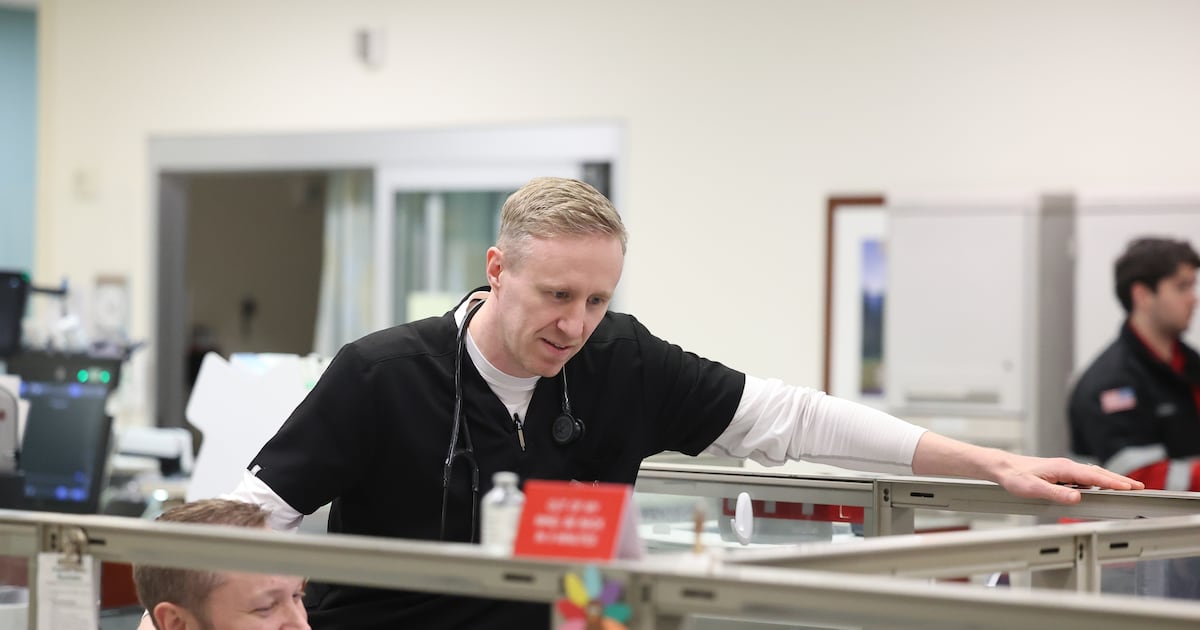
When patients must be admitted and no inpatient hospital beds are available, patients “board” in the emergency department until one frees up, which can cause emergency rooms to back up, according to Jill Pateros, director of emergency services at Silver Cross Hospital in New Lenox.
A 2025 study published in the journal Health Affairs found that boarding is becoming increasingly common.
For that study, researchers from the University of Michigan Medical School and the Beth Israel Deaconess Medical Center in Boston examined national data from electronic health records of 46.2 million hospitalizations in 1,500 hospitals in all 50 states from January 2017 to September 2024.
For instance, in January 2022, 40.1% of patients boarded for more than four hours, and 6.3% boarded for more than 24 hours, according to the study.
Dr. Daewon Kim, emergency department medical director at Saint Joseph Medical Center in Joliet, said insurance snags can interfere with timely placement and lead to boarding.

“Some patients need to go to a nursing home,” Kim said. “But they need prior authorization. That process takes time. But guess what? Insurance companies are not open on holidays; they’re not open on weekends.”
Boarding isn’t even good for the boarders, even though they’re in the hospital.
A 2022 study found patients may be more likely to die in 30 days if they waited longer than five hours in the emergency department before being admitted.
That’s why the Agency for Healthcare Research and Quality held a summit in 2024 to address this national public health crisis.
Obviously, every patient who comes to the emergency department isn’t admitted, Kim said. But neither can one plan for an exact number in advance.
“Some days we see a lot more sick patients,” Kim said. “And we end up admitting a lot more sick people than we typically do.”
Sharon Zobel, chief nursing officer at Silver Cross, said the hospital’s inpatient teams may “shuffle people around” so providers can see boarded patients at bedside and start their inpatient care.
:quality(70)/cloudfront-us-east-1.images.arcpublishing.com/shawmedia/JKP6QLEHZBDKFDFAPT3HL7OXWU.jpeg)
“They [patients] receive all of the same services they’d receive in a patient room,” Sharon said. “And as soon as we are able to free up a room, we move those patients.”
Why the long wait?
Kelly Monestero, a registered nurse and director of operations for the emergency departments at both Northwestern Medicine McHenry and Woodstock hospitals, said patients often come to the emergency department because they can’t access primary care or specialty care providers.
“What we’re seeing is that patients are getting sick and try to get into their primary care provider and there’s an extended wait time to get in there,” Monestero said. “Then they either become increasingly more sick and need to come to the emergency room or their physicians refer them to the emergency room so they’re seen sooner.”
Jill Pateros, director of emergency services at Silver Cross, said people used to avoid the emergency department unless the situation was “life or death.”
But chest pain symptoms are not as “cut and dried” anymore and doctors often advise patients to seek emergency care, Pateros said.

Other factors that drive emergency room visits include an aging population with complex health needs, underfunded mental health care and changes in health insurance plans, Pateros said.
“If their provider is no longer in network, they just might be looking for help somehow,” Pateros said. “We tend to be the place where people go.”
How local EDs are addressing long waits
Triage is absolutely key.
Debra Robbins, director of marketing and communications at Silver Cross, said the hospital’s website has a symptom checker, so people can decide to seek care at urgent care or the emergency department.
:quality(70)/cloudfront-us-east-1.images.arcpublishing.com/shawmedia/DELQNR7LWZAXJBVMHHS7FYGO4A.jpeg)
These nurses can “run through the child’s history” with the parents and ask targeted questions to determine whether the child needs emergency care, be seen in the morning or should be seen within three days, Endris said.
At Silver Cross, patients are registered and triaged shortly after arrival and get any tests they need before seeing a provider “so they’re not just sitting there with no eyes on them,” Pateros said.
Pateros said improved triage decreased Silver Cross’ level of patients leaving before seeing a licensed provider by 57%.
In a written statement, OSF HealthCare said it uses “nationally recognized triage protocols to ensure patients with the most time-sensitive and life-threatening conditions receive immediate care.”
“Throughout periods of high patient volume, our clinical teams continue to monitor patients in the waiting area through regular assessments to ensure their condition remains stable and to identify any changes requiring immediate intervention,” according to OSF HealthCare.
Jenni Radtke, director of nursing, emergency department and women’s and children’s services at Saint Joseph Medical Center, said data from the last two years showed the emergency department is typically busiest between 3 and 11 p.m., so staffing was adjusted to meet the higher need.
:quality(70)/cloudfront-us-east-1.images.arcpublishing.com/shawmedia/7V36X3UEFNC55IVT5HSWSIUZ2U.png)
“A lot more injuries and accidents happen in the afternoon and early evening hours,” Radtke said.
Kim said these strategies have reduced the number of patients who leave the Joliet hospital without being seen from as high as 6% to as low as less than 1%, with Radtke adding that the hospital also has reduced its boarding by 65%.
Monestero said patients are often seen faster at Northwestern Medicine Woodstock than at the Huntley or McHenry emergency departments.
“They don’t have patient beds there, which I think deters people away,” Monestero said. “But they can do the same things the McHenry and Huntley ERs can do with less of a wait. If a patient needs to be admitted from Woodstock, we provide transportation to McHenry or Huntley at no cost to the patient.”
When patients leave without being seen
A study published in May said patients leaving without being seen “represent failures of strained healthcare systems to meet acute care demand” and may contribute to poor health outcomes in those patients.
Monestero said when patients get bloodwork and imaging and then leave before a licensed provider sees them, they will try reaching the patient or the patient’s primary care provider.
Finally, patients are sometimes frustrated when the emergency department can’t address every health concern, Pateros said. But emergency departments are not designed for that care.
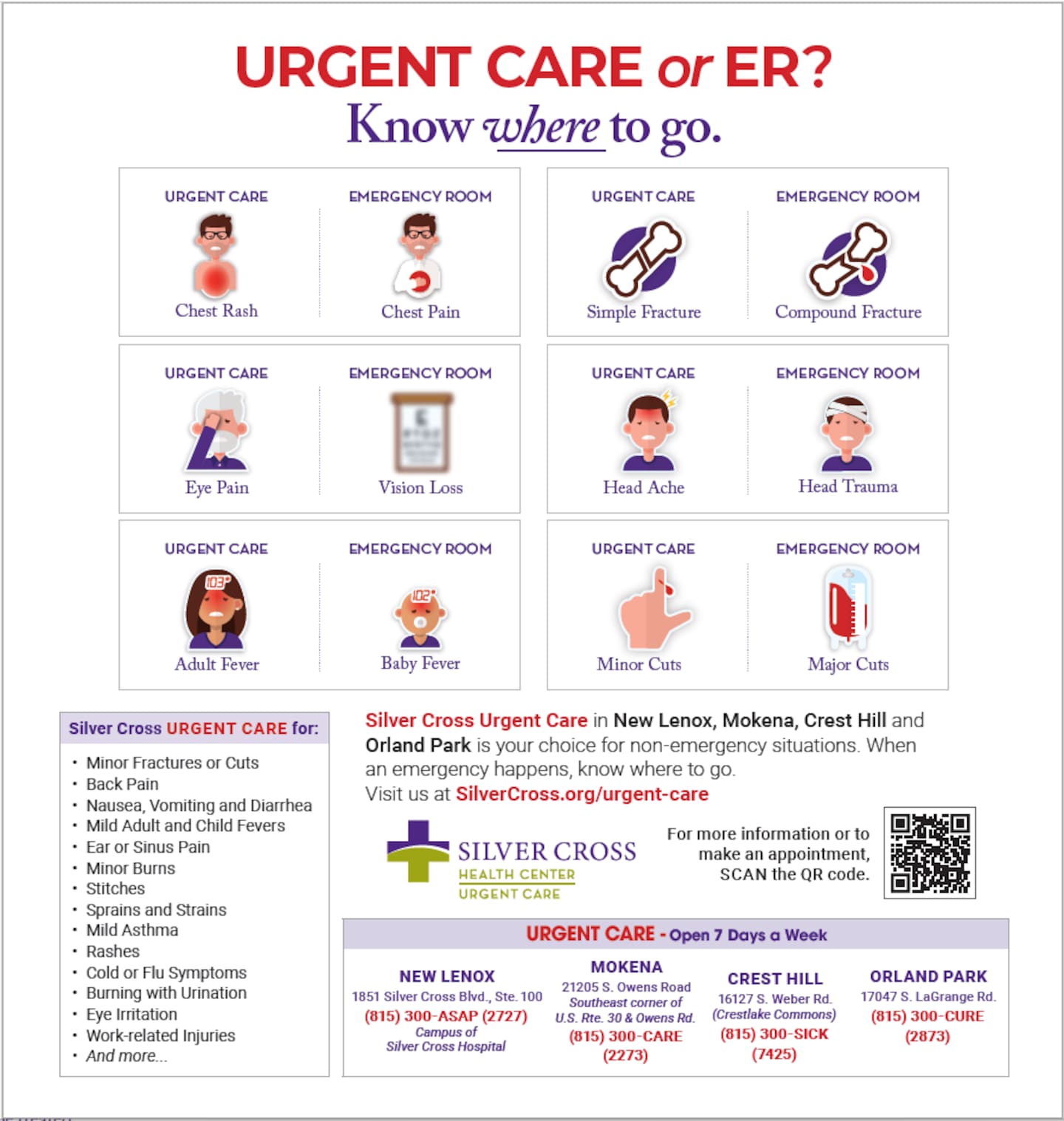
“Our job is to identify the life threat and get you through that,” Pateros said. “If you’re coming in with a heart attack, we are going to save you from dying of a heart attack. The rash you’ve had for three years – we may not talk about…we stabilize you and get you home or into a room somewhere.”