
USA TODAY NETWORK
Among a long list of measures purported to help beef growers, President Donald Trump signed an executive order Sept. 4 directing the Department of Interior to take action on the status of wolves in much of the U.S.
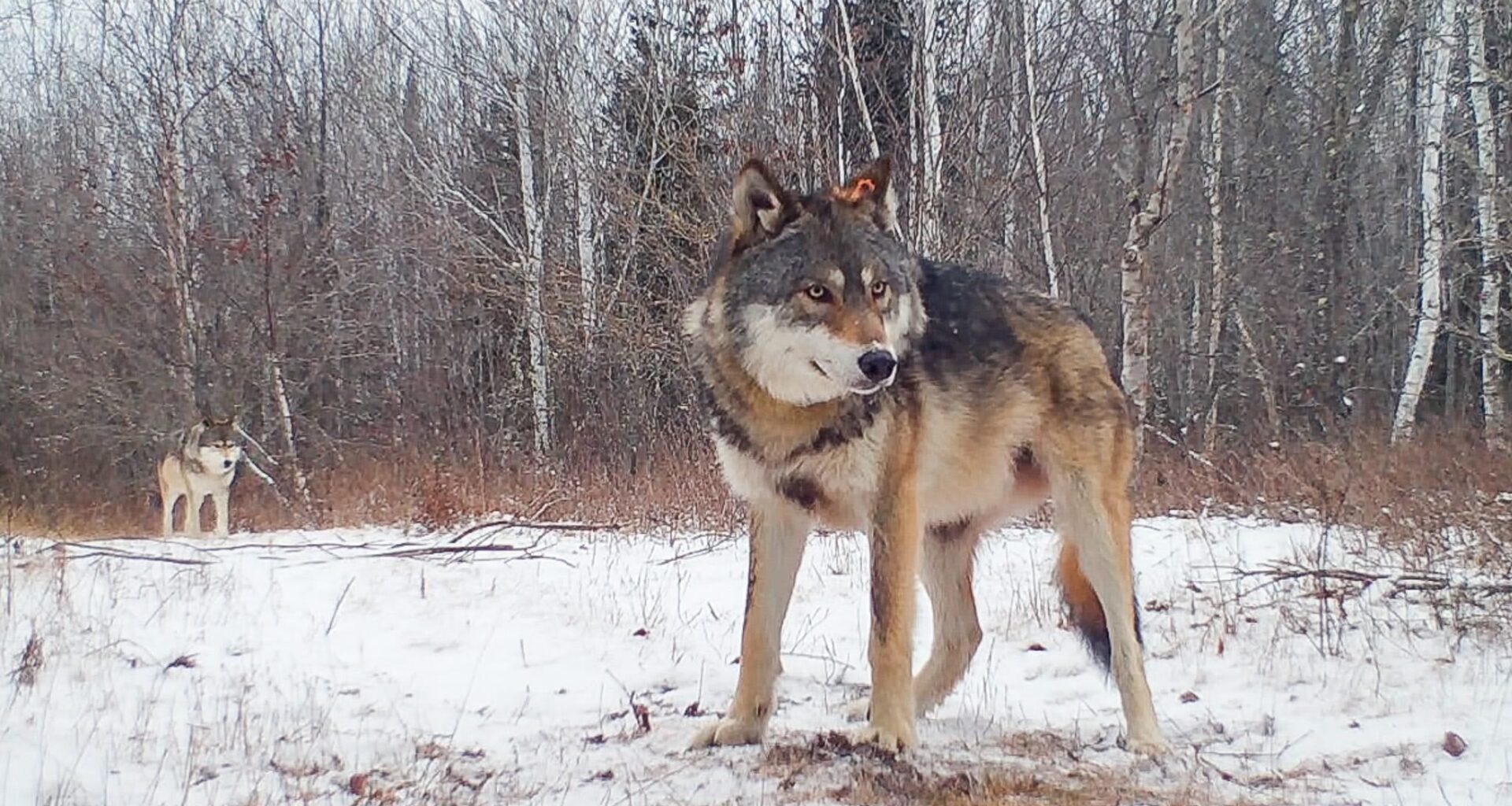
The wolf order directs the Secretary of the Interior “to determine whether gray wolves or Mexican wolves meet the criteria for delisting or downlisting under the Endangered Species Act and begin the process of delisting or downlisting them,” according to a statement from the Department of Agriculture.
The gray wolf has been protected under the ESA in Wisconsin and most other states since a federal district judge’s decision in February 2022 in a lawsuit brought by wildlife advocates.
The status prohibits lethal means of wolf management, including hunting and trapping.
Importantly, it also prevents farmers and ranchers from killing wolves that prey on their livestock. Only non-lethal techniques such as noise, lights and fladry may be used.
The gray wolf was delisted in 2011 in Montana, Idaho and eastern Washington and in 2017 in Wyoming through legislative actions.
Trump signed a range of executive orders Sept. 4 in the Oval Office as more than a dozen farmers and ranchers, including Joe Thomas of Muscoda, Wis., looked on.
Thomas is a Brookfield native who starred in football at the University of Wisconsin and in the NFL with the Cleveland Browns and now owns and operates Hall of Fame Beef in Muscoda.
Trump focused most of the press conference on beef supply and pricing issues. He had recently come under strong criticism for his move to allow more imported beef at a lower price as well as consumer pressure for rising beef prices.
Trump announced a series of measures intended to address beef costs and domestic production issues, including an executive order for mandatory country of origin labeling for beef products, allowing more state-inspected meat to cross state lines and a new “one-stop shop” to provide technical assistant to small processors and modernize meat inspection regulations.
When Trump read the initial statement on the wolf executive order he mentioned only the Mexican wolf.
During discussion with western and southwestern ranchers about their inability to legally shoot wolves as well as concerns of public safety, Trump turned and addressed Thomas.
“What about you?” Trump said, looking at Thomas. “I mean if I wanted to take a walk (on your farm), do you have problems with wolves?”
“We’re in southern Wisconsin,” Thomas said. “Not too many Mexican gray wolves up there, maybe some day.”
However the executive order covers the gray wolf, too.
“Today, the President laid out tools to better equip farmers and ranchers to deal with dangerous predators threatening their livestock, provide more transparency for consumers on where their meat originates, and expand market opportunities while maintaining our world class food safety standards,” said Secretary of Agriculture Brooke Rollins in a statement.
The Department of the Interior and the Department of Agriculture are also directed to update their standards for compensating ranchers for losses due to predators, and to ease authorization for lethal removal when necessary, Rollins said.
The move was met with support by Hunter Nation, a Kansas-based organization with state chapters, including in Wisconsin, that has been lobbying legislators on wolf issues for several years.
“The recovery of the gray and Mexican wolf is one of the greatest conservation success stories in American history, and today’s executive order is the first step to restore common sense, respect for real science, and return wildlife management back where it belongs, to each state and the people who live closest to the land,” said Keith Mark, Hunter Nation founder and CEO.
Wolf advocates saw it at least in part as an attempt to pacify ranchers who have been hurt by Trump’s tariffs.
“This is a huge distraction to placate a handful of ranchers and make them believe that wolves are a greater threat than President Trump’s own policies,” said Greta Anderson, deputy director of Western Watersheds Project. “The impact of wolves on the livestock industry pale in comparison to the impacts of recent trade agreements and the reality of ranching in the arid West under changing climate conditions.”
And groups such as the Center for Biological Diversity, part of the successful lawsuit that in 2022 returned ESA protections to wolves in most states, predicted a forced delisting by the Interior Department would fail.
“Trump’s new push to prematurely remove wolf protections will lead to yet another court decision that reinstates those protections while doing nothing to help ranchers,” said Collette Adkins, senior attorney and director of the carnivore conservation program at the Center for Biological Diversity. “Smart ranchers coexist with wolves by using commonsense measures like guard dogs and fencing to protect livestock. Trump should be funding these tools, not wasting taxpayer money trying to kill or illegally strip wolves of lifesaving protections.”
It’s possible the wolf would be delisted another way, including through a budget-related maneuver in Congress or the Pet and Livestock Protection Act, a bill that has passed the House of Representatives but is still in committee in the Senate.
If the wolf is delisted and returned to state management, Wisconsin law requires the Department of Natural Resources to hold a wolf hunting and trapping season.
Wisconsin had an estimated 1,162 gray wolves in 321 packs in late winter 2026, according to the DNR.
The 2026 population estimate represents a 5% year-over-year decline and is 3% below the 5-year average, a slight fluctuation around a mean that suggests the state’s wolf population has reached its biological carrying capacity, said Lydia Margenau, DNR wildlife research scientist.
Confirmed or probable gray wolf depredations on livestock and other domestic animals in Wisconsin decreased in 2025, as did the amount of compensation paid, but were close to 5-year averages, according to DNR reports.
The compensation dropped from $322,970 in 2024 to $200,864 in 2025.
There has never been a wolf attack on a human in modern Wisconsin history, according to the DNR.
This article originally appeared on Milwaukee Journal Sentinel: Trump signs executive order on wolf delisting
Reporting by Paul A. Smith, Milwaukee Journal Sentinel / Milwaukee Journal Sentinel
USA TODAY Network via Reuters Connect
Related