
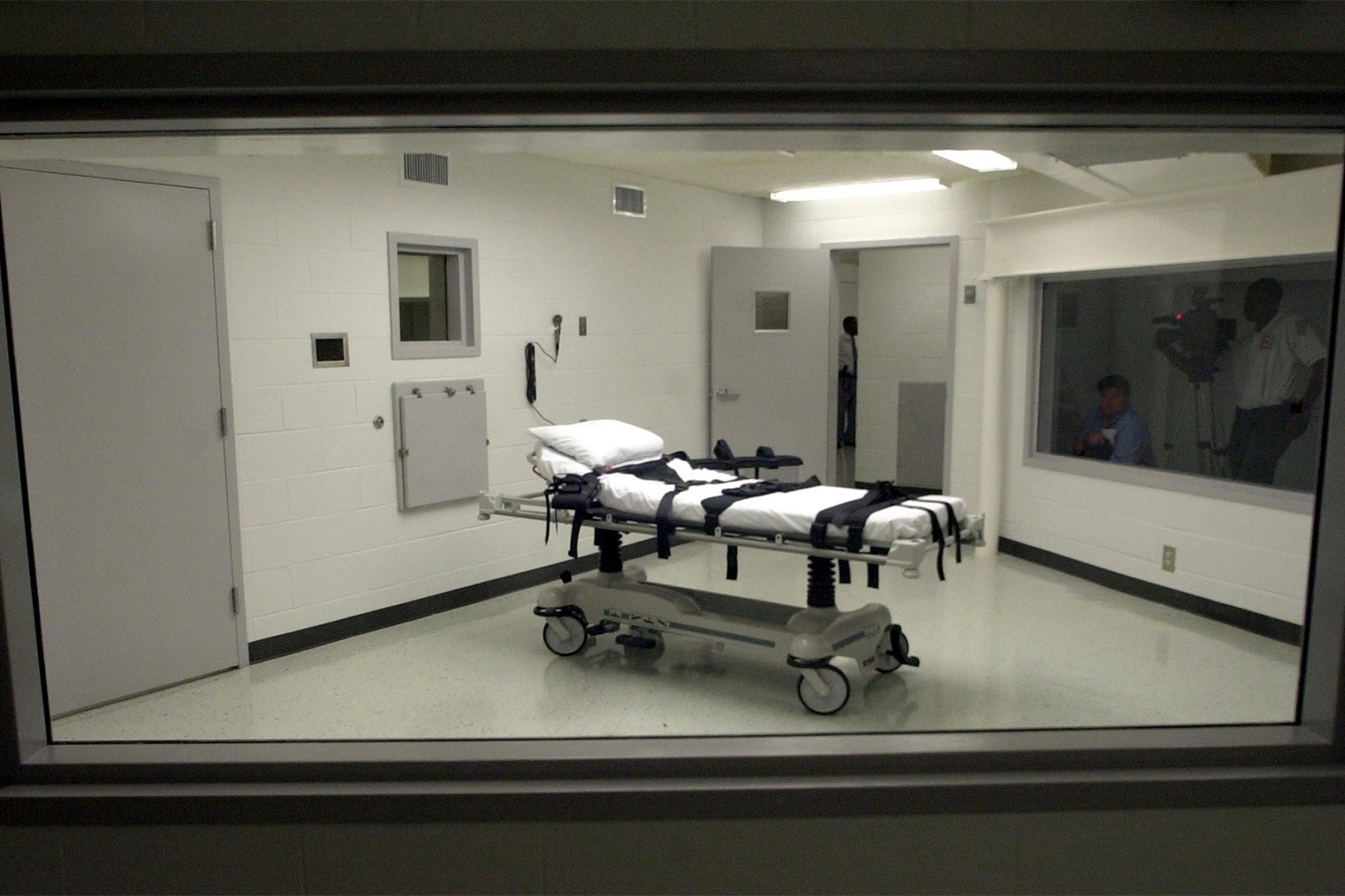
The U.S. is on pace to execute 50 or more people this year. The latest is slated for Thursday, with a death warrant signed for Daniel Owen Conahan, aka the “Hog Trail Killer,” who’s been sitting on Florida’s death row for almost three decades. More than two dozen executions are set in Florida and six other states for the remainder of the year.
Some U.S. politicians tout the practice as a deterrent to other would-be-killers, or those who commit treason or espionage – as well as justice for the victims’ families.
But it positions America within a retentionist club of nations, including Saudi Arabia, Iran and China, that actively employ capital punishment. The U.S. is the only western country that ranks among the 55 nations that still have the death penalty on its books, although only 17 actively use it, according to the London-based human rights group, Amnesty International. All European nations have abolished the practice.
Why the U.S. clings to condemning people to death for committing certain crimes is part of a lifetime of work for Northeastern University’s retired law professor Michael Meltsner – a death penalty law author whose own legal battles against the practice in the U.S. Supreme Court has placed him in the legal history books.
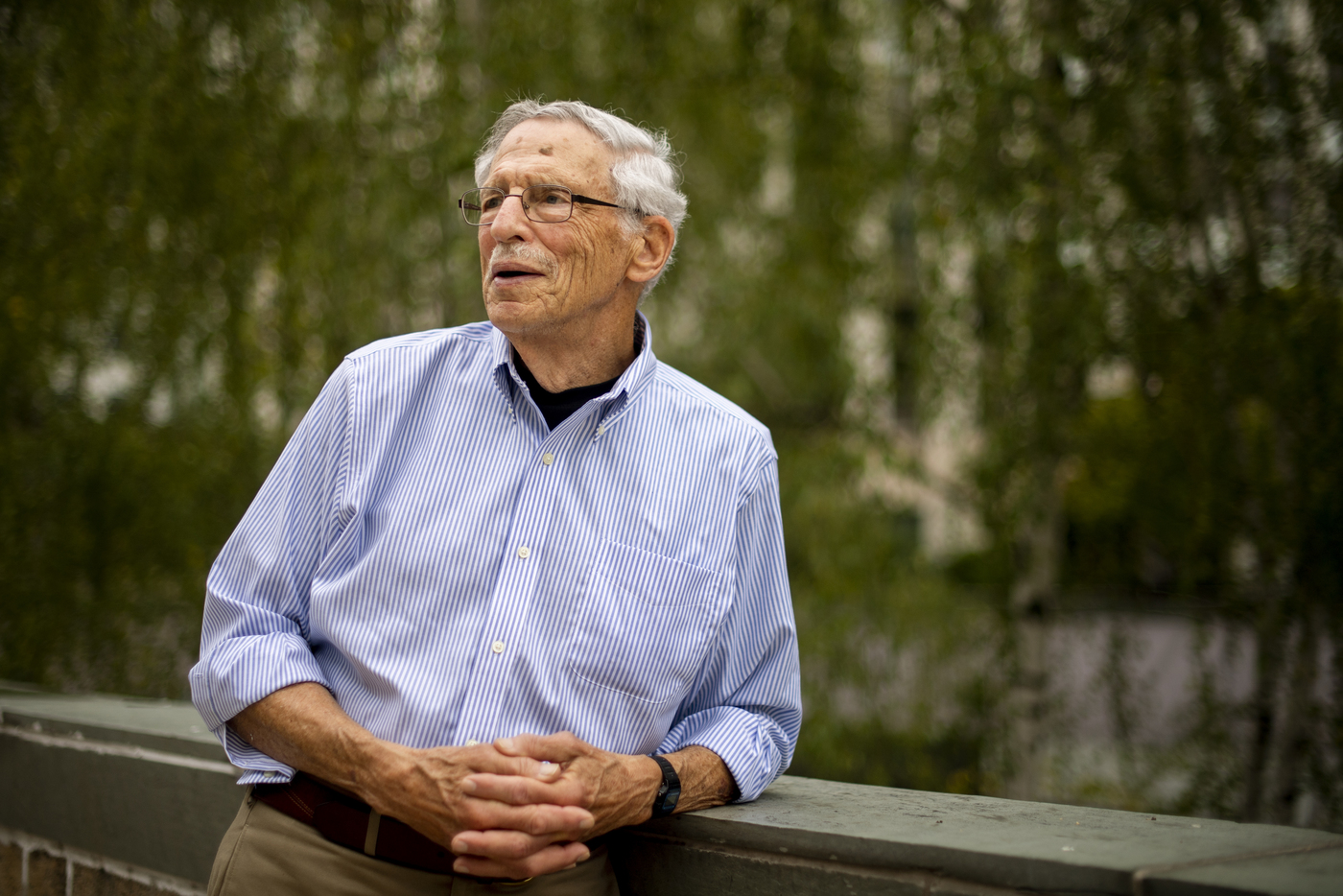 Michael Meltsner, George J. and Kathleen Waters Matthews Distinguished University Professor, emeritus, has argued for a lifetime against the death penalty. Photo by Matthew Modoono/Northeastern University
Meltsner, along with Amnesty International and other death penalty abolitionist groups, said that the evidence shows that the death penalty is used disproportionately on Black men, and that the practice largely is carried out in Southern U.S. states which have an entrenched history of racism.
“The reason we are different from other democracies is predominately due to the history of racism in Southern and border states emerging from slavery, Jim Crow and lynching,” said Meltsner, who is Northeastern’s George J. and Kathleen Waters Matthews Distinguished University Professor of Law Emeritus.
He was an architect of a 1972 Supreme Court case, Furman v Georgia, that temporarily overturned the death penalty in the U.S. The justices ruled in that case that the practice was applied in an arbitrary and discriminatory way and violated the Eighth and Fourteenth Constitutional Amendments that provide protections against cruel and excessive punishment and equal protection under the law. Most U.S. executions happen in a handful of Southern states that fought during the U.S. Civil War to keep slavery, Meltsner said.
Black men comprise most of the 40% of the almost 2,000 people on death row in the U.S., though African Americans make up only 12% of the U.S. population, according to the Death Penalty Information Center.
That’s evidence of the racial disparity, Meltsner said.
Politics is another reason why, in Meltsner’s opinion, capital punishment remains on the books in the U.S.
He pointed to California, which still employs the death penalty. Although the practice is decried by the state’s governor, Gavin Newsom, he has never granted universal clemency or commuted the sentence of anyone on death row.
“That suggests that the death penalty is in deep decline, but there’s also a political cost for coming out and being an abolitionist,” Melstner said.
Newsom signed an executive order in 2019, putting a moratorium on the practice and ordered that the death chamber, at San Quentin State Prison where executions take place, be dismantled.
Newsom said in a statement at the time, “I do not believe that a civilized society can claim to be a leader in the world as long as its government continues to sanction the premeditated and discriminatory execution of its people.”
But Florida’s governor, Ron DeSantis, has held firm on allowing state executions, telling a press conference last November that he views the death penalty as a deterrent and “if somebody goes and shoots 10 people, they should get the death penalty very quickly.” He also called it justice for the families of the victims.
Formal death penalty advocacy groups are rare, but the National District Attorneys Association officially supports capital punishment for certain heinous homicides, as a necessary tool in the criminal justice system.
Many politicians support the practice as a deterrent to crime, including President Donald Trump, who in January 2025, signed an executive order directing the Department of Justice to pursue the death penalty for every eligible capital crime. And an October 2025 Gallup Poll of 1,000 adults between ages 18 and 54 found that more than half of all Americans support condemning criminals to death.
Florida’s planned execution of Conahan will be the 15th execution the state has carried out this year. The 72-year-old is scheduled to die by lethal injection, 27 years after he was convicted of first-degree murder.
Authorities say that in 1996, Conahan tied his victim to a tree, strangled him and then mutilated the body. Investigators also found four other bodies they say had been bound, with some of them posed for photos. They were mutilated in a similar manner to Conahan’s known victim – earning him the moniker, “the Hog Trail Killer.”
DeSantis signed his death warrant. Amnesty International criticized him in its annual report released in May for presiding over 19 executions in 2025, the most in a single U.S. state.
“It’s a weighty thing,” DeSantis told the media at a Florida sheriff’s conference in July about sending people to death. “I don’t take joy in that.” But, he added, “the victims’ families have been waiting a long time,” with some of them asking ‘‘when are we going to get justice?’ ’’
Justin Mazzola, deputy director of research at Amnesty, told Northeastern Global News in a statement that “the continued use of the death penalty in the United States is a human rights failure…It is a system plagued by racism, arbitrariness and mistakes,” he said.
The methods of execution in the U.S. are getting more cruel, the advocacy group said, with President Donald Trump reinstating the use of a firing squad in April for federal death penalties.
It’s a practice allowed in only five U.S. states with South Carolina leading the way, using the method three times last year.
Saudi Arabia uses the sword to behead people, 116 so far this year. Iran has killed almost 1,000 people this year through hangings or firing squad. China also employs firing squads, or lethal injection, according to rights groups.
The U.S. executes only a small fraction of people compared to Saudi Arabia, Iran and China, and Meltsner said that the numbers show that the practice is falling out of favor among much of the American public.
According to Meltsner, juries ordered the death penalty several hundred times in the 1990s, compared to around 18 times in the past two years. And while there were 98 executions in 1999, 47 were carried out last year.
“When it will go away, I cannot predict,” Meltsner said.