
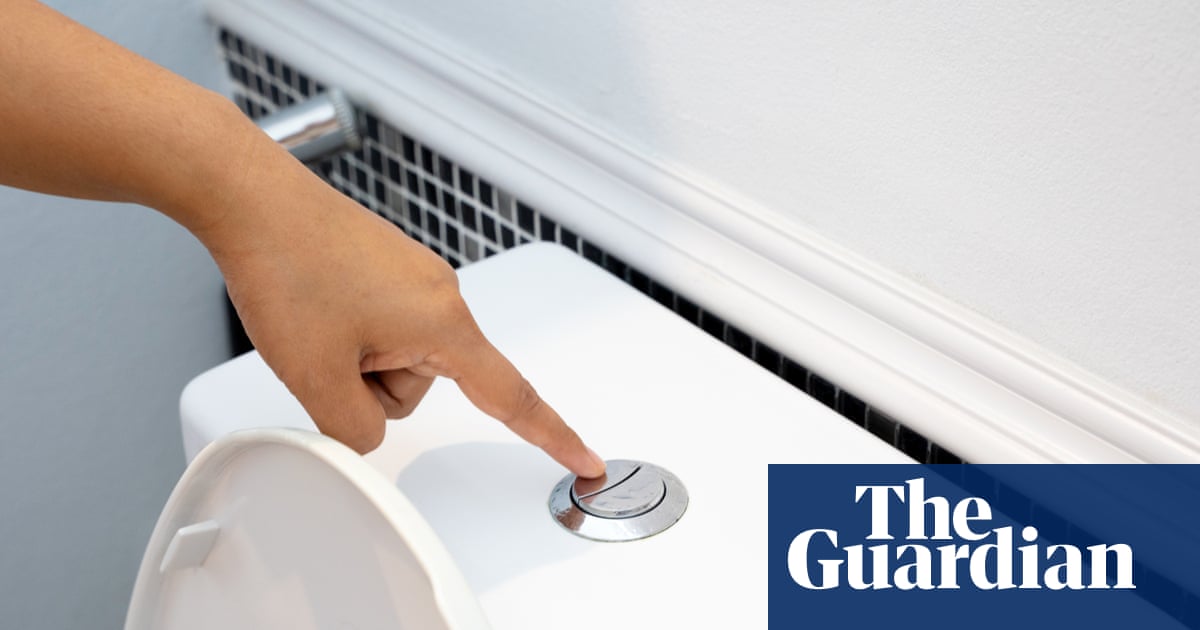
Flushing toilets release particles into the “breathing zone” of adults and can remain suspended in the air for at least 20 seconds, a new study has found.
And closing the lid might not be enough to avoid a “plume” of potential pathogens.
Meanwhile, previous research has shown public toilets are an inescapable hotbed of microbes.
Flinders University researchers reviewed 22 studies of toilet-generated aerosols, publishing the results in the Science of the Total Environment journal.
They found microbes from the water used for flushing or from contamination of the bowl ended up as aerosols, with more “turbulent” flushing releasing more particles.
That included bioaerosols – aerosols that contain biological material and can transmit pathogens including legionella, influenza and norovirus. There are differing reports about whether Covid spreads through toilet aerosols.
The researchers found higher levels of aerosols in the water and higher levels of turbulence during the flush increased the volume of particles suspended in the air, but the effects of bathroom ventilation and whether the lid was up or down were unclear.
Sign up for the Breaking News Australia email
Despite that, lead author and PhD student Lira Adiyani said she would still recommend putting the lid down after using the toilet.
“Toilet flushing creates turbulence that can release aerosols into the surrounding air,” she said.
“Some studies detected these aerosols at adult breathing height, indicating a potential pathway for inhalation exposure.
“The more microbes present in the toilet, the more bioaerosols may be released. Therefore, larger flush volumes generally produce more aerosols.”
Adiyani said “based on the available evidence” she would still recommend closing the lid as a precautionary measure, “while recognising that it does not completely prevent aerosols from escaping”.
In the report, the researchers wrote that the effects of indoor aerosols had been “understudied” despite the risk of infection. This had “important implications for risk assessment, building design, and infection control in an era of water security pressures and emerging infectious diseases”, they wrote.
“Indoor aerosols influence air quality and human health as their small size allows them to penetrate deep into the respiratory tract when inhaled, providing a direct exposure pathway.”
Co-author, environmental health professor Harriet Whiley, said people didn’t have to be worried in their own homes, unless someone in the house was immunocompromised.
She said the team was working on “protecting the most vulnerable through good design” in places such as hospitals and aged care environments.
skip past newsletter promotionFree newsletter | When needed
Sign up to Breaking News Australia
Get the most important news as it breaks

after newsletter promotion
They are increasingly concerned about “opportunistic pathogens” that can be present in water, particularly recycled or rainwater. “They don’t affect healthy people,” she said. “But if you’re immunocompromised you can get very sick, and it can be fatal.”
So it’s about getting “an effective flush with less volume and less turbulence”, she said.
Dr Lotti Tajouri, an associate professor in molecular genetics at Bond and Murdoch universities wasn’t involved in the research but warned bathroom dangers go well beyond the toilet.
His own research is particularly focused on public toilets and mobile phone use in toilets.
“As soon as you enter a toilet, consider everything contaminated,” he said.
The door will have microbes on it, as will the floor – so you should never put anything on it, he said. Then you might touch the lid, after which you flush with the lid up or down.
If it’s up, you get the “plume” effect, an “explosion or aerosols … you are literally sprayed [with]”.
Flushing with the lid down might limit your exposure to the plume, but depending on the cleanliness of the toilet, previous users have left microorganisms on every surface anyway. “The roof, the walls, the floor,” he said.
Then, you touch the toilet door again, before (hopefully) washing your hands. But you will probably touch the taps again, blow microorganisms around with the hairdryer, touch the exit door and then touch your phone.
“Studies show between 50% and 80% of people use mobile phones in the toilet. For younger generations it’s almost 100%,” he said. “They will contaminate their phones and fingers with fecal microorganisms – salmonella, campylobacter, all sorts of bacteria and viruses.
“The less contact you have, the better it is.”