
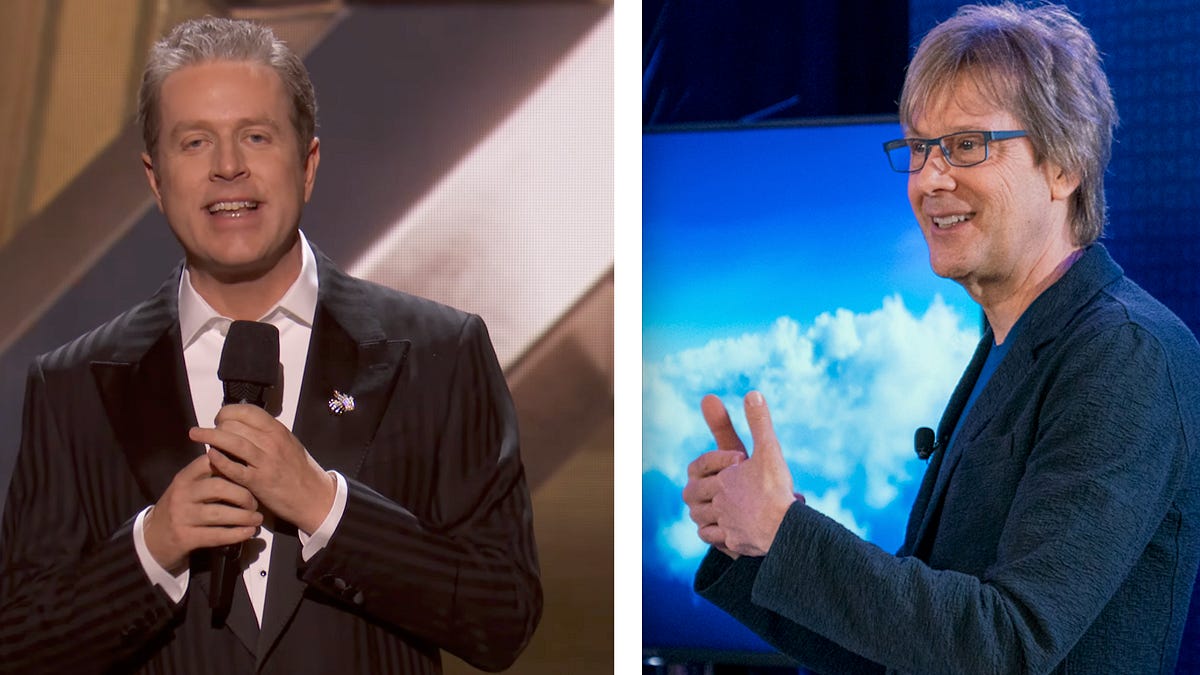
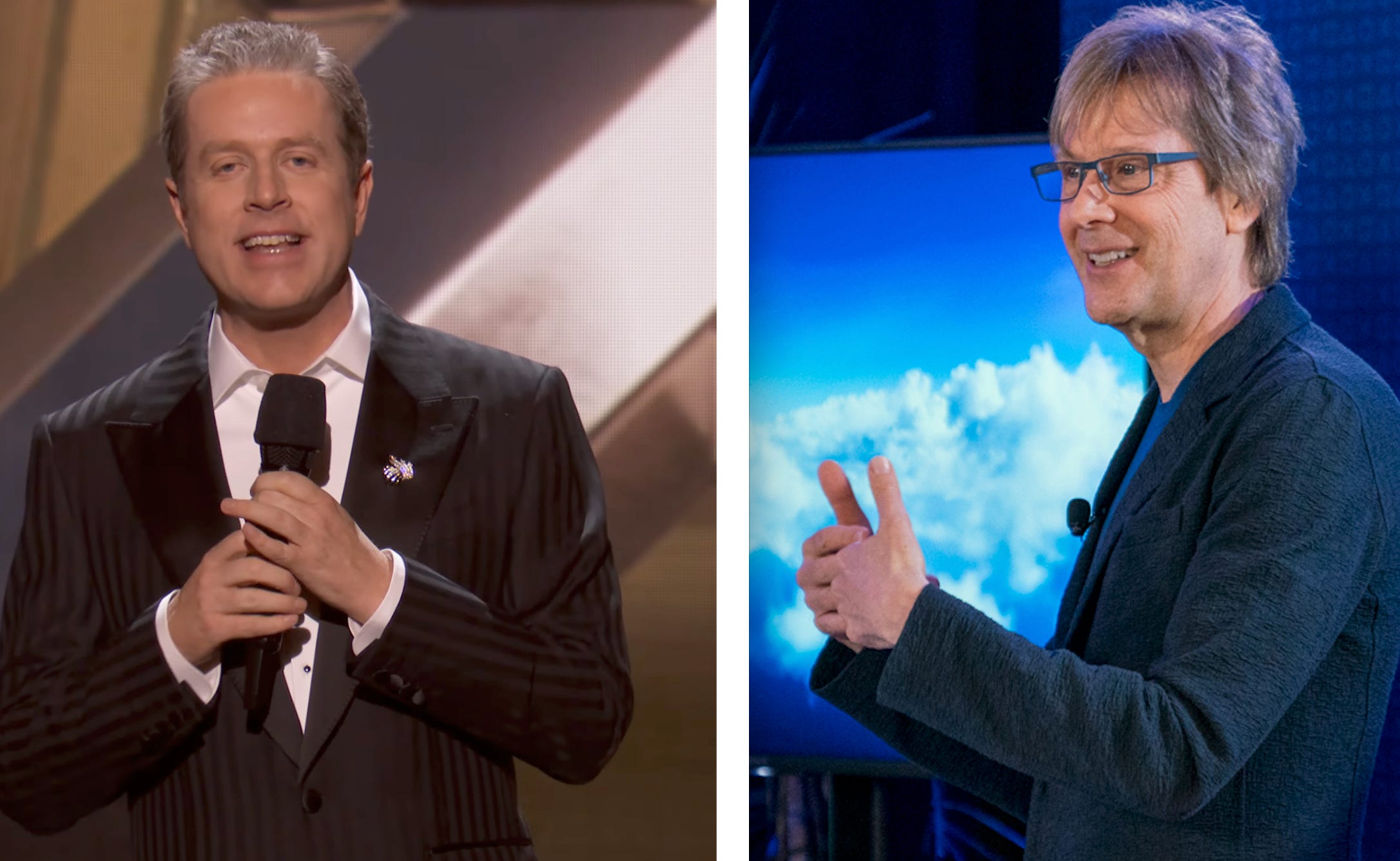
 Geoff Keighley (left) and Mark Cerny. Photos via The Game Awards and Sony Interactive Entertainment
The first thing to know about the Nova Games Foundation is that it isn’t about The Game Awards. And it’s not about PlayStation.
The ambitious new grant program is the brainchild of Geoff Keighley and Mark Cerny. Keighley is the host of The Game Awards, Summer Game Fest and Opening Night Live. Cerny is a game designer of some 45 years and the lead architect for the PlayStation 4 and 5.
But this new thing, which they’re revealing through Game File, isn’t about their day jobs.
It’s an unaffiliated, standalone philanthropic project. It’s a bet on the artistic future of video games and a way, they tell me, to give back.
“I’m nearing the end of my career,” Cerny recently told me over email. “I’m not done yet, but paying it forward—in the best way possible—is very much on my mind these days,”
The Nova Games Foundation is a university-affiliated fellowship program, intended to offer six-figure grants to 20 young game designers each year, potentially for decades to come.
It will offer no-strings-attached funding along with mentorship from games industry leaders, a combination intended to aid the development of groundbreaking new games, Cerny and Keighley told me.
Nova will begin accepting applications in December, from class of 2026 and 2027 students from 13 affiliated gaming programs at universities in eight countries. The schools working with Nova include the New York University and the University of Southern California in the U.S., along with Abertay University in Scotland, Cnam-Enjmin in France, TH Köln in Germany, and the Royal Melbourne Institute of Technology in Australia, Cerny and Keighley said.
The plan: $100,000 per recipient, with about a quarter of Nova fellows eligible for up to $500,000 more for projects that are shaping up particularly well. Payments will be delivered based on development milestones, and recipients will own their games. Nova will help promote the work, and developers will be free to pursue the publishers and platforms of their choice. Nova can help introduce fellows to publishers, but won’t take a cut.
 The foundation’s official logo.
“I’ve always wanted to give back, but given my role in the industry, I’ve never felt it appropriate to commercially invest in games,” Keighley told Game File.
“I’ve never owned stock in a game company or taken a financial stake in a game. Nova is philanthropy: we aren’t taking equity or looking to recoup the grants. The return we’re hoping for is creative—helping new voices make games and find their footing.
“Mark and I have each made multi-million-dollar donations to establish the foundation, and we intend to keep contributing. We hope others will join us.”
Cerny and Keighley have already hired an executive director, John Maconga, and a head of grants, recent Game Developers Conference director Ashley Corrigan, to help launch the effort.
They’re working to recruit game industry leaders to join the effort. Keighley says “dozens of leading game directors have already expressed interest in contributing their time.” To name one, they’ve already gotten Josef Fares, lead designer from It Takes Two and Spit Fiction studio Hazelight on board with a donation and pledge to help out.
“I’m proud to support Nova because it gives the next generation of creators the freedom to explore their creativity and hopefully bring their unique visions to life,” Fares told Game File.
Keighley and Cerny have known each other a long time. It’s been so long, Cerny isn’t even sure exactly when they met. “We travel in much the same circles and I’m sure first intersected in the 90s or early 2000s,“ Cerny said.
Keighley thinks it might have been during his stint writing a column about the mid-’90s console 3DO for a gaming magazine while Cerny was working on games with Crystal Dynamics or on Way of the Warrior with Naughty Dog.
They became genuine friends about a 10 years ago, Keighley said, as they bonded over a shared love of games and a hope to improve the industry.
“About a decade ago, we started having dinner a few times a year in LA,” Keighley said. “Just to catch up on life and the industry. Those conversations continued over Zoom during COVID. Nova grew out of that friendship and a question we kept coming back to: ‘What could we do to help the next generation of game directors get started?’”
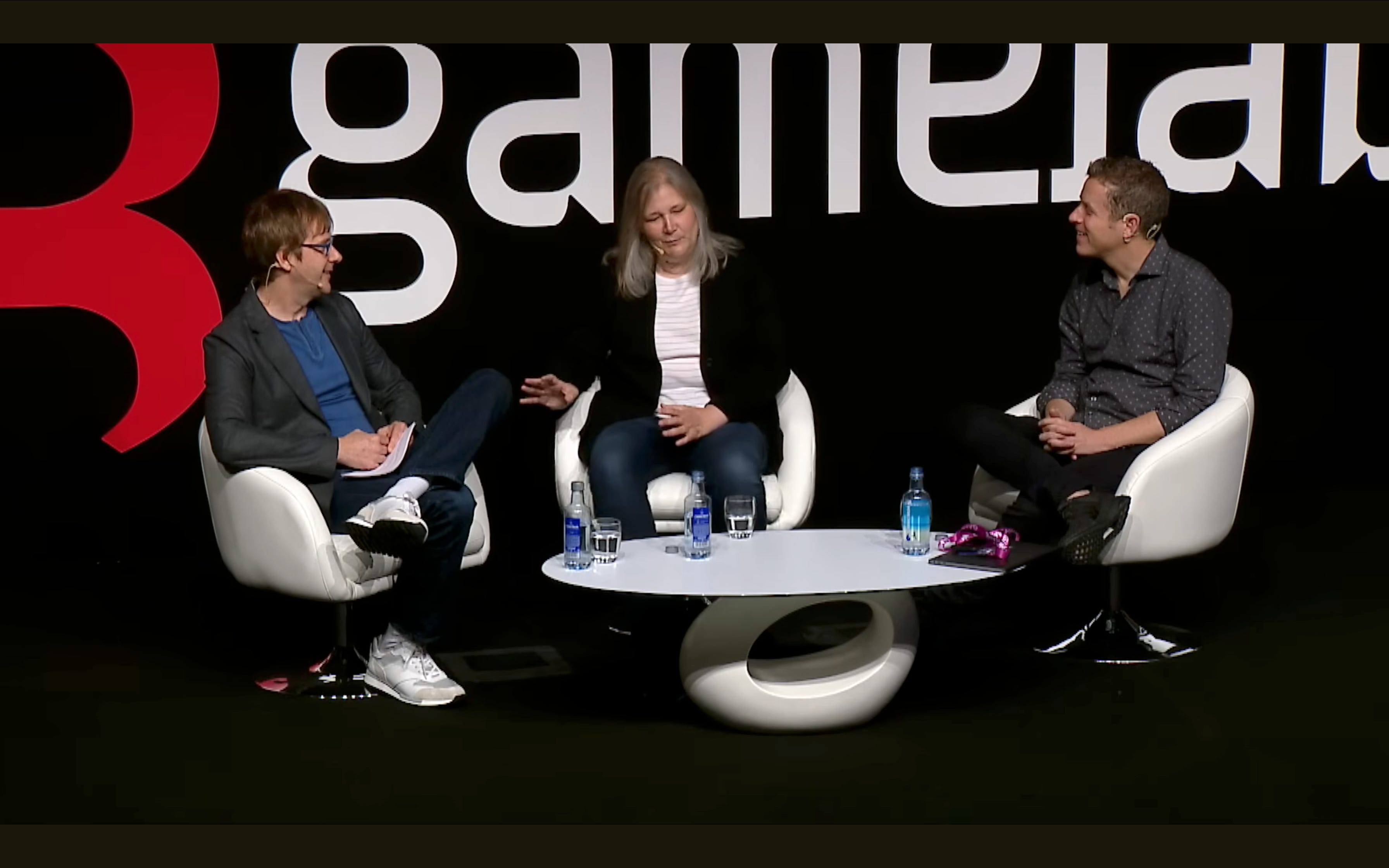 Mark Cerny (left) and Geoff Keighley (right) with game designer Amy Hennig (center) in 2018.
Keighley credits Cerny with the idea to figure out a way to put their money and time back into the industry.
At one of those dinners, Keighley proposed the idea of a fellowship program. He’d recalled applying for a Rhodes Scholarship when he was younger. “Spoiler: I didn’t get it,” he said. He’d admired the MacArthur Foundation’s so-called “genius grants.” He liked these kinds of programs that recognized people’s talents and gave them the financial boost and the freedom to realize their potential. With Cerny, he had pondered what a game industry version of that could be.
Keighley liked the idea of centering the fellowship on students, drawing inspiration from the accomplishments of Jenova Chen, the USC game design graduate who went on to lead the creation of gently moving, ambitious games such as Flower and Journey.
Keighley also thought it could be useful to help promising graduates bridge the transition from student to professional.
“Joining an established studio isn’t always possible—especially in today’s market—and even then, it isn’t the right path for everyone,” Keighley said. A fellowship, he realized, could give “graduates the time, resources and guidance to pursue a game of their own and not worry about the commercial viability.”
As the idea took shape, Cerny also saw an opportunity to enable more games of a certain type: “The target with the grants is games as an artistic medium,” Cerny told me. “We like to say games with ‘artistic, literary and societal value.’”
He added: “I’m a pretty big gamer myself, though I tend to gravitate towards the smaller and more unique or artistic titles, games like Neva, Abzu, Gorogoa, Stray or Outer Wilds. I was just playing and Roger on a flight to Japan, and was getting misty eyed to a degree that I was concerned that a flight attendant would ask me if I was OK.
“So one fun benefit here is the games that will come out of the Nova Games Foundation – I can’t wait to play them myself.”
Cerny believes it will also be useful for Nova fellows to hone their craft and team leadership skills. “We are looking for the next generation of visionaries,” he said. “The trick is that they will also need to have the executive function necessary to drive a small project to completion.”
Keighley and Cerny may have started Nova and may be the ones primarily backing it right now, but they’re dreaming of something that goes beyond them.
“Mark and I may have helped get it started, but one of our measures of success is that Nova grows into something the entire games industry feels a sense of ownership in,” Keighley said.
“Our ambition is to build a lasting endowment supported by people and companies across the industry, and an equally broad community of creators willing to give their time and experience to the next generation.” The industry has a lot of knowledge that it can pass to the next generation, Keighley said: “Nova can hopefully become a way to connect that generosity with talented young creators at the moment when it can make the biggest difference.”
Cerny, who told me he believes Nova can mature “over the next 10 or 20 years,” sees an opportunity to give generations of game makers momentum.
“The industry has changed immeasurably since I started in games in 1982,” he said. “These graduates have talent, training and tools that outclass what we had back in the day by an astonishing amount. But they face a tough road ahead getting traction in the industry, and many could benefit from our support. We want to be there to give it to them.”
“There’s a personal side to this, too,” Keighley said. “I don’t have children, and I’ve spent a lot of time thinking about what I can do for future generations. Games have been my entire career. I’ve been incredibly fortunate, and helping someone else build a life in this industry feels like a meaningful way to give back.”
Cerny’s oeuvre dates back to Marble Madness and Sonic the Hedgehog 2. He has stood on stage multiple times to reveal the future of PlayStation hardware. He’s been an executive producer for a string of modern PlayStation classics such as The Last Guardian and Marvel’s Spider-Man. Nevertheless, of Nova, he said, “It’s certainly not like anything I’ve done before.”
Nova Foundation applications will be due in December and the first wave of fellows will be announced in March 2027. A full list of participating universities and steps students and recent graduates can take to apply to become a Nova Fellow is forthcoming.