
In rocketry, the moment that matters is when the vehicle leaves the pad and the ground can no longer hold it. Public opinion has moments like that too. A question that was one state’s business becomes the country’s. Our latest survey caught one of them.
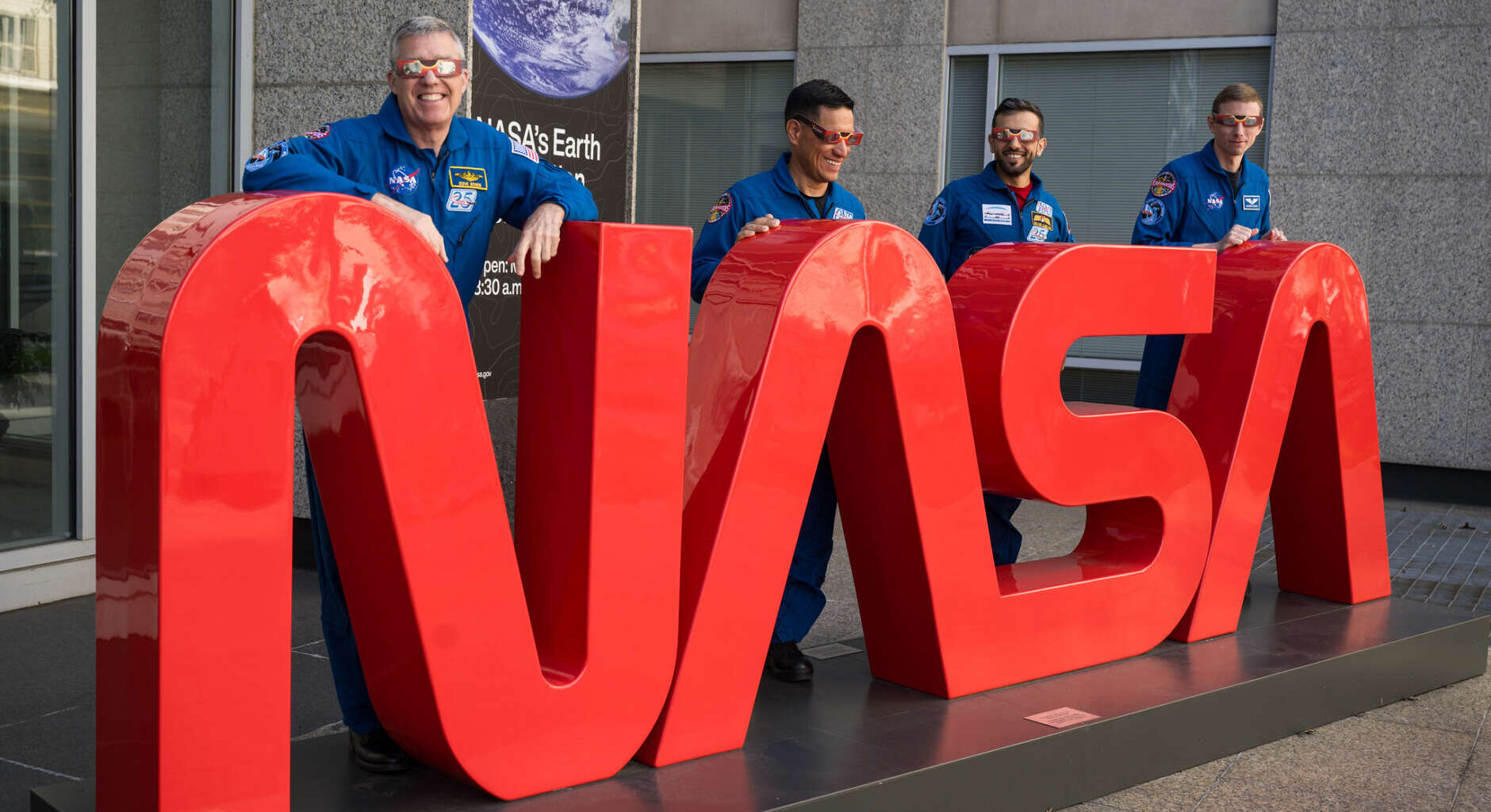
Last month, Sachs Media surveyed 1,000 Florida voters and 500 American adults on the same question: Where should NASA be headquartered?
Both said Florida.
Among those who care where NASA keeps its executives, the results are lopsided. Florida voters choose their own state 82% of the time, with Washington, D.C., at 11%.
Nationally, 40% of Americans choose Florida. Washington, the status quo, draws 22%. Texas, home of the Johnson Space Center and the word “Houston” in every astronaut’s vocabulary, draws 21%. California gets 16%.

Nationally, Florida beats the city NASA currently calls home by nearly 2-to-1. Among Floridians, the margin is better than 7-to-1.
“I fully expected Floridians to pick Florida,” said Karen Cyphers, a partner and Chief Research Officer at Sachs Media. “What surprised me was that when we asked Americans nationally, Florida still came out on top. This wasn’t just state pride showing up in the data.”
This is not a Southeast phenomenon, either. Florida leads in the Northeast (53%), the Southeast (51%) and the Central states (37%, tied with Texas). Only the West Coast prefers California.
Florida leaders are already in orbit on this
“None of this is happening in a vacuum,” Cyphers said. “From Ron DeSantis, Byron Donalds, and Ashley Moody, to Jared Moskowitz and Debbie Wasserman Schultz, Florida leaders are pulling in this same direction.”

Cyphers pointed to the “Florida’s Space Race” initiative Donalds rolled out last month, which pairs the headquarters move with faster permitting and zero-tuition training programs for aerospace jobs. It builds on his House bill to relocate NASA headquarters to Brevard County, co-led by Republican U.S. Rep. Mario Díaz-Balart and Democratic U.S. Reps. Moskowitz and Wasserman Schultz.
That bill is the companion to the CAPE Canaveral Act, which U.S. Sens. Rick Scott and Moody introduced in March 2025. In June 2025, 24 of the delegation’s 30 members, including every Republican, signed a letter to President Donald Trump making the same case. Moody, who has since shepherded a spaceport financing bill into law, said last week she will also file legislation to place the new United States Space Academy on the Space Coast.
“DeSantis was first out of the gate,” Cyphers said. “He made this pitch publicly in early 2025 from Kennedy Space Center, asking why the federal government would spend half a billion dollars on a new Washington headquarters that few employees show up to when the launch pads are already in Brevard County.”
NASA’s Washington lease expires in August 2028. In July, the agency put out a solicitation for a building to lease or buy for its next headquarters, and it limited the search to the District. That gives the decision a clock. It also means Florida is now pitching against a process that has already started.
Floridians are go for launch, and for practical reasons
Choosing Florida cuts across party lines. Among those who care, 97% of Republicans, 73% of Democrats and 71% of nonpartisans pick the state over any other location. Democrats are the only group where Washington reaches 20%.
Floridians were also clear about what they expect to get out of it. The most common reason is the one every state economic development office would name first: bringing additional high-paying jobs to Florida (58%). Close behind are strengthening Florida’s aerospace and space industries (55%), putting NASA leadership closer to major launch operations (51%), and attracting additional businesses and investment to the state (50%). Even the least-cited reason, providing educational opportunities for Florida students, was selected by 44% of voters.
Florida is already becoming the center of the commercial space industry. Space Florida says $531 million in state spaceport investment has helped attract $3.3 billion in private funding, including major investments from Blue Origin, SpaceX, Relativity Space and others. The companies building the rockets have decided where they want to be. Now Florida wants NASA to follow.
The top objections raised by Floridians were the ones you would expect from anyone who has driven Interstate 95 near Melbourne on a launch day: traffic and infrastructure strain (33%) and the cost and disruption of moving (30%). The argument that NASA leadership should stay close to Congress and federal agencies, which is the entire case for the status quo, was selected by 17%.
As for where in Florida, 75% say the Space Coast, and nowhere else breaks 6%.
“When Americans think NASA, they seem to think about where spaceflight actually happens,” Cyphers said. “They think rockets. They think launches. They think Cape Canaveral and Kennedy Space Center. They don’t think of an office building in Washington.”
Sachs Media surveyed 1,000 Florida voters and 500 American adults Aug. 8-10. The Florida sample was drawn from the state voter file and carries a margin of error of plus or minus 3.4 percentage points. The national sample was collected through the Cint panel platform.
___
Ed. note: This story was drafted with assistance from AI. Editorial judgment, sourcing, and final review were performed by Peter Schorsch and the Florida Politics editorial team.