
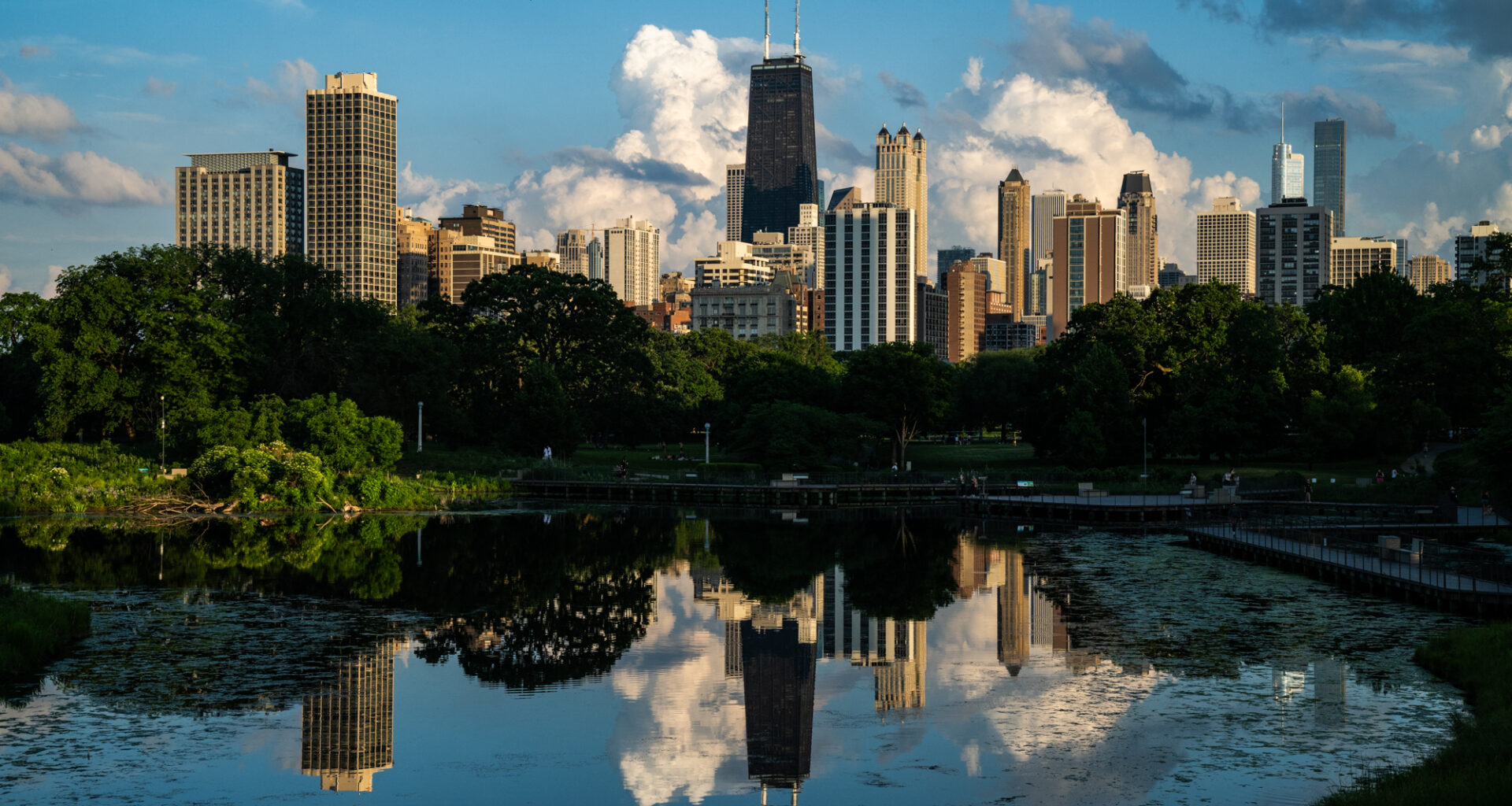
CHICAGO — Chicago faces lower risks from climate change — and is better prepared to handle hostile impacts from changing weather patterns — than any other city, a report assessing the resiliency of the world’s major cities found.
AlphaGeo, a Singapore-based artificial intelligence company that forecasts geographical risks, graded the adaptiveness of 72 of the largest cities around the globe and placed Chicago at the top of the list.
Chicago’s rank as the most “climate resilient” location was guided by the combination of its low physical exposure to a bevy of climate risks — inland flooding, coastal flooding, heat stress, drought, wildfires and hurricane winds — and the city’s high adaptation to those risks, including via infrastructure, early warning systems and policy responses.
“Chicago is the most resilient major city in this analysis, benefiting from low coastal and tropical hazard exposure combined with robust urban infrastructure,” the report found.
Chicago’s geography shields it from some of the most catastrophic natural disasters that affect coastal regions, like hurricanes and rising sea levels, the report noted.
No other U.S. cities made the list of the top 20 most resilient locations. Others in the top five include Addis Ababa, Ethiopia; Melbourne, Australia; Barcelona, Spain; and Ankara, Turkey. Many in the bottom of the rankings were cities in South Asia, the report said, although Phoenix, Ariz. was ranked the 17th least resilient city. Those cities faced the greatest heat exposure and relatively low adaption rates, the authors said.
Karen Weigert, the director of Loyola University Chicago’s Baumhart Center for Social Enterprise and Responsibility, said the report is more a reflection of the potential difficulties other cities will face versus being a positive prediction for Chicago’s future.
“It’s important to think about Chicago as a place where climate impacts will be less bad than they will be in other places,” said Weigert, who was not involved in producing the rankings. “It’s not that this is a good story; it’s more that this is a much less bad story.”
Weigert said officials bolstered Chicago’s disaster response following the 1995 heat wave, which resulted in the deaths of more than 700 people over the course of five days. The city created the Office of Emergency Management and Communications in the months afterward to streamline information exchanged between Chicagoans and emergency services.
Officials also improved the city’s proactive heat preparedness measures, Weigert said, through opening cooling centers, implementing well-being checks for at-risk residents and adopting green infrastructure, like planting more trees, to keep the city cooler overall.
Weigert said city officials have also made significant upgrades to stormwater infrastructure to reduce flooding, the largest being the Deep Tunnel project. Officially known as the Tunnel and Reservoir Plan, the project captures excess stormwater and raw sewage during heavy rains, storing it temporarily in deep underground tunnels and massive reservoirs before pumping it back up for proper treatment to reduce basement and street flooding.
In early July, the Deep Tunnel was nearly full for the first time after heavy rain and storms pummeled the city — showing that more needed to be done to address flooding concerns. The city is piloting an expanded rainwater storage system to fight flooding on the West Side in response.
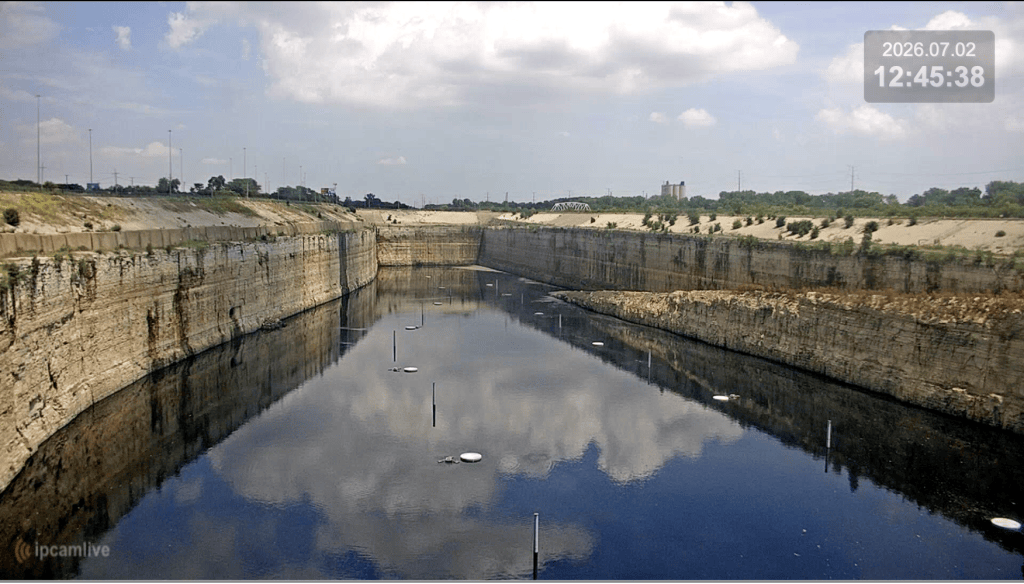 The McCook Reservoir as seen at 12:42 p.m. on July 2, 2026. Credit: Provided by the Metropolitan Water Reclamation District of Greater Chicago
The city has also adopted green infrastructure projects to mitigate flooding by keeping rainwater out of the sewer system through permeable surfaces, Weigert said. For example, city workers have been building “green alleys” for years, which act like a sponge and a runway for rainwater, letting some water seep into the ground while the rest gathers into a grooved channel and streams into a manhole that connects to local sewers.
Still, Chicagoans face climate events that city infrastructure doesn’t fully address, Weigert said.
Climate change means rainfall in the city is increasingly coming in intense bursts, and Chicago’s flat, heavily paved landscape means rainwater often ends up in residents’ basements. There are also urban heat islands in the city, particularly on the South and West sides, where residents experience higher temperatures during heatwaves because there are more paved surfaces that absorb heat.
The report noted that the city scores were averages and different neighborhoods could have different risk levels.
Lots of folks with flooded basements would beg to differ
— Michael McLean (@cornoisseur) September 7, 2026
The city and its residents should also prioritize reducing carbon emissions including by transitioning to renewable energy to reduce the impacts of climate change, she added.
“Chicago has done a very good job, and I think there’s a lot more that Chicago needs to do,” Weigert said. “We’re lucky to be here, but the climate is only getting more volatile. There’s more that we’ll all need to do to make sure that all of our residents are safe in times of challenge when we have these weather events.”
______________________________________________________________________
Support Local News!
Subscribe to Block Club Chicago, an independent, 501(c)(3), journalist-run newsroom. Every dime we make funds reporting from Chicago’s neighborhoods. Already subscribe? Click here to gift a subscription, or you can support Block Club with a tax-deductible donation.
Listen to the Block Club Chicago podcast: