

UWM going out of this world with Panther Pride
A gold, sun-like star orbiting a black hole is now named UWM Star
 MILWAUKEE —
Panthers far and wide will be searching the sky for the newly recognized UWM Star, also known as Gaia Black Hole 1 (Gaia BH1). Heads up, Panthers: the star cannot be seen with the naked eye; a telescope is needed, as the system is about 1,560 light-years away from Earth. That is over 9 quadrillion miles! Although that sounds far off, celestially speaking, it is actually the closest black hole to Earth.
The UWM Star is composed of a gold star, located in the constellation Ophiuchus, which orbits a black hole. The black and gold colors were the perfect fit for showing off Panther Pride.
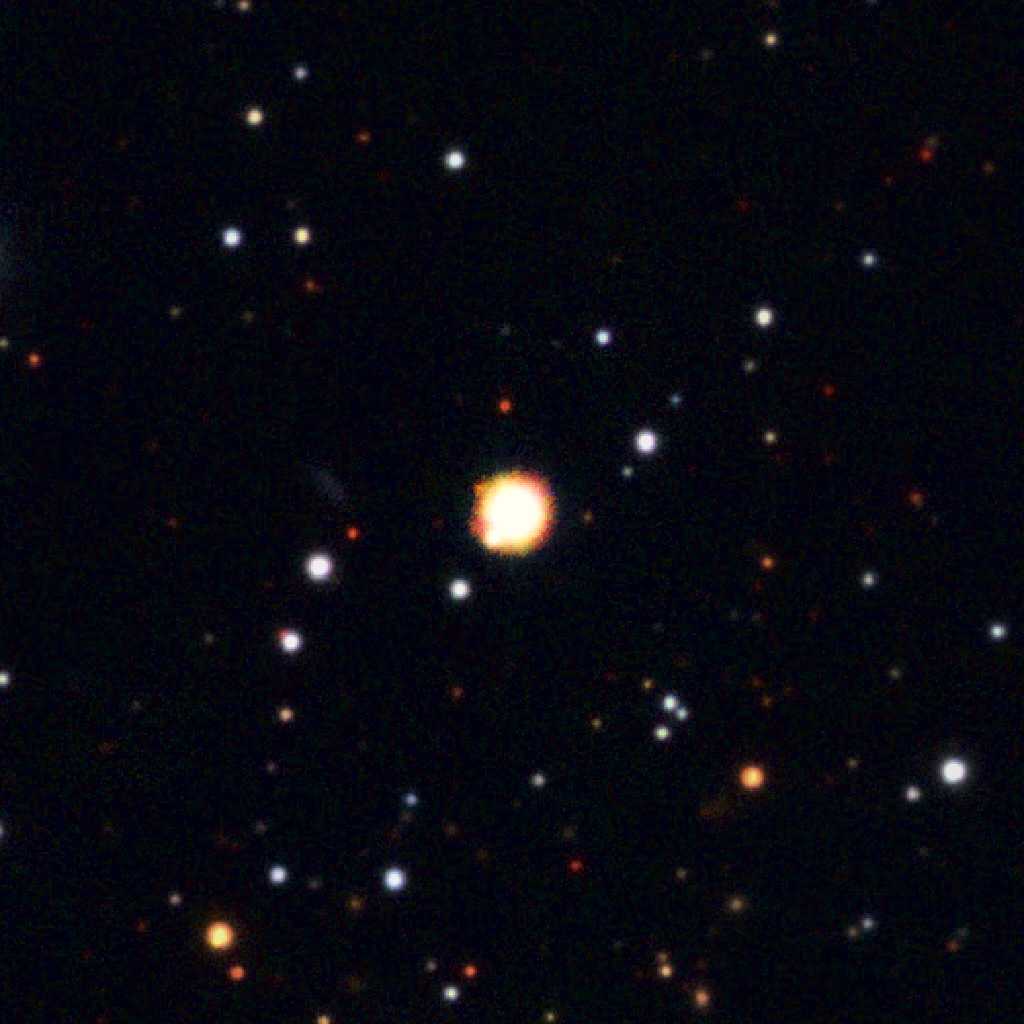
“The gold star is very similar to our sun in terms of its size, its mass, its color. But it has a companion that is a black hole, so they’re orbiting each other, and the only reason we can tell the black hole is there is by looking at very small movements of the gold star,” said astronomy and physics professor Dawn Erb.
The UWM Astronomy Club felt that the school should have an official star to represent the school and highlight black hole research being done at the University. UWM professor of physics and astronomy Phillip Chang was part of an independent research team that identified the binary system.
A proclamation will be read during a public astronomy talk Thursday, Sept. 10, at 7 p.m. UWM Chancellor Thomas Gibson will sign the proclamation at the Lubar Entrepreneurship Center.
More information on Thursday’s astronomy talk can be found here: https://uwm.edu/letters-science/event/the-galactic-underworld-finding-invisible-black-holes/