
9/11 transformed airport security, now Trump wants to privatize TSA
The Trump administration wants to expand the privatization of passenger screenings, but critics warn that it could lead to inconsistent security
 WASHINGTON —
Twenty-five years ago, the deadliest terrorist attack on American soil prompted the federal government to take charge of airport security. Now, the future of the Transportation Security Administration (TSA) is in flux as the Trump administration aims to expand the privatization of passenger screeners.
Airport security overhaul
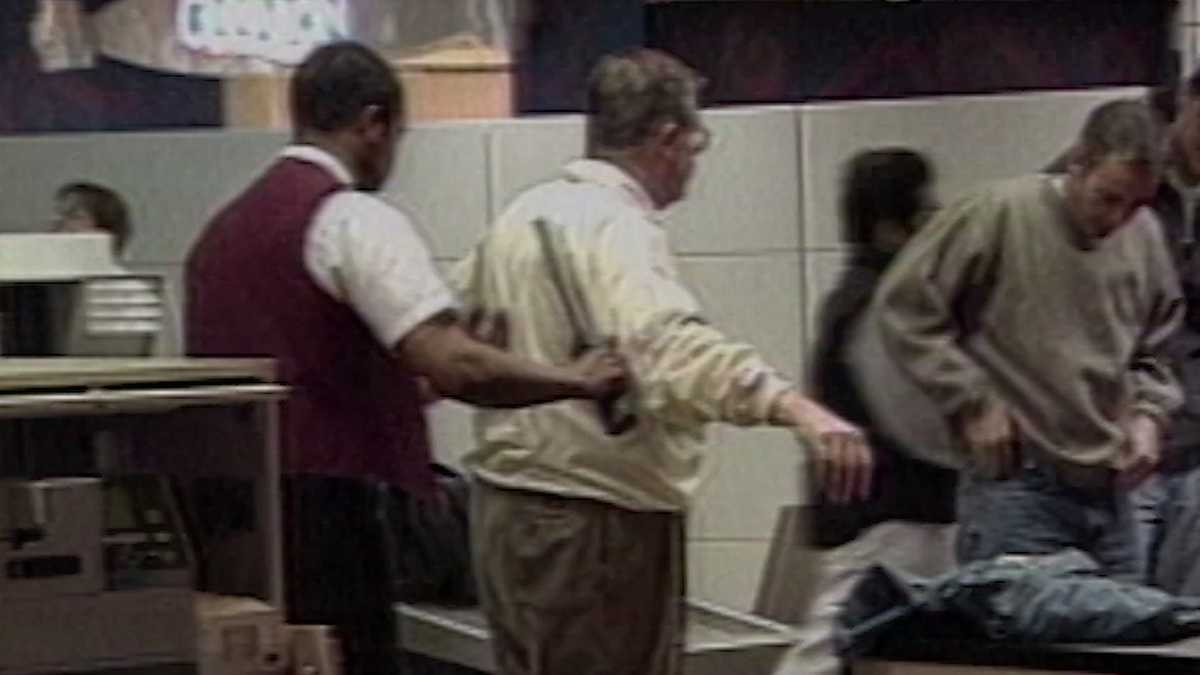
Getting on a flight used to take just a few minutes. There were simple metal detectors, and you could walk straight up to your gate without an identification check. Screening was done by private contractors that were generally hired by airlines.
That all changed after four commercial planes were hijacked on September 11th, 2001, killing thousands of people.
Roughly two months later, former President George W. Bush signed a law creating the TSA, which was tested for the first time at Baltimore/Washington International Thurgood Marshall Airport.
“We were chosen by the federal government to serve as the training ground to really look at how the system would work, at the type of equipment, what the bins would look like, how the lines would be formed, who would actually be doing the screening,” said Shannetta Griffin, executive director and CEO of the Maryland Aviation Administration.
Federal standards have evolved over time. Some of the first TSA regulations banned potential weapons, like box cutters, from carry-on luggage. Shoe removal requirements and liquid restrictions were put in place years later in response to a changing threat environment.
“The next big innovation is an even less intrusive screening process,” said Jeffrey Price, an aviation security expert and professor at Metropolitan State University of Denver. “Eventually, a completely touchless screening. You don’t even have to put your bag on a belt. You just walk through a corridor.”
Ahead of the TSA’s 25th anniversary, President Donald Trump’s new TSA Administrator, David Cummins, detailed his vision for the next 25 years. The administration’s priorities include modernizing checkpoints, enhancing TSA PreCheck and expanding the private sector’s role “in delivering a safer, more secure, and more efficient aviation system.”
Privatization plans
Since taking the helm at TSA, Cummins cancelled one emerging privatization effort and announced that the agency would instead focus on an “evolved” Screening Partnership Program (SPP).
TSA didn’t agree to an interview or respond to specific emailed questions about the change of plans. It’s not clear how the SPP may evolve, or when those changes could be implemented.
So far, 20 airports have voluntarily enrolled in SPP, which employs private contractors who are still subject to federal oversight. Trump’s fiscal year 2027 budget proposal to Congress calls for requiring small airports to enroll.
“The move would yield cost savings compared to Federal screening and begin reform of a troubled Federal agency,” the budget request adds.
Price said privatized models are used in some other countries, but there are valid questions about whether a similar concept could be scaled up effectively in the United States.
Critics warn the Trump administration’s plan could lead to inconsistent security from airport to airport.
Mac Johnson, a chapter president for the union representing TSA employees, was inspired to join the agency after 9/11. He’s concerned that returning to a privatized model would jeopardize progress on passenger safety.
“It would be a complete setback,” Johnson said. “That’s my biggest fear.”
Cummins has argued that private contractors would face fewer risks of paycheck disruptions from government shutdowns that have hit TSA hard and led to long lines at some airports, though there are other ways that Congress could protect aviation employees from future funding lapses.
Asked if BWI is evaluating privatization as a possible solution to avoid shutdown-related disruptions, Griffin said they’re still evaluating their options.
“We are going to take a look and see what other airports are doing as well,” Griffin said.