
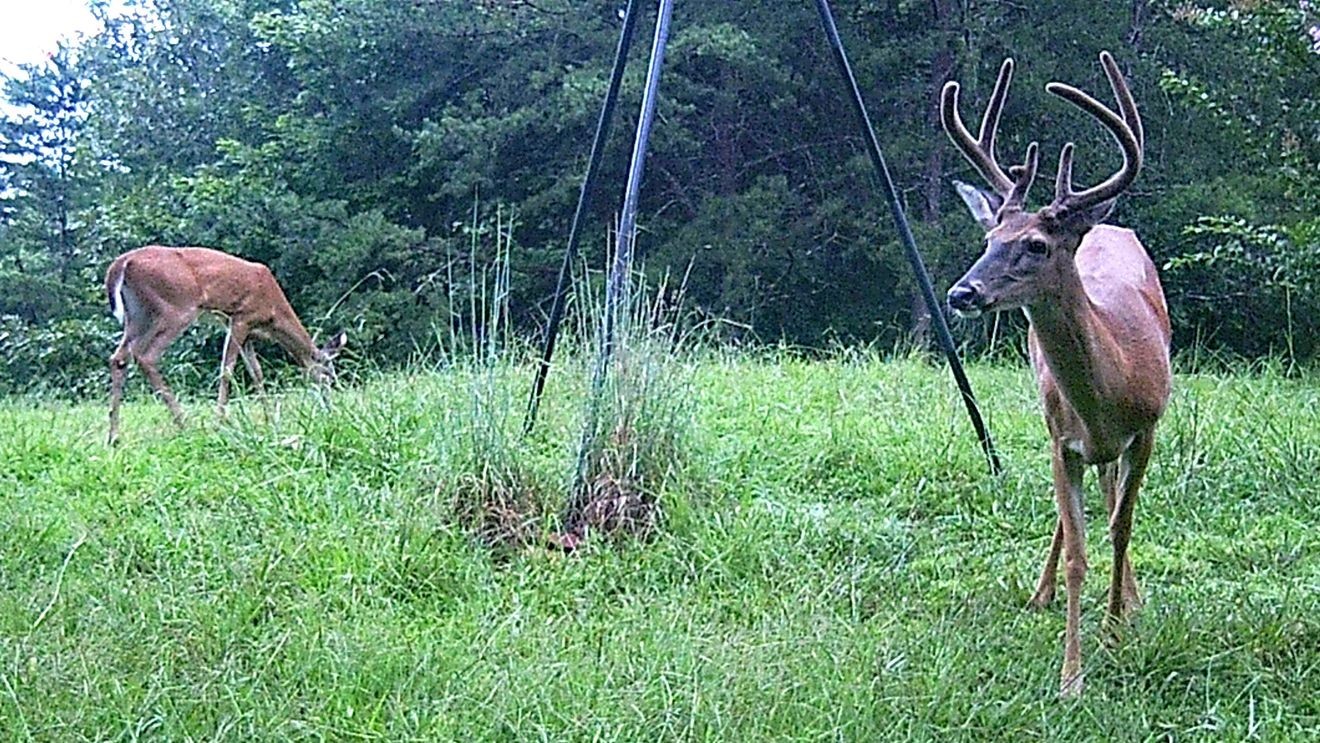
Tennessee’s first year of legalized deer baiting is off to an interesting start. In a recent interview, TWRA Wildlife & Forestry Chief Joe Benedict said as of Sept. 8, approximately 5,400 Deer Bait Privilege Licenses have been sold. Benedict says there is little doubt that number will continue to grow as regular deer hunting season kicks off on Sept. 26 with the opening of archery-only season.
The new “Bait Privilege” license – which allows hunters to use bait while deer hunting on private land – was created by Tennessee legislators after TWRA biologists had argued for years against allowing deer baiting in Tennessee. The license costs $50 for Tennessee residents and $100 for nonresidents.
RESULTS SO FAR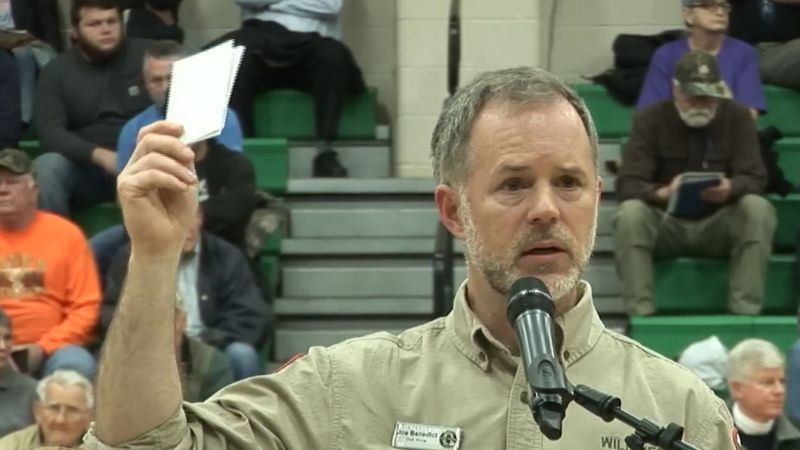
TWRA Wildlife & Forestry Chief Joe Benedict addresses a crowd during a public meeting regarding chrinic wasting disease (CWD). Deer baiting will still be illegal in Tennessee’s declared CWD zones. Biologists say congregating deer around bait sites will hasten the potential spread of CWD. (TWRA Photo)
Benedict said he believes legalized baiting might have played a part in the increased harvest of bucks during the 3-day August “velvet” season.
“The (harvest) number went from about 1,200 deer bucks in 2025 during the velvet hunt to more than 1,500 this year,” he said.
With a 25 percent increase in the August harvest, Benedict said, “My suspicion, as a guy that’s been hunting all my life, baiting probably is a factor. There’s bachelor groups (of deer) out there now. If hunters could get deer to move a little bit closer to their tree stand, and they had a good setup, that probably did have an impact on the harvest.”
However, he cautioned against assuming the higher velvet-season harvest necessarily means Tennessee will experience a corresponding increase in the overall number of bucks harvested for the season. He said it might just affect the timing of the kills.
“People still shoot one or two bucks a year, right,” he said. “They may be killing bucks earlier with bait, but it doesn’t mean they’ll kill more. So it may not it matter to the overall population at all.”
RESTRICTIONS ON BAITING FOR DEER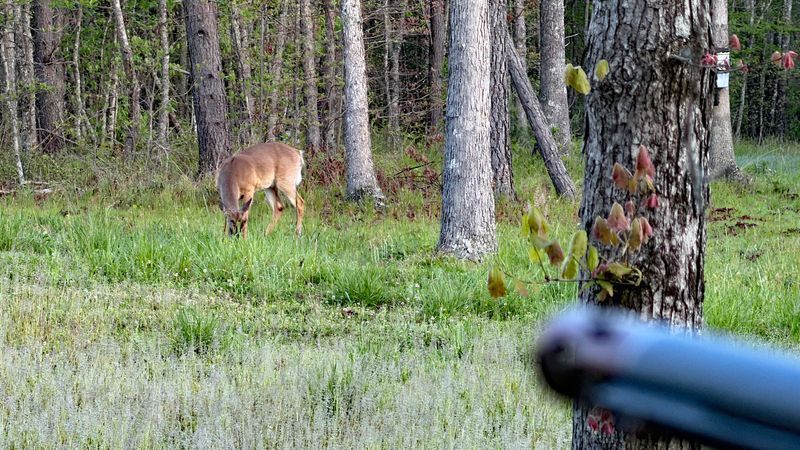
Research has found that bait can influence where deer spend their time and how they use their home ranges. Some previous studies have documented deer shifting core areas toward bait sites. (Photo: Richard Simms)
The new baiting privilege is not available everywhere in Tennessee. Baiting is still prohibited on public lands, in the state’s CWD Management Zone and in counties designated as CWD-positive. The current regulations also establish limits on the number and spacing of bait sites, the amount of bait that can be available and the types of bait that may be used.
FUTURE IMPACT
Benedict said TWRA is not currently alarmed about the potential effects of hunters using bait. He pointed specifically to portions of West and Middle Tennessee where deer densities are already high.
“We’ve got areas of the state with 50 or 60 deer per square mile in West and parts of Middle Tennessee,” he said. “That’s way too many deer. So I’m not concerned yet. We have plenty of deer in the state. So even if people are killing more deer than normal with bait, as long as they’re staying within the legal bag limit, it’s okay.”CHANGING DEER BEHAVIOR?
Benedict points out that baiting can change deer behavior and hunting strategies in ways that could affect harvest patterns.
“There are research projects that show bucks become nocturnal, animals become patterned,” he said. “People are more selective because they have a buck on camera. And they go to the same place looking for that same deer. And some deer pattern people at their stands by their feeders. So there’s all sorts of different variables that go into this.”
CHANGING HUNTER BEHAVIOR?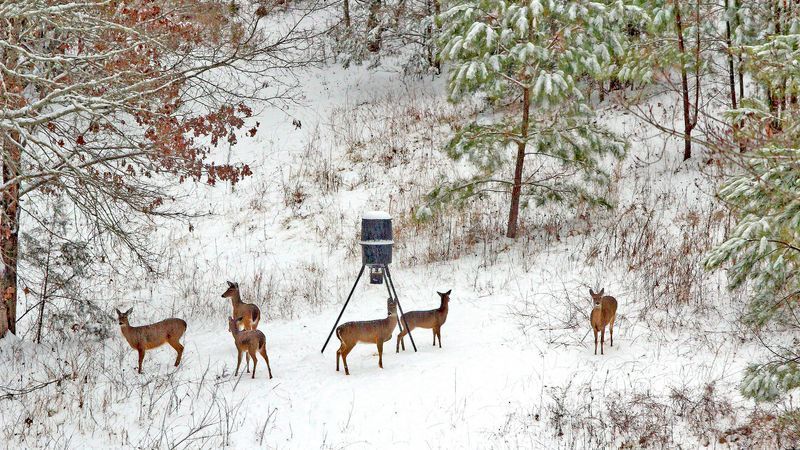
TWRA officials say many hunters consider baiting unethical and will not buy the new bait privilege license. They say, however, if neighbors are baiting and they begin seeing fewer deer on their property, in the future they may feel forced to start using bait. (Photo: Richard Simms)
Benedict also offered an interesting prediction about how Tennessee’s baiting culture could evolve. He said some hunters who currently oppose baiting on ethical grounds may initially choose not to purchase a permit. But that could change if they believe neighboring hunters who do use bait seem to be gaining an advantage.
He said, “There will be people that don’t buy baiting permits for their hunting club or their property, but at some point, two or three years from now, if they’re seeing fewer deer, and they know their neighbors are baiting, they might say, ‘Look, in order for me to have the same probability of killing deer, they may decide then to bait. We might see an initial surge of baiting permits, and then we may see another little bump.
Benedict emphasized that was not a prediction, but rather a possible scenario as hunters gain experience with the new law.
For now, Benedict said he expects (baiting) participation to grow.
“We’ll have a lot of people buy baiting licenses this year. I’m sure,” he concluded.
READ MORE: TWRA answers other questions about baiting.