
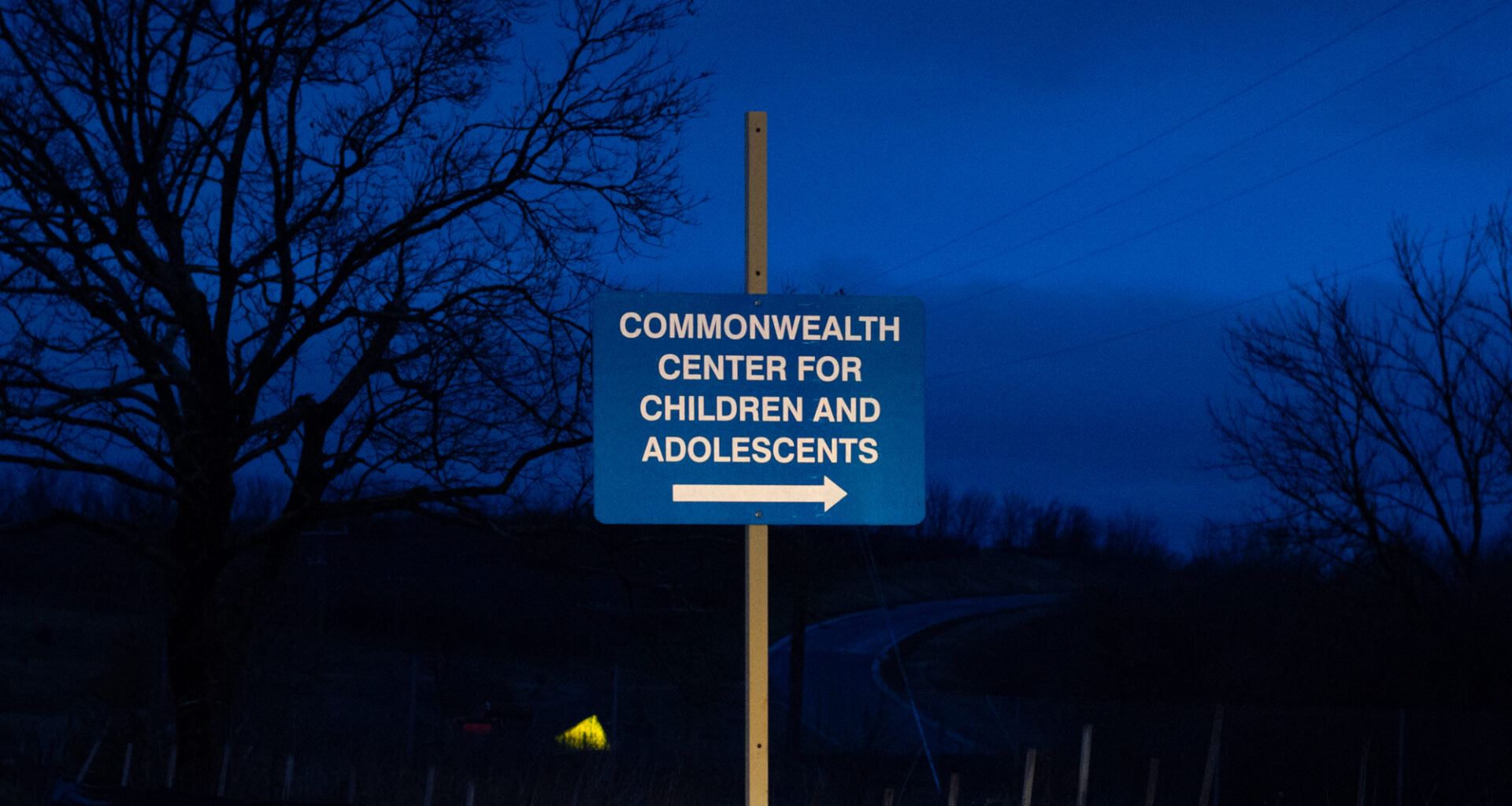
In 2023, the Virginia General Assembly’s research and oversight arm urged officials to close the only state-run psychiatric hospital for children, due to patient safety concerns and other issues at the 48-bed facility.
Three years later, the Commonwealth Center for Children and Adolescents in Staunton is still open and the Joint Legislative Audit and Review Commission’s recommendation to shut it down hasn’t changed.
JLARC staff issued a report in December 2023 on public psychiatric hospitals that called on the state’s Department of Behavioral Health and Developmental Services to plan CCCA’s closure and to find alternatives for the patients it serves.
“While some time has passed since the JLARC study, we don’t have reason to believe that conditions have improved significantly, if at all,” JLARC director Hal Greer told commission members on Tuesday.
“In fact, we continued to get phone calls from staff at the facility after the completion of our study, who shared serious concerns about safety and treatment,” Greer said.
State Sen. Creigh Deeds (D–Charlottesville), a JLARC member, told Greer that former Gov. Glenn Youngkin’s administration prepared a plan to close the facility but it didn’t move forward.
Deeds said it was “a very tough issue” for state officials, and encouraged Gov. Abigail Spanberger’s administration to spend time to consider the implications for patients if Virginia eyes a path to shut down the center. But, he said, there’s no question it has problems.
“That hospital primarily treats foster kids, teenage foster kids. I haven’t been in the hospital for a year, but the last time I was there, it was the most dangerous psychiatric hospital we have,” Deeds said during Tuesday’s JLARC meeting.
In a text message after Tuesday’s JLARC meeting, Deeds told VPM News that there are no plans to close the hospital.
A spokesperson for Virginia’s Department of Behavioral Health and Developmental Services, which oversees the hospital, also said in a Wednesday statement that the department “is not currently pursuing closure.”
“Our work on Virginia’s children’s behavioral health system following the report has reinforced how important CCCA remains to the current ecosystem,” department spokesperson Lauren Cunningham said in an email. “Virginia still has significant gaps in inpatient, residential, crisis and other specialized services for children with complex behavioral health needs.”
Compared to other state psychiatric facilities examined in JLARC’s 2023 study, Greer said on Tuesday that “CCCA stood out as the worst or among the worst performance performers” in many ways.
Greer noted during the meeting that, at the time of the study, the hospital had the highest rate of physical safety incidents between patients and between patients and staff.
He added that the psychiatric hospital for children also had “the highest rate of patient self-harm, the highest number and percentage of substantial human rights complaints, the highest use of physical restraint against patients, the highest staff turnover, nearly the highest staff vacancy rate, and the greatest dependence on expensive contract staff.”
JLARC’s report says the hospital received 28 citations during an unannounced inspection by the Joint Commission, a national healthcare accrediting body, and “was determined to be an immediate threat to the health and safety of patients, according to DBHDS.”
In its Wednesday statement, the department said it has worked to improve the hospital’s safety and operations, including installing cameras and fencing around the perimeter.
According to the department, the hospital’s use of seclusion and restraints decreased by 58% from fiscal year 2025 to fiscal year 2026. In that time, DBHDS said that there was a “34% reduction in workers compensation injuries” at the facility.
“DBHDS believes people should receive care in the setting best equipped to meet their needs, and state hospitals should not be the default when more appropriate care is available,” the department said.
Tuesday’s meeting covered other recommendations from JLARC’s 2023 report that haven’t been implemented, including one to allow state psychiatric hospitals to deny admissions if the new patient would put a facility above 85% of their staffed capacity.
Per JLARC’s report, industry standards are that psychiatric hospitals shouldn’t generally operate at more than 85% of their staffed bed capacity but, at the time, all of Virginia’s exceeded that level.
Deeds said denying admissions “would essentially repeal the bed of last resort,” referencing the 2014 state law that requires state psychiatric facilities to accept patients under a temporary detention order if no private hospital is available.
Deeds carried the legislation after the state couldn’t find an available bed for his son, Austin “Gus” Deeds, who he had placed under an emergency court order amid a mental health episode. Gus had to return home, where he later attacked Deeds before fatally shooting himself. In a 60 Minutes interview, Deeds said the system failed his son.
Greer said there is plenty of capacity at private hospitals. As a result, JLARC recommended that officials fund incentives for state-licensed private facilities to increase their involuntary inpatient admissions.