
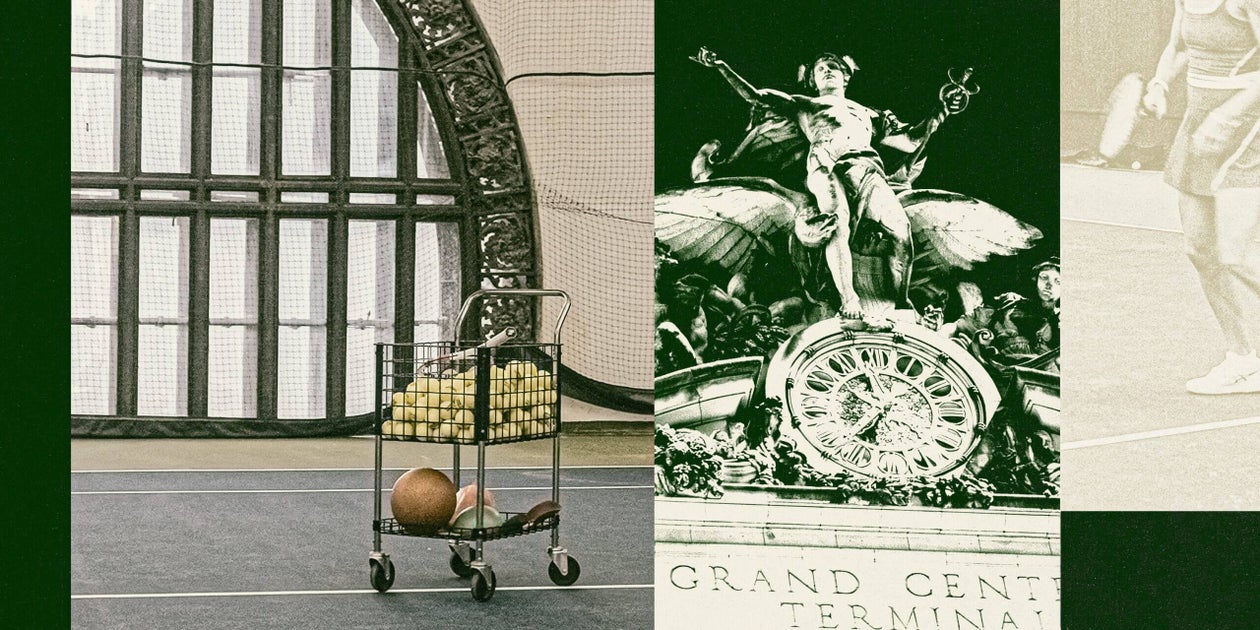
The Athletic has live coverage of Aryna Sabalenka vs. Elena Rybakina in the 2026 U.S. Open women’s final.
NEW YORK — For hundreds of thousands of people a day, Grand Central Terminal is a stop on the way to and from work, or the start of a first visit to the big city.
For those in the know, it’s also a tennis club.
Through a bar on the ground floor and up a set of elevators, four floors above the rumble of trains and hidden behind one of the station’s iconic arched windows, sits a single court.
Open from 6 a.m. to 2 a.m., Vanderbilt Tennis Club features one full-sized court and two practice courts. Hourly rates on the full court start at $100 and go up to more than $400 depending on the time of day. With indoor space scarce in Manhattan and a slew of fall classes starting next week, the club is booked straight through December.
Last Friday, the court was busy. Its patrons offered a snapshot of New York: commuters, tourists, retirees and kids all came through to play.
On the tracks below, tennis fans boarded trains heading to Queens to see the world’s best at the U.S. Open.
Four stories above, they worked on perfecting their serve.
Come inside Grand Central’s hidden tennis court
Rebecca Tauber
Grand Central was calm when the club’s first players took the court for the day at 7 a.m. The Terminal’s historic Oyster Bar wouldn’t open for another four hours; early commuters were just starting to trickle in. On the starry ceiling, the red heart shaped balloon stuck there since February floated alone.
On the fourth floor, Metropolitan Transportation Authority employees clocked in to work. Down the hall, Charlotte and Brian, two colleagues who declined to give their last names to protect their privacy, were there for tennis.
“I think it is one of the coolest New York things there is,” said Brian, who had tickets to the U.S. Open that night. Charlotte planned to go for the quarterfinals.
After Charlotte, in Brian’s words, “beat the hell” out of him, another pair of colleagues took the court on the way to their office, a financial firm just a few blocks away on Park Avenue.
“I feel like when people said it’s above Grand Central, I thought that was just like, ‘Oh, it’s near Grand Central,’” said Kurt, who also declined to give his last name, before taking the court for the first time. “I didn’t realize it’s literally above Grand Central.”
By 10 a.m., the retired crowd came in. Arthur Zabarkus has played at the court for 30 years, including pre-renovations, when it featured two courts one floor below. He first started coming to the courts to avoid going out to dinner — and having to pick up the tab — with a friend who was a heavy drinker.
“Every time he invited me, I said, ‘No, I’m learning to play tennis,’” Zabarkus said.
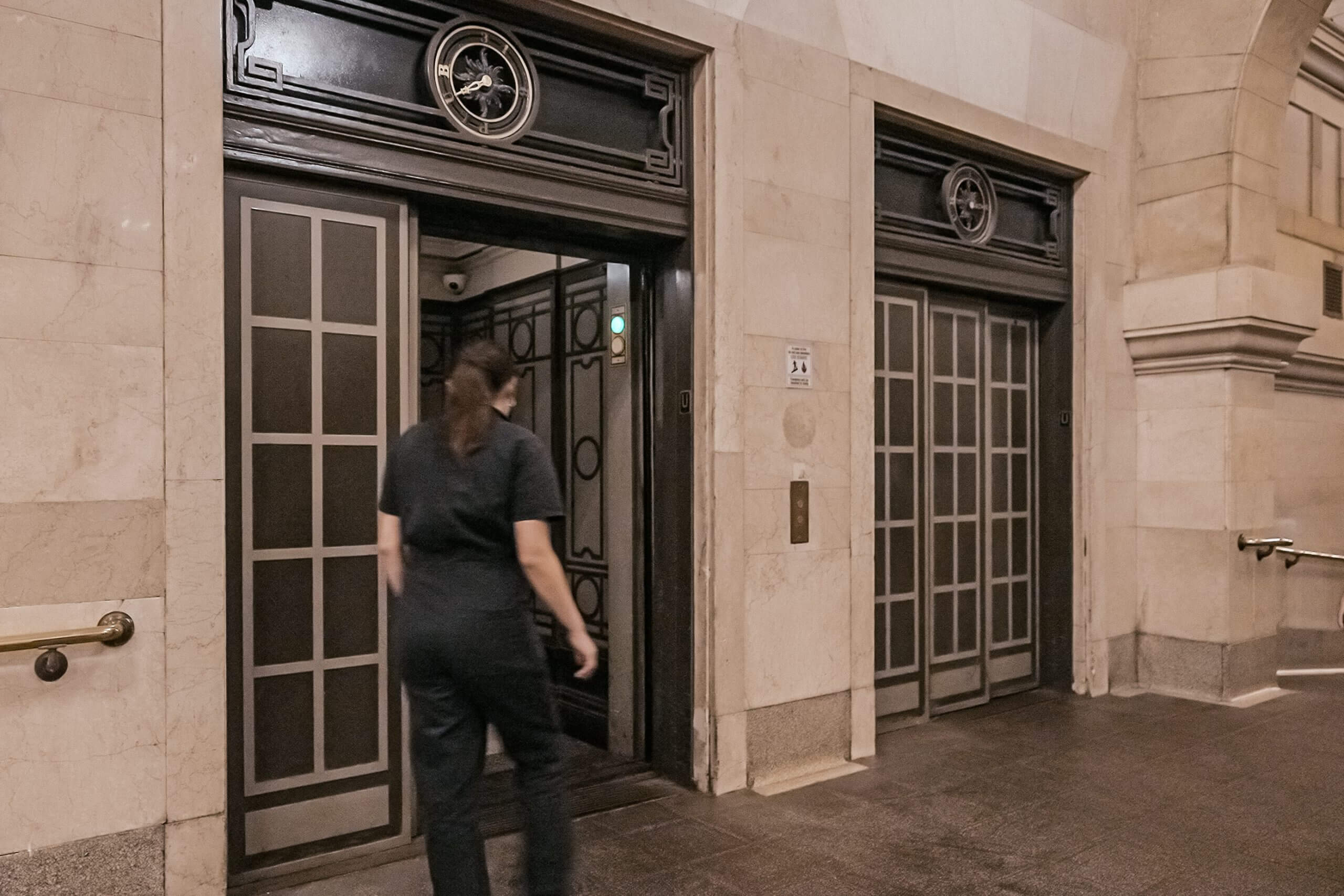
One of the sets of elevators that leads up to the hidden tennis court, four floors above the train tracks. (Johnny Sweet / The Athletic)
Pros have played on the court over the years; last week, Austria’s Lilli Tagger hit there while rain disrupted the first few days of play at Flushing Meadows. In 1967, the New York Times wrote about a tournament hosted on an early iteration of the courts co-chaired by baseball great Hank Greenberg.
Built in 1913, the historic train station has featured at least one court since the 1960s. Its original space on the third floor began as an art gallery and turned into CBS broadcast studios from the 1930s to the 1960s. Then, an athletic club moved in, fitted with a 65-foot astroturf ski slope and two tennis courts. Now-President Donald Trump operated the courts from the 1980s through 2009, when renovations sent them up to the fourth floor. The Vanderbilt Club took over in 2011.
Dadi Zvulun, who has run the court since that year, has a standing Wednesday dinner with Zabarkus and his wife. A jazz pianist who grew up playing tennis in Jerusalem, Zvulun came to the U.S. with his band in 2001 and stayed. He found his job at one of the club’s sister courts on the Yellow Pages.
“I just stumbled upon the tennis page and all of a sudden it hit me that people play tennis on this concrete island,” he said.
“I just showed up with Timberland boots, ripped PJ pants, like a bum. I had nothing. I didn’t have a resume, I didn’t have any tennis gear, I had nothing on me, literally. And I just walked in there and they’re looking at me like, ‘Who are you?’”
But Zvulun could play, and he got the job. When the club took over operations at the Grand Central court, Zvulun applied to run the place, and has been there ever since.
“It never ceased to amaze me,” he said. “It feels special on a daily basis.”
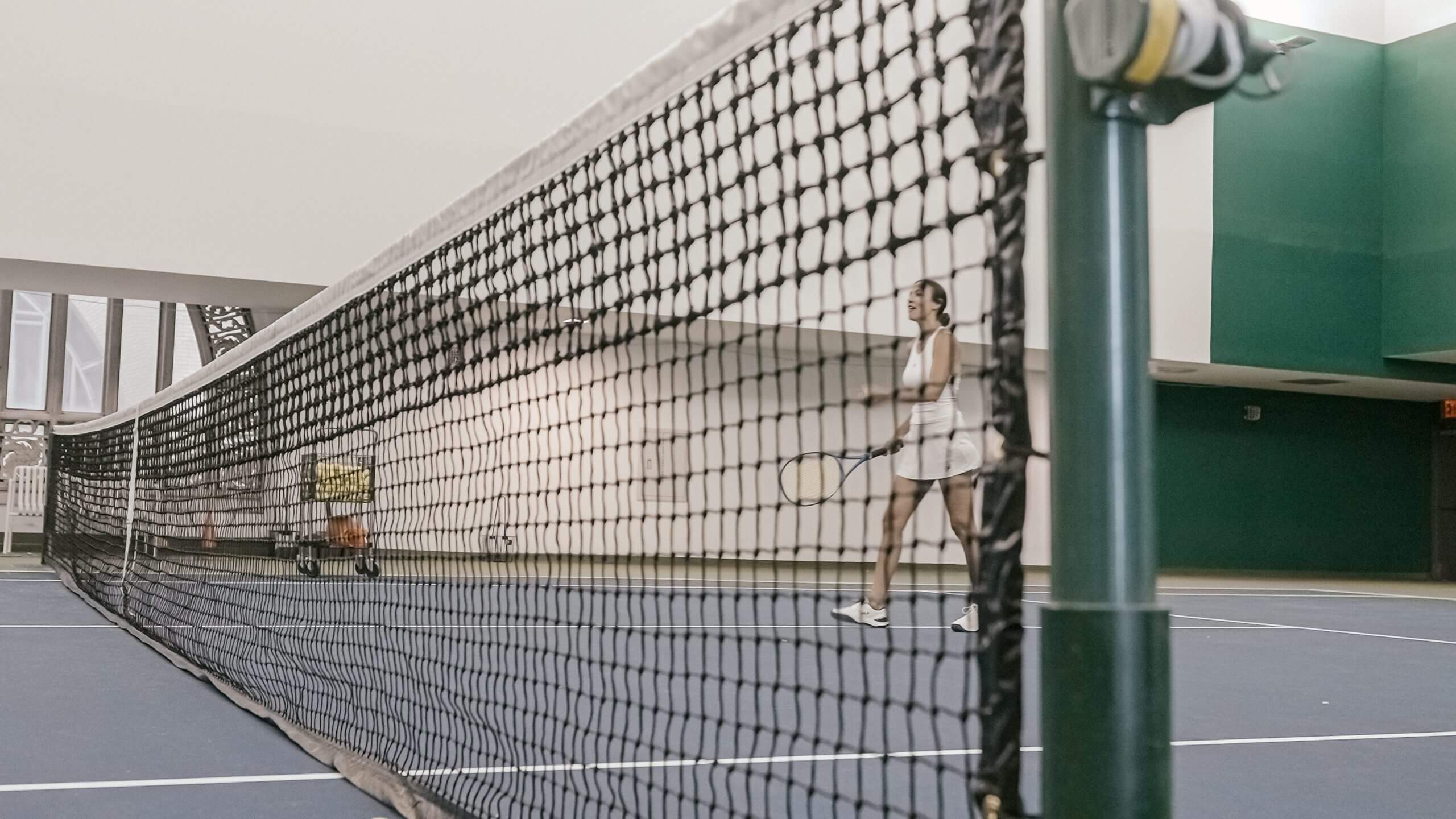
The court has one of Grand Central Terminal’s famous windows on one side. (Johnny Sweet / The Athletic)
Zvulun has occasionally hit with professional athletes who have come through, like Mats Wilander, the seven-time Grand Slam champion. Once, someone proposed on the court. Zvulun has known the regulars for decades.
“It’s a community,” he said.
After taking a good-natured beating from Zabarkus for missing Wednesday dinner, Zvulun headed to the court to teach lessons. By noon, the small entryway swarmed with people coming and going. At one point, a fire alarm went off.
“Every day is like this here,” Zvulun said. “It’s completely chaotic.”
In the afternoon, a group of about a dozen tourists arrived in a chorus of “Wows” for a lesson. They were part of Rose Gold Rally Trips, which runs group tours to the four Grand Slams, in which participants watch professional tennis and play on courts throughout the city. Freshly arrived in New York from all across the U.S., Grand Central was their first stop.
“There’s something magical about it,” said Rose Gold co-founder Leeanne Seely, who was visiting New York from Dallas.
The group spent an hour hitting before heading back to their hotel to get ready for Friday night at the U.S. Open.
“New York in general, I had low expectations,” said Remy Fellman, a tourist on the trip also from Dallas. “It’s exceeded. Never been to Grand Central Station. That was very cool. And I had no idea there was a tennis facility within this place.”
By the evening, Grand Central filled up with commuters traveling home from work and tennis fans on their way back from Flushing Meadows. A floor below the concourse, a second set of elevators leads up to the Vanderbilt Club. Down the hall is the Oyster Bar, the Grand Central fixture since the terminal opened.
Alfonso Chavarria has worked as a host at the restaurant for 15 years. Chavarria plays tennis himself, but never at the Grand Central court — he doesn’t like to come into work on his days off. Chavarria said the restaurant gets busier the first two weeks of September.
“Our regulars are regulars at the U.S. Open,” he said.
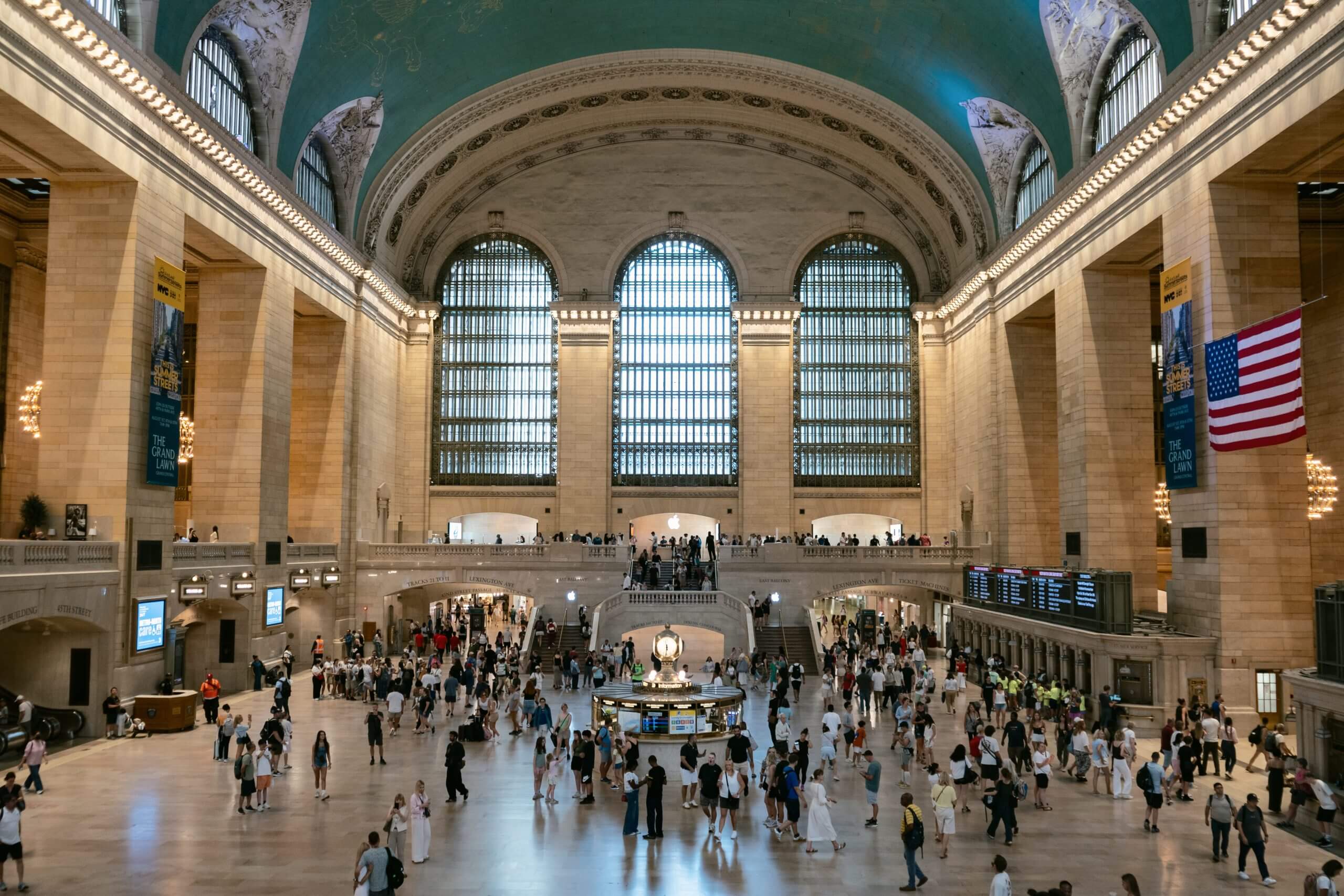
The Beaux-Arts main concourse at Grand Central Terminal is one of the most iconic settings in New York City. (Johnny Sweet / The Athletic)
Around 9 p.m., Leena Banchong exited the Long Island Rail Road coming from the U.S. Open and took the elevator up to the Vanderbilt Club to coach lessons. A former DII tennis player, Banchong has a U.S. Open guest credential through Swiss player Viktorija Golubic.
“At first, I wanted to play, and I came up here and I realized how much they cost per hour, so then I’m like, ‘Oh s–t, let me coach here,” she said.
Banchong finished up coaching as the late-night crowd took the courts. As midnight approached, Penny, who declined to give her last name, and her husband wrapped up their session. They often play at Flushing Meadows, but the courts are a little busy this time of year. Young professionals, they bought the late-night package at the Vanderbilt Club because it costs $300 less than peak hours.
“It’s so vintage. You can see around the court, you even see the street,” Penny said. “It’s really New York. I really love it.”
As the early hours of Saturday morning approached, foot traffic slowed in Grand Central. Across the East River, bartenders poured their last honey deuces of the night, as Ben Shelton closed out Arthur Ashe Stadium with a win over Denis Shapovalov. Inside the Terminal, the Oyster Bar had long emptied out, and rail service had slowed to a trickle.
Just a few hours later, it would all start up again: The rumble of the trains, the chatter of passengers and the thump of tennis balls on the court above.