
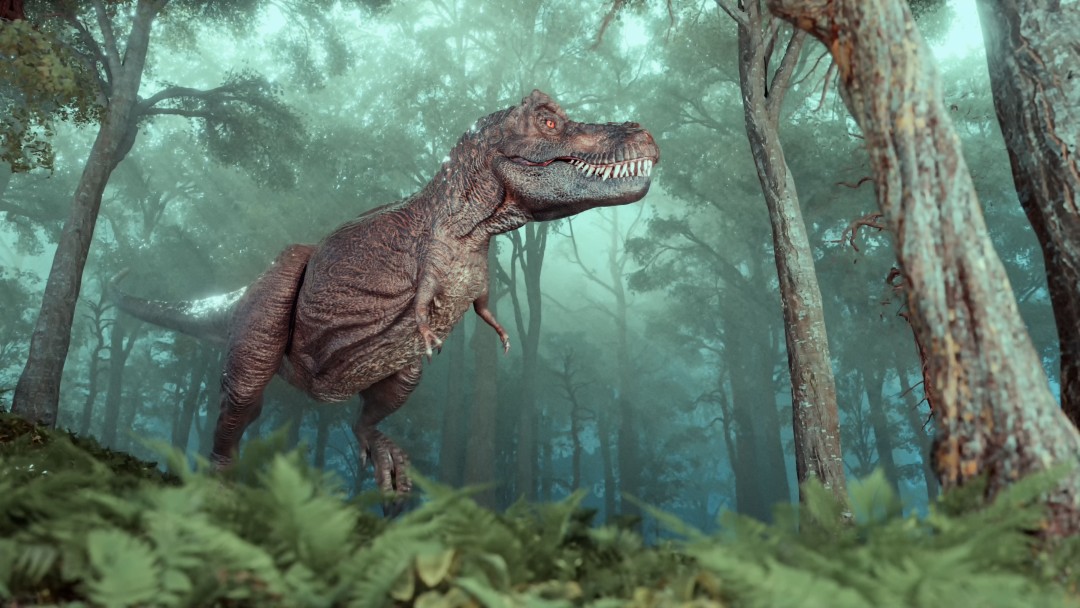
The most pristine dinosaur-era bird feather on record has turned up in an unglamorous place: a 66-million-year-old hunk of fossilized dinosaur droppings. Paleontologist David DeMar spotted the cherry-size coprolite in Montana’s Hell Creek Formation in 2016 and noticed a tiny branching structure embedded in a crack, reports NPR. “You got to be kidding me,” he recalls thinking as he examined the object. CT scans later revealed more feathers, bone fragments, and fish scales packed inside. Described in Current Biology, the find likely captures a food chain in a single “Cretaceous turducken”: A large carnivorous dinosaur such as a T. rex had devoured an aquatic, loon-like bird that had just eaten fish.
The feather’s structure, however, may carry a darker message. Lead researcher Jingmai O’Connor argues that this now-extinct bird lineage may have had less insulating plumage than the luckier ancestors of today’s birds, potentially leaving it more vulnerable when the asteroid impact triggered global cooling. Some scientists call that a speculative leap, but they agree on one thing: Dinosaur scat could be an unexpected new archive for delicate tissues like feathers and fur, and for clues to why some species make it through extinction events and others don’t. “It made me feel like a detective, piecing together all these little clues,” O’Connor says, per Phys.org.