
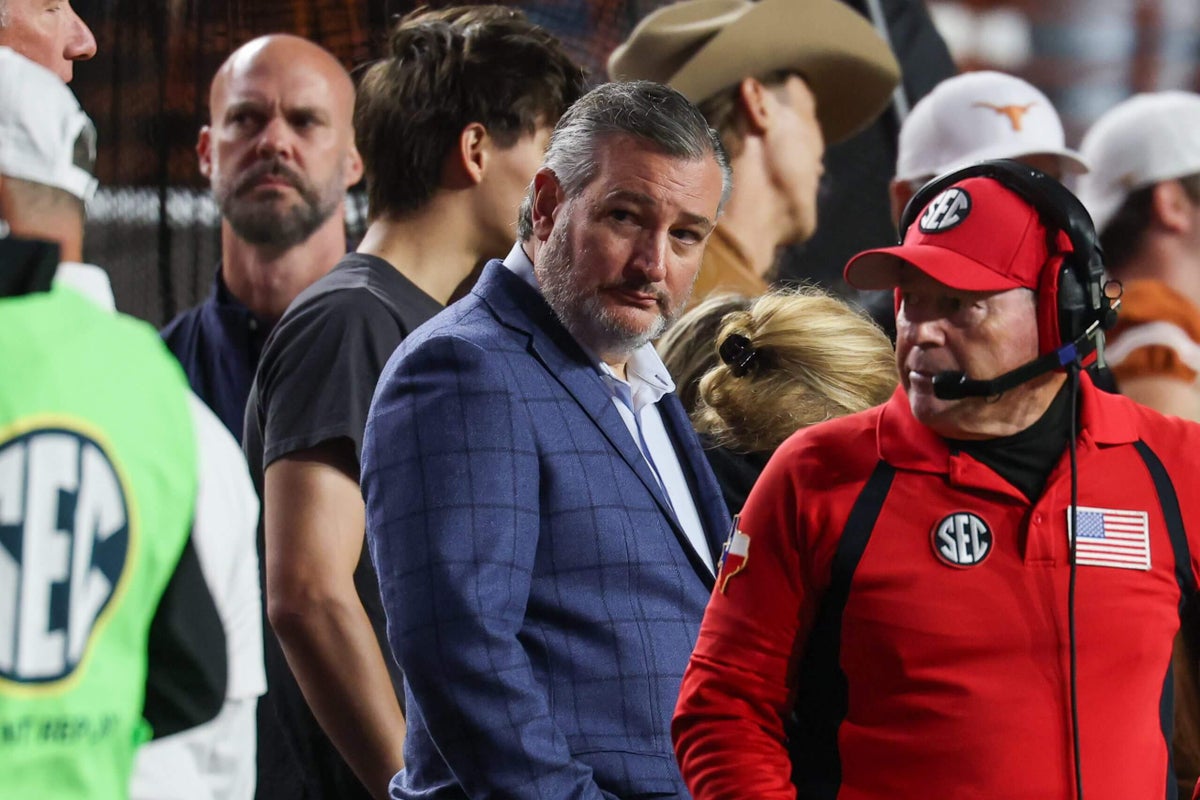
With “College GameDay” in Austin, Texas, ahead of Saturday’s much-anticipated showdown between No. 1 Ohio State and No. 4 Texas, ESPN gave Sen. Ted Cruz of Texas ample airtime to discuss his bill on college sports.
Cruz is the co-author of the Protect College Sports Act, a bipartisan bill before the U.S. Senate that aims to address a number of disruptive issues in college sports. The bill, as currently written, would allow the NCAA and member conferences to establish new rules on athlete eligibility, transfers and player compensation, and limit conference realignment and a future super league.
Cruz was interviewed on set by GameDay host Rece Davis for nearly 10 minutes during the show’s first hour, with Cruz wearing a burnt-orange blazer and Longhorns lapel pin while being booed loudly by the Texas-heavy crowd.
“What we have right now is chaos. There are no rules,” said Cruz, who endured chants of “Ted, you suck!” and “Get him off!” during the interview.
ESPN had Ted Cruz on ‘College GameDay’ in a conversation with Rece Davis for nearly 10 minutes.
Cruz was heavily booed by the crowd — and heard “Ted, you suck!” chants — in Austin. pic.twitter.com/npQesiYMsG
— Awful Announcing (@awfulannouncing) September 12, 2026
This is the second consecutive week that GameDay has dedicated a segment to discussing the PCSA, with co-hosts Nick Saban and Pat McAfee advocating for it during the Week 1 show in Baton Rouge.
After publication, an ESPN source told The Athletic that Cruz, who was in Austin for the game, expressed interest in coming on the show to discuss the legislation. That source called it an “easy decision” given the timeliness and relevance to college football, and added that GameDay had not received any requests from a senator or other figure (like a coach or athletic director) opposed to the legislation — but would “obviously do the same” if it received such a request.
Cruz got more airtime than Texas head coach Steve Sarkisian, who joined the set for about eight minutes during an earlier segment ahead of his team’s Saturday night kickoff against the top-ranked Buckeyes.
Saban and Colorado head coach Deion Sanders have also appeared in recent commercials supporting the PCSA that are sponsored by the Saving College Sports organization run by Texas Tech booster and board chair Cody Campbell, who has been an integral proponent of college sports legislation.
When @DeionSanders speaks about College Sports (or any sports) people should listen! He was not only a legendary athlete, but also deeply cares about current and former athletes, and understands that the value of sports goes far beyond what happens on the field our court! pic.twitter.com/eTK90DzrZw
— Cody Campbell (@CodyC64) September 8, 2026
The PCSA is slated for a potential vote next week as the Senate returns from a recess. The bill needs 60 votes to pass the 100-member Senate, a level of support it was unable to secure prior to the recess. If it passes the Senate, the bill would then go to the House of Representatives, where it could face additional hurdles to approval, and not come to the floor until after the November midterm elections. Cruz said previously he wants to see President Donald Trump sign the bill into law on “College GameDay” this year.
This heightened discourse around the PCSA is part of college sports’ years-long push for federal legislation that would provide congressional antitrust exemptions similar to those for professional sports leagues. This would limit the number of lawsuits against the NCAA and other entities and enable them to govern and enforce rules, something the leadership has struggled to do in recent years.
Cruz specifically mentioned the recent eligibility standoff at LSU involving former NFL players returning to college as well as the Brendan Sorsby gambling saga at Texas Tech as examples of the challenges college sports has had policing itself.
The PCSA has garnered support from the NCAA and member conferences, including the Big Ten and SEC, both of which initially held out until late July. However, the bill faces opposition from athlete advocacy groups and on both sides of the political aisle, particularly from Democrats and others who feel the bill limits athlete autonomy and earning potential.
Davis asked Cruz about some of those criticisms during the interview, with Cruz leaning on the increase in revenue-sharing allotment under the proposed bill and eliminating “pay-for-play” deals. There was no time given outside of the Cruz interview for discussion or opposing viewpoints.
ESPN is owned by parent company Disney, which is heavily invested in college sports, including owning the television rights for the College Football Playoff. According to a report this week from OpenSecrets, a research organization that tracks money in U.S. politics, Disney listed college sports legislation among its political lobbying disclosures this year.
Asked about his level of confidence in the PCSA passing through the Senate in the coming weeks, Cruz described it as “very, very high,” and argued that without congressional intervention, he believes the increased financial strain on college sports will lead to increased cuts, especially for Olympic and women’s sports.
“If Congress does nothing, within a few years, we will see hundreds of thousands of scholarship slots and roster slots go away for young kids,” said Cruz. “Many of them young African-American and Hispanic kids who would not otherwise have a chance of getting to college. That would be a travesty.”
— Stewart Mandel contributed reporting.