
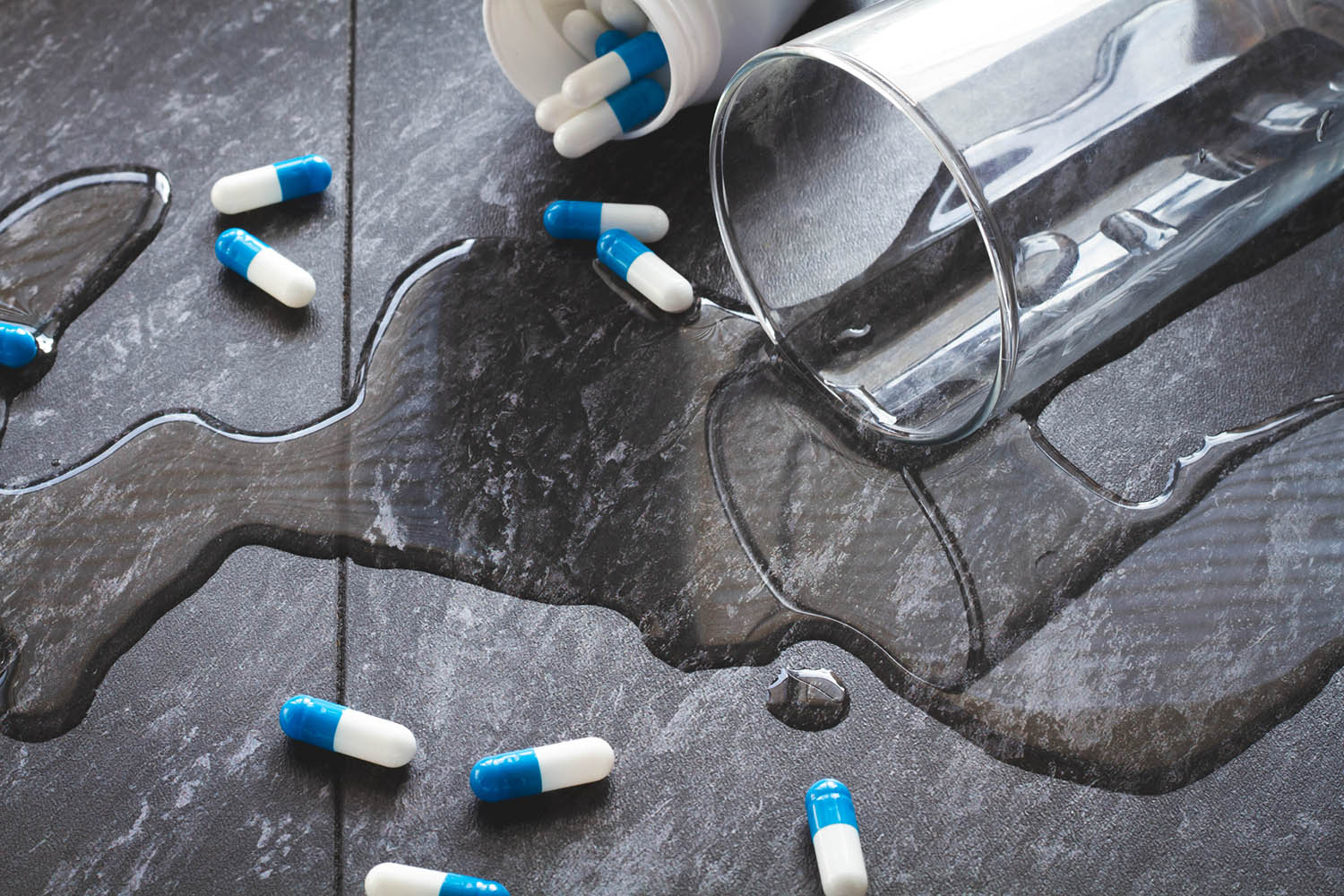
The history of the newer antidepressant drugs is a remarkable demonstration of how fraud in the randomised trials and financial corruption have killed patients.1 For almost 40 years, the psychiatric leaders have denied that antidepressants increase suicides despite overwhelming evidence that this is correct.1,2
The false promises of Prozac
Prozac (fluoxetine) was the first SSRI (Selective Serotonin Reuptake Inhibitor) that came into widespread use. It was approved by the FDA in December 1987 for depression in adults. Eli Lilly wanted to shelve it after having considered marketing it for eating disorders but was in serious financial trouble and had to make it a success.2 The drug is so poor that the German drug regulator found it “totally unsuitable for the treatment of depression” and noted that, according to the patients’ self-ratings, there was little or no response, in contrast to doctors’ ratings.2
In 1990, Martin Teicher and colleagues described six patients who had become suicidal and reacted in bizarre ways on fluoxetine.3 It quickly became America’s most complained-about drug and led the harms list in 1991.4
The same year, the FDA held a hearing about the suicide issue. Internal Lilly documents revealed that the FDA had worked with the company on this, and at the hearing, Lilly’s scientist left out information that demonstrated that fluoxetine increases the risk of suicide.5
Earlier, Lilly had submitted data to the German drug agency showing that suicide attempts almost doubled on fluoxetine compared to placebo. But at the hearing, the chair of the FDA committee, psychiatrist Daniel Casey, brutally interrupted Teicher so that he couldn’t present his findings. He was allowed to present a few slides while Lilly staff presented many.
After many witnesses had told stories about out-of-character suicides and homicides, all the advisory committee members, many of whom had financial ties to the drug makers, rejected this proposal:
“There is credible evidence to support a conclusion that antidepressant drugs cause the emergence and/or the intensification of suicidality and/or other violent behaviors.”
The FDA received 39,000 adverse event reports for fluoxetine in the first 9 years, far more than for any other drug.4 There were hundreds of suicides, horrendous crimes, hostility, psychoses, confusion, abnormal thinking, convulsions, amnesia and sexual dysfunction.
But the public was consistently told another story and the hype in the media and in medical journals was extreme. In 1992, Time magazine announced that Prozac and similar drugs could achieve a cure rate of 90% in depression.6 A remarkable statement for drugs that cannot cure anyone2 and only have small, clinically insignificant benefits.7
In a New York Times bestselling book from 1993, psychiatrist Peter D. Cramer described Prozac as a revolutionary drug.8 He believed the drug didn’t just alleviate his patients’ symptoms but changed their very personalities into a “new person.”6
Over 200 diagnoses have been investigated in placebo-controlled trials of antidepressants, and my co-author and I concluded that these pills are the modern version of Aldous Huxley’s soma pill intended to keep people happy in Brave New World.9
Depression pills double suicides
In 2004, the FDA could no longer ignore the elephant in the room and issued a black box warning, updated in 2006, about “Increased risk of suicidal thinking and behavior in children, adolescents and young adults.” This is still included in package inserts for antidepressants.10
Health Canada went much further. They declared in 2004 that “patients of all ages taking these drugs may experience behavioural and/or emotional changes that may put them at increased risk of self-harm or harm to others.”11
Health Canada correctly noted that violence against self and others can occur at any age.
Depression pills double not only the risk of suicide but suicides and they do this in adults. It is important to include suicidal events that occur after the randomised phase is over because it reflects what happens in real life where the patients will also stop taking the drug at some point, which increases the risk of suicide because of withdrawal effects, particularly akathisia.1,2,4
In 2019, independent researchers reanalysed the FDA trial data and included harms occurring during follow-up.12 Like other researchers,1,2 they found that suicide events had been manipulated and they removed two suicides that had erroneously been assigned to the placebo group in the paroxetine data.13-15 They found twice as many suicides in the active groups than in the placebo groups in adults, with a statistically significant odds ratio of 2.48.12
The FDA did not find an increased suicide risk in adults in its 2006 meta-analysis,16 but they relied on what the companies sent to them, even though the FDA knew that the companies had cheated on them earlier in relation to suicidal events.1,2,12
It is remarkably flexible how many suicides there were. Thomas Laughren, who was responsible for FDA’s meta-analysis,16 published a paper five years earlier using FDA trial data where he reported 10 times as many suicides per 10,000 patients on antidepressants17 as he reported in 2006.12
There were only five suicides in FDA’s analysis of 52,960 patients on SSRIs, but an internal Lilly memo from 1990 described nine suicides in 6,993 patients on fluoxetine in the trials.2 Thus, the FDA is complicit in the fraud the companies committed and we must ignore its 2006 meta-analysis.
A high-quality meta-analysis of observational studies confirmed that antidepressants double suicides.12,18 The authors also published disturbing findings about how the research literature is being manipulated.12,19 Studies that show an increased suicide risk with antidepressants are less likely to be published in psychiatric journals; lead authors with financial conflicts of interest report more favourable results; and their studies are published in the most prestigious psychiatric journals.
There is a myriad of deeply flawed observational studies of the suicide risk by authors with conflicts of interest who have been eager to show that depression drugs do not increase the risk of suicide.2,12,20,21
The worst of these scientifically dishonest studies have even claimed that reduced usage of antidepressants have increased suicides in children and young people. When one such study was published in 2026, former FDA officials rebutted the claim that FDA’s black box warning in 2004 had increased suicides noting that the article was “factually inaccurate in ways that are directly verifiable.”21
There are too few randomised trials in children to demonstrate an increase in suicides, but the data on suicidality suggest that depression pills also double suicides in children. In 2003, the FDA announced that the risk of suicidal events in children receiving antidepressants was 4%, twice the placebo risk of 2%.22 Thus, one in 50 children become suicidal after having received a drug that doesn’t work for them.2,7,23
When psychiatrist David Healy and I scrutinised the two pivotal study reports Eli Lilly had submitted to drug regulators to get fluoxetine approved for childhood depression, we found that two suicide attempts among only 48 children on fluoxetine in one of the trials had been left out in the published trial report.23 We also found that precursors to suicidality or violence occurred more often on fluoxetine than on placebo, and for the biggest trial, the number needed to harm was only 6 for nervous system events (a category used by Lilly) and 10 for severe harm.
It cannot be ignored that it is harmful to treat people with antidepressants. And, as would be expected, fewer people drop out of the trials when they are treated with a placebo rather than with a drug.24
Hiding the suicide risk
It is very threatening to the psychiatric guild that depression pills, the most used drugs in psychiatry, increase suicides, violence, and homicides.25 So, perhaps we should not be too surprised that psychiatric textbooks are highly untrustworthy. They downplay or deny the suicide risk to such an extent that their advice is outright dangerous.26
Two of the five most used textbooks in Denmark claimed that increased use of depression pills had decreased suicides. But, as just mentioned, all studies that have claimed this are unreliable and of poor quality and some are even fraudulent.2,12,20,21
A third textbook noted that untreated depression can cause suicidality and recommended SSRIs. In a 20-page chapter about preventing suicide, the authors claimed that SSRIs seem to reduce suicidal thoughts. In this book, the “suicide experts” said that an effect has not been demonstrated of antidepressants on suicidal behaviour or suicide. This is not true. They double suicides, which is a demonstrated effect.
People who consider themselves suicide experts consistently recommend antidepressants to prevent suicides,27 and guidelines and authoritative articles in leading medical journals do it too.
It is particularly deceptive when disinformation is provided in article types whose names suggest prestige and trustworthiness, e.g. State of the Art articles in the BMJ and Seminars in The Lancet, or in articles with misleading, declarative titles.27
A 2015 State of the Art review in the BMJ claimed that “Evidence supports specific psychotropic drugs to reduce the risk of suicide.”28 It was a narrative review with a curious mix of randomised trials, observational studies, cross-sectional studies, retrospective analyses, and conclusions based on flawed data. I explained on the BMJ website that none of the references supported that any psychiatric drug reduces the risk of suicide.29
A 2021 paper in the official journal of the American Psychiatric Association entitled “Improving suicide prevention through evidence-based strategies: a systematic review,” claimed in the abstract that “Meta-analyses find that antidepressants prevent suicide attempts.”30 This is a gigantic lie. No good-quality meta-analysis has ever found this.
A 2022 Lancet seminar, “Suicide and self-harm,” provided 14 misleading pages.31 Among risk factors for suicide, it mentioned substance use but not depression pills or antiepileptics, which also double the risk of suicide,32 or the psychiatric profession itself, which is a strong risk factor for suicide,33,34 with a very marked dose-response relationship. The closer the contact with psychiatric staff, the greater the risk of suicide. The greatest risk was psychiatric hospital contact, which increased the suicide risk 44 times, and this could not be explained by confounding (patients admitted to hospital would be expected to be at greater risk of suicide than others because they are more ill).
None of the 142 references in the Lancet seminar were to any of the many meta-analyses of placebo-controlled trials showing that depression pills increase the suicide risk. The authors quoted a book written by one of them and by Robert D. Goldney who has published a review where he cherry-picked observational studies that showed that depression pills protect against suicide including some conducted in the Nordic countries that are scientifically dishonest.2 Goldney had received “gold” from “a number of pharmaceutical companies.” The authors claimed, with no references, that drugs can reduce the suicide risk, and that the randomised trials were underpowered, which is blatantly false, as they have shown the opposite.
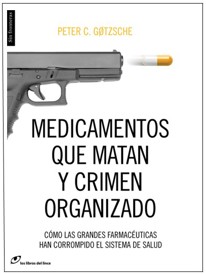
In 2023, in a very long BMJ article, “Suicide in young people: screening, risk assessment, and intervention,35 the authors mentioned some risk factors, e.g. living in a home with firearms, but not depression drugs even though they can also be regarded as a loaded gun, which the cover for the Spanish translation of my book about deadly medicines and organised crime in the drug industry illustrates:36
The authors dismissed a risk difference of 0.7% for suicidal ideation or suicide attempt between drug and placebo by saying that “Data from more recent pediatric antidepressant trials have not shown differences between drug and placebo.” The review they quoted cannot be used to such effect, and when studying rare events, it is unacceptable to lose statistical power by including only “recent” trials. Moreover, the review only included published trial reports, which have omitted many suicide attempts and suicides.1,2
In a companion article,37 I shall describe how two articles about suicide prevention published in the BMJ in June this year misinformed their readers yet again and that the BMJ refused to allow critics to publish their comments in the print journal.
***
References
1 Healy D. Let them eat Prozac. New York: New York University Press; 2004.
2 Gøtzsche PC. Deadly psychiatry and organised denial. Copenhagen: People’s Press; 2015.
3 Teicher MH, Glod C, Cole JO. Emergence of intense suicidal preoccupation during fluoxetine treatment. Am J Psychiatry 1990;147:207-10.
4 Whitaker R. Anatomy of an epidemic, 2nd edition. New York: Broadway Paperbacks; 2015.
5 Bass A. Side Effects – a prosecutor, a whistleblower, and a bestselling antidepressant on trial. Chapel Hill: Algonquin Books; 2008.
6 Sharpe K. The silence of Prozac. Lancet Psychiatry 2015;2:871-3.
7 Gøtzsche PC. A story of bad science: How defenders of antidepressant efficacy make their case. Mad in America 2026;July 28.
8 Kramer Peter D. Listening to Prozac: The landmark book about antidepressants and the remaking of the self. Viking 1993.
9 Gøtzsche PC, Dinnage O. What have antidepressants been tested for? A systematic review. Int J Risk Saf Med 2020;31:157-63.
10 FDA package insert for Lexapro (escitalopram).
11 Health Canada advises Canadians of stronger warnings for SSRIs and other newer antidepressants. Government of Canada 2004;June 3.
12 Gøtzsche PC. Observational studies confirm trial results that antidepressants double suicides. Mad in America 2025;Feb 8.
13 Hengartner MP, Plöderl M. Newer-generation antidepressants and suicide risk in randomized controlled trials: a re-analysis of the FDA database. Psychother Psychosom 2019;88:247-8.
14 Hengartner MP, Plöderl M. Reply to the Letter to the Editor: “Newer-Generation Antidepressants and Suicide Risk: Thoughts on Hengartner and Plöderl’s Re-Analysis.” Psychother Psychosom 2019;88:373-4.
15 Plöderl M, Hengartner MP, Bschor T, et al. Commentary to „antidepressants and suicidality: A re-analysis of the re-analysis“. J Affect Dis 2020;273:252-3.
16 Laughren TP. Overview for December 13 Meeting of Psychopharmacologic Drugs Advisory Committee (PDAC). FDA 2006;Nov 16.
17 Laughren TP. The scientific and ethical basis for placebo-controlled trials in depression and schizophrenia: an FDA perspective. Eur Psychiatry 2001;16:418-23.
18 Hengartner MP, Amendola S, Kaminski JA, et al. Suicide risk with selective serotonin reuptake inhibitors and other new-generation antidepressants in adults: a systematic review and meta-analysis of observational studies. J Epidemiol Community Health 2021;75:523–30.
19 Plöderl M, Amendola S, Hengartner MP. Observational studies of antidepressant use and suicide risk are selectively published in psychiatric journals. J Clin Epidemiol 2023;162:10-8.
20 Gøtzsche PC. Study of study of changes in antidepressant use after FDA warnings is not reliable. BMJ 2014;349:g5623.
21 Whitaker R. Yet another claim about the benefits of antidepressants bites the dust. Former FDA officials write that claims that the black warning led to an increase in youth suicides are “factually inaccurate in ways that are directly verifiable.” Mad in America 2026;July 16.
22 New Pediatric Labeling Information Database – Detail. FDA 2003;Jan 3.
23 Gøtzsche PC, Healy D. Restoring the two pivotal fluoxetine trials in children and adolescents with depression. Int J Risk Saf Med 2022;33:385-408. Can be accessed for free here.
24 Sharma T, Guski LS, Freund N, Meng DM, Gøtzsche PC. Drop-out rates in placebo-controlled trials of antidepressant drugs: A systematic review and meta-analysis based on clinical study reports. Int J Risk Saf Med 2019;30:217-32.
25 Gøtzsche PC. Antidepressants can change peaceful citizens into killers. Mad in America 2026;Aug 15.
26 Gøtzsche PC. Critical psychiatry textbook. Copenhagen: Institute for Scientific Freedom; 2022 (freely available).
27 Gøtzsche PC. So-called suicide experts recommend antidepressants, which increase suicides. Mad in America 2024;Oct 24.
28 Bolton JM, Gunnell D, Turecki G. Suicide risk assessment and intervention in people with mental illness. BMJ 2015;351:h4978.
29 Gøtzsche PC. No psychiatric drugs have been convincingly shown to decrease suicides. BMJ 2015;Dec 10.
30 Mann JJ, Michel CA, Auerbach RP. Improving suicide prevention through evidence-based strategies: a systematic review. Am J Psychiatry 2021;178:611-24.
31 Knipe D, Padmanathan P, Newton-Howes G, et al. Suicide and self-harm. Lancet 2022;399:1903-16.
32 FDA package insert for Lyrica (pregabalin).
33 Hjorthøj CR, Madsen T, Agerbo E, et al. Risk of suicide according to level of psychiatric treatment: a nationwide nested case-control study. Soc Psychiatry Psychiatr Epidemiol 2014;49:1357–65.
34 Large MM, Ryan CJ. Disturbing findings about the risk of suicide and psychiatric hospitals. Soc Psychiatry Psychiatr Epidemiol 2014;49:1353-5.
35 Hughes JL, Horowitz LM, Ackerman JP, et al. Suicide in young people: screening, risk assessment, and intervention. BMJ 2023;381:e070630.
36 Gøtzsche PC. Deadly medicines and organised crime: How big pharma has corrupted health care. London: Radcliffe Publishing; 2013.
37 Gøtzsche PC. The BMJ refused to publish criticisms in print of its highly misleading suicide prevention articles. Mad in America 2026 (in press).
***
Mad in America hosts blogs by a diverse group of writers. These posts are designed to serve as a public forum for a discussion—broadly speaking—of psychiatry and its treatments. The opinions expressed are the writers’ own.