
I don’t doubt it will, but there is uncertainty about the timing.
Meanwhile, there’s been plenty of talk in the health and lifestyle sections about the drugs – like Ozempic and Wegovy. But not nearly as much in the business sections.
That’s starting to change as listed food companies wake up to the enormous social change that the drugs are already causing in the US.
Goldman Sachs analysts estimate the drugs will deliver a 1% increase in US gross domestic product (GDP) based on improved productivity and cost savings related to health benefits.
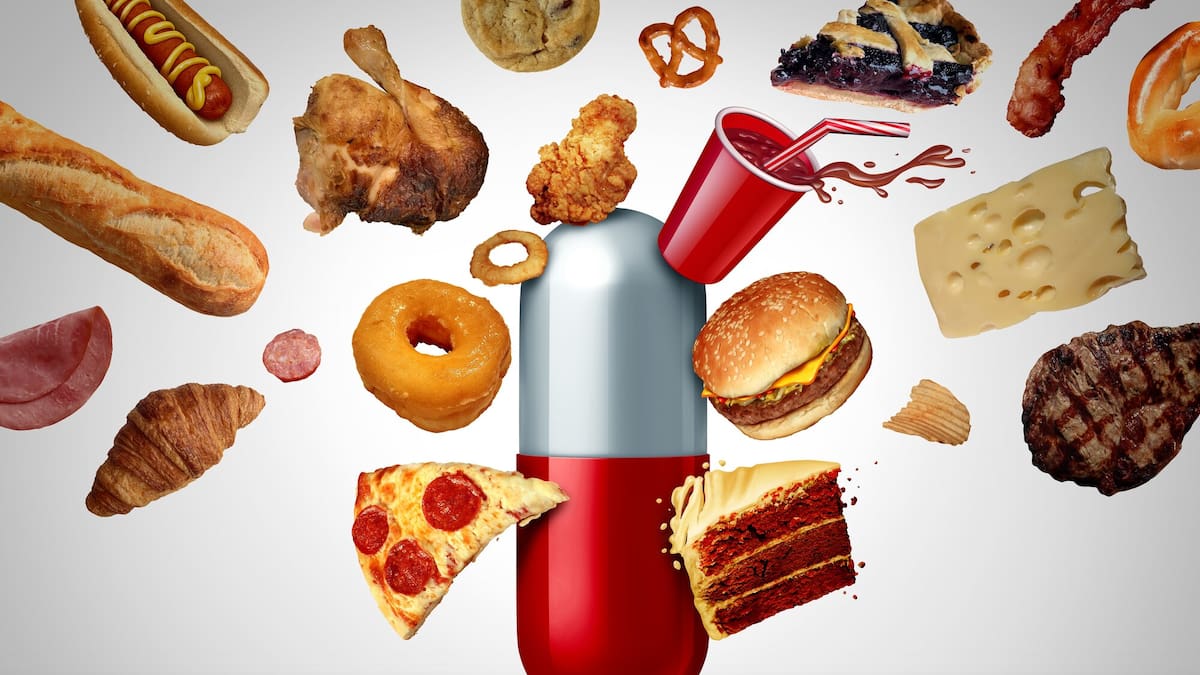
Food companies like McDonald’s and PepsiCo have issued warnings about the drugs causing a big shift in consumer demand.
US burger chains are starting to take note of GLP-1 use. Photo / Fresh Media
That shift in demand is towards smaller meals based around protein and fresh produce.
For New Zealand, this is a good story. That’s the kind of food we export.
Meat and dairy prices are already strong and may stay that way for longer if GLP-1 use continues to explode.
The latest figures suggest that 18% of the adult US population is on these drugs.
That’s an incredible rate of adoption given they are still very expensive and mostly still need to be injected.
In the next few years, they are going to become increasingly available in pill form. They also get a lot cheaper.
The first generation of the drugs is already off patent for India, China and Brazil – the world’s biggest manufacturers of generic drugs.
“While we’re all salivating at the prospect of where AI can go in the years ahead, perhaps the bigger leap in the near term is the technological miracle that is stopping us salivating at all,” Deutsche Bank’s Jim Reid, global head of macro and thematic strategy wrote in a recent commentary.
“Maybe GLP-1 is the real short-term general-purpose technology for a wider range of consumers, especially in the US.”
Of course, you could argue the stakes are a lot higher with AI.
We just heard from an Anthropic staffer that AI has a 10% chance of wiping out humanity within a decade.
Huge news if true!
1News ran that as the fourth item Thursday night, which I found oddly amusing.
At least it made it further up the news list than the new iPhone and a story about whether we are drinking our coffee too hot.
I guess this is either the biggest story ever, or not much of a story at all.
Jacob Coxon, a disgruntled ex-staffer of both Anthropic and OpenAI, has warned that: “The people building AI earnestly believe that it could kill us all by the end of the decade.”
I’m not sure if it was supposed to be reassuring, but Anthropic’s current safety executive Evan Hubinger followed up by saying: “We really do earnestly believe AI could kill all humans!” He added that he estimated that risk at more than 10% over the next decade.
It’s not like the possibility that they have exaggerated the odds would be a good reason for downplaying the story.
Perhaps it’s really only a 1% chance.
Well, I’m sorry, but that is still not all right.
Realistically, if the odds were even 0.01% (ie one in 10,000) then we ought to all be taking these claims far more seriously.
The odds of winning Lotto Powerball are one in 34.4 million (per line), and people seem to take that seriously.
And the end of humanity is about as serious as it gets.
So you’d have to assume that we, collectively, don’t really believe these warnings at all.
The trouble is that there is still a lot of speculation involved in the future of AI and an enormous range of views.
It is advancing at an exponential pace. But we don’t know how long it will continue to do that.
Energy restraints or chip shortages may yet curb growth.
Or … everything might just turn out fine. Don’t laugh.
That is actually the prevailing view on Wall Street.
“Abundance” has become a very trendy buzzword.
Very powerful people are taking seriously the idea that the AI revolution will deliver some kind of economic utopia.
The logic is that if AI systems and robots can produce goods and services at extraordinary scale and ever-lower cost, scarcity starts to lose its grip on society – making food, healthcare, education and other essentials dramatically cheaper and more widely available.
In that scenario, we’d see inflation fall rapidly. There’d be fewer jobs but no one would have to work as hard.
We can all be poets, painters and rock stars. We’d just need to do a bit of reorganising on the work-life balance.
To be honest, this reads like a kind of sci-fi utopia from the 1950s.
I have some sympathy for the idea (I like it better than a robot apocalypse), but I fear the social upheaval to get to that world of abundance might be a lot more traumatic than we’d like.
Anyway, we just don’t know.
Market analysts are watching closely for signs of real productivity benefits from AI.
There are some, but they are still far from exponential – in fact, they are decidedly linear.
Meanwhile, the case for GLP-1 drugs transforming the economy hangs on an immediate and dramatic shift in human consumption patterns that is already highly visible in the US.
Some speculation is required for extrapolation to a global economic upheaval, but perhaps not as much (for the time being) as with AI.
Ultimately it’s not an either/or scenario anyway.
Both these technologies are real, revolutionary and about to make themselves felt at an economic level.
One of them might decide to wipe humanity off the face of the Earth.
But at least the other one can ensure that our species will go out looking great.
Liam Dann is business editor-at-large for the New Zealand Herald. He is a senior writer and columnist, and also presents and produces videos and podcasts. He joined the Herald in 2003.
Catch up on the debates that dominated the week by signing up to our Opinion newsletter – a weekly round-up of our best commentary.