
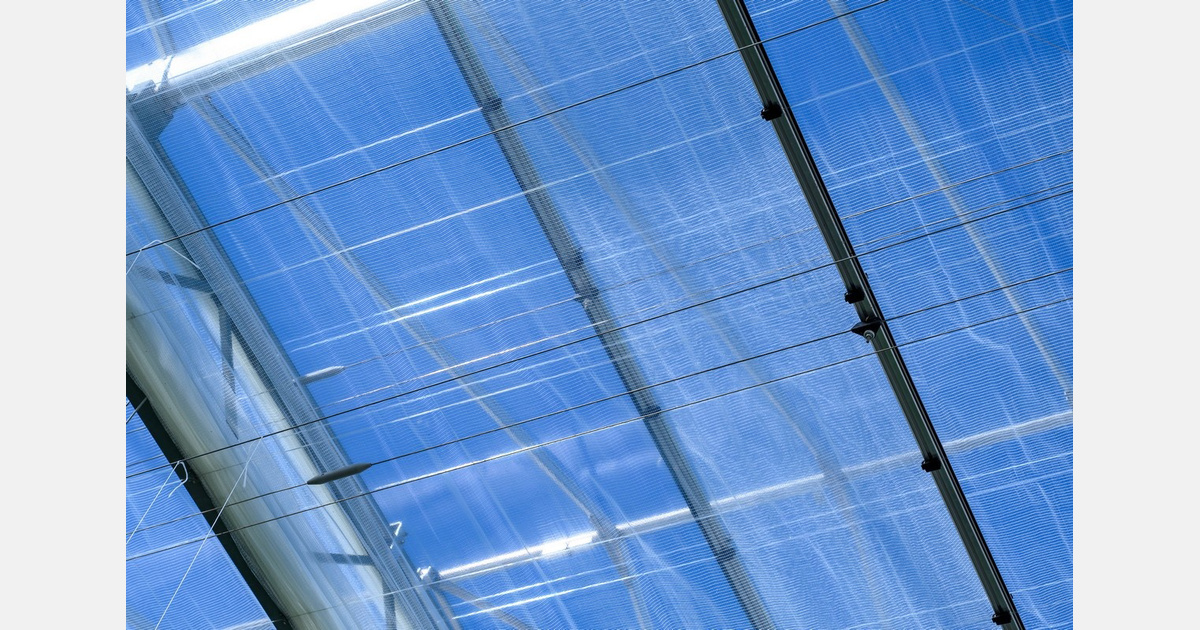
new screens as a response to rising energy costs
In the Netherlands, rising gas prices combined with the opening of a European subsidy program have put energy savings back at the center of discussion in the greenhouse horticulture sector. For many growers, it’s a logical moment to take a fresh look at their energy use and investment plans.
According to Arjan van der Veer, sales manager and advisor at Phormium, screening installations are often among the first areas where savings can be made. “Growers have already taken significant steps in recent years, but current gas prices once again show how important it remains to manage energy wisely. The cheapest energy is ultimately the energy you don’t have to buy.”
 © Phormium
Where growers once had to choose between maximum light transmission and energy savings, the options available now are considerably broader. Phormium has introduced Diamond, which it describes as the clearest energy screen on the market, with a shading level of just 8% and energy savings of up to 47%. For businesses looking to retain heat mainly at night, an aluminum night screen such as Noctis Thermo can deliver energy savings of up to 72%.
Arjan notes that the combination of higher energy costs, new developments in screen fabrics, and available subsidies is prompting growers to rethink their approach. “At Phormium, we see growers increasingly looking for the optimal balance between maximum light transmission and energy reduction. Alongside a sound screening strategy, the right fabrics can really make the difference.”
With gas prices elevated again and the European subsidy program offering opportunities for energy-saving investments, many businesses may find this a fitting moment to reassess their screening strategy.
For more information:
Arjan van der Veer
Sales Manager & Advisor
Phormium
www.phormium.com
[email protected]
Publication date:
Mon 14 Sep 2026