
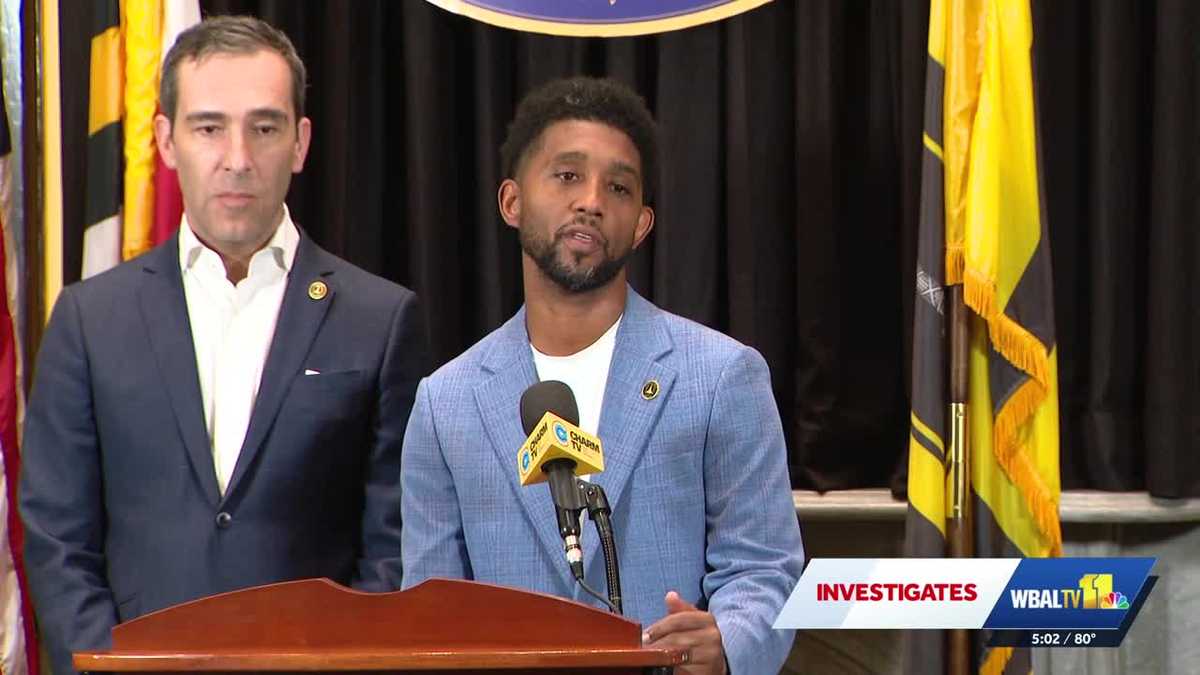
Baltimore plan would send mental health professionals to 911 calls, cutting police involvement

 BALTIMORE —
Baltimore city leaders announced a proposal to create a new department that would send mental health professionals to respond to nonviolent 911 calls, aiming to reduce police involvement in such situations.
“This is about delivering the right response to 911 calls, freeing up our police officers in an emergency, other emergency personnel to the emergencies that need them the most,” Mayor Brandon Scott said.
Scott and City Council President Zeke Cohen introduced legislation to establish the Department of Neighborhood Safety, which would include MONSE, the city’s community violence intervention program, and a new alternative response system.
The system would divert certain nonviolent emergency calls away from police.
“I don’t think you can serve in city government without hearing from police officers that they are tired of constantly chasing around mental health crises,” Cohen said.
Under the plan, social worker teams would respond independently to welfare checks, trespassing calls, and lewd behavior. Co-responder teams, consisting of clinicians and officers, would handle situations where weapons may be involved, such as harassment calls, threats, and suicide attempts.
City leaders estimate the program could reduce police involvement in approximately 22,000 calls annually.
Advocacy groups welcome new initiative
Ray Kelly, executive director of the Citizens Policing Project, an advocacy group focused on public safety, shared his perspective on the initiative.
“I think this has the potential to be something game changing for the city,” Kelly said. “I think as we enter this phase of lower crime, lower homicides, we have an opportunity to focus on the contributors to the crime.”
Video below: Advocacy groups react to mayor’s proposed safety department
He emphasized the importance of proper implementation.
“The success of this whole venture is going to [be] hinged to making sure the right people are in the right place to administer this and making sure we keep the politics out of this process,” he said.
Erricka Bridgeford, with the Baltimore Peace Movement and the Baltimore Community Mediation Center, highlighted the need for resources to address the root causes of violence.
“My thoughts are the city council would be wise to follow through with it,” she said.
“We’ve been saying forever that people don’t know how to resolve their conflicts peacefully, that people need resources, that people need mental health services. And we know all of those things are connected to why violence happens,” Bridgeford said.
She also stressed the importance of securing long-term funding for the department.
“The funding for it needs to really be in place, and it needs to be a part of the city’s budget so that it’s not just, no matter who’s in the administration, this is a thing that Baltimore needs. It doesn’t matter who’s sitting in the mayor’s chair,” Bridgeford said.
Initiative modeled after North Carolina program
The initiative is modeled after a similar program in Durham, North Carolina, which launched five years ago.
“I traveled with my team and the mayor’s team to Durham and watched their operation. We witnessed trained professionals skillfully de-escalate difficult situations both with and without police,” Cohen said.
David Prater, overdose and injury prevention coordinator for Durham’s Community Safety Department, works closely with the HEART team, which responds to nonviolent emergencies.
“Don’t send me to an armed robbery, I don’t have anything for that. But when a person is experiencing crisis, that’s what we’re here for,” Prater said.
A recent study found that HEART team deployments in Durham led to a significant decrease in arrests and citations.
“We get a chance to meet with people and provide them with support and resources to address things like mental health crisis, poverty, homelessness, substance use. There’s really no reason to send an armed responder to those types of calls,” Prater said.
Scott emphasized the importance of ensuring residents receive appropriate care during behavioral health emergencies.
“This is about making sure that residents who are in clear need of a, of behavioral health, having a clear behavior health issue gets the help that they need,” Scott said.
The Mayor’s Office has allocated $16 million in next year’s budget to launch the program, which includes replacing the city’s dispatch system.
The legislation is being introduced to the City Council Tuesday night, and if passed, the city will begin a nationwide search for an executive director.