
LAS VEGAS (KSNV) — NASA is quickly moving forward with plans to establish and build a Space Academy for the U.S. Space Force, similar to the existing military academies for the Air Force, Army and Navy.
Each state will have an opportunity to submit an offer to become the Space Academy’s new home, based on certain criteria.
So, what does Nevada have to offer that might pique the interest of NASA? Perhaps more than we might think.
For starters, Nevada is home to the NNSS, the Nevada National Security Site, once known as the Nevada Test Site.
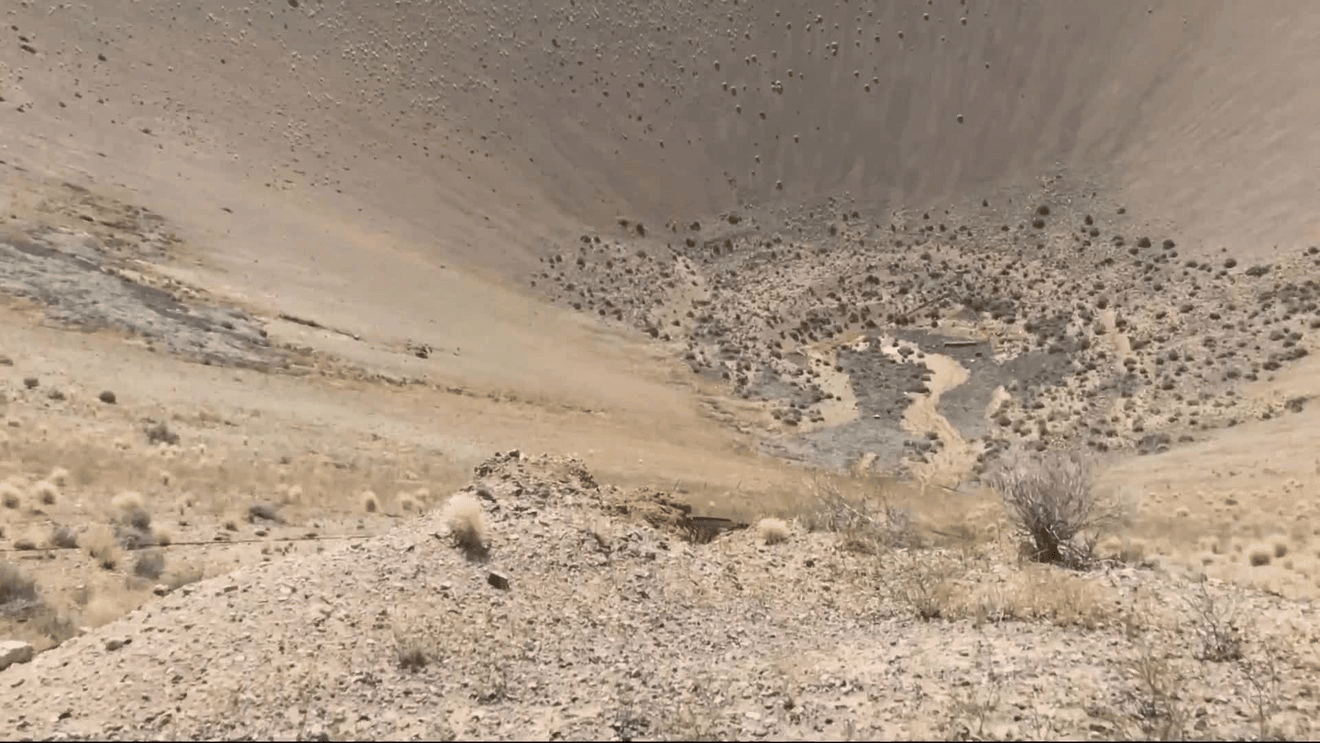
One of its features is the Sedan Crater, the largest man-made crater in America, formed by a nuclear blast in 1962. In the years that followed, many of the astronauts who went to the moon during NASA’s Apollo program trained at Sedan Crater. It was an ideal location, since NASA needed to give the astronauts, who were pilots, a crash course in geology and crater formation.
A half-century later, President Trump signed an Executive Order late last month to establish a Space Academy to train cadets, or guardians, for the U.S. Space Force.
Each state must present its submission by October 26 with information on a location, site readiness, environmental and regulatory considerations, and proximity and supporting ecosystems.
“To have the Space Force Academy in Nevada. Well, I mean, there’s a number of things that Nevada has to offer that don’t really exist in other places,” said UNLV astrophysics professor Jason Steffen, who is also a former NASA scientist.
He says, along with the test site, the Federal Government already owns most of the land in Nevada, including a number of attributes that would be attractive to NASA.
“We have a couple Air Force bases. We have, I think there’s an Air Force training range,” Steffen said. “So, there’s a lot of real estate that they could use as they train the (new) generation of guardians.” Steffen added, “We’re also in relatively close proximity to three other large hubs for aerospace in Arizona, Utah, and California.”
Rob Lauer, CEO of United Spaceports Corporation, says his private venture has a three-year jump on a space academy concept with plans to build a spaceport between Las Vegas and Pahrump, which would include flight training facilities, STEM programs, and someday, the ability to launch rockets and space planes into orbit.
“I read the requirements from NASA, and one of them was 300 acres, and we have 240 acres,” Lauer said. “But we have 100,000 acres surrounding us of BLM land.” He believes it could lead to a private-government venture that could be a match made in the heavens. “We believe we can carve out 500 acres right adjacent to our spaceport to build a standalone academy,” Lauer said. “So, imagine having a brand new U.S. Space Force Academy attached to a real live spaceport.”
And, considering NASA wants 300 guardian cadets in temporary Space Academy quarters by 2028, and a permanent location by 2031, Steffen thinks that head start could give Nevada another advantage.
“What kind of infrastructure do we need to have to you use low Earth orbit, or the space in general, as a commodity, both a public and a private commodity, and so having people with that kind of vision, I think, is also helpful for making the case for Nevada.”
Realistically, Nevada would appear to be a long shot for becoming the home of the United States Space Academy.
Florida leaders say they are the best location due to the proximity to the Kennedy Space Center. Texas says the Space Academy should be in Houston, near the Johnson Space Center. And, even Alabama says the best academy location would be Huntsville, home to the Marshall Spaceflight Center, and NASA’s Space Camp, which opened to the public 55 years ago.
For additional details about the plans to develop the Space Academy, use this link to NASA’s website: NASA Answers President’s Call to Establish United States Space Academy – NASA