
Researchers monitoring osprey nests around Great Bay and the Mullica River found many chicks were starving, with 85% not surviving as experts focus on the continuing scarcity of a critical food source.
Stockton University biology instructor Melanie Schroer and her students surveyed and monitored more than two dozen osprey nests in the area.
“We would approach a nest, and we would see chicks, just skin and bones,” Schroer said.
The troubling signs hit particularly close to home at Stockton University, where the osprey is the school’s mascot.
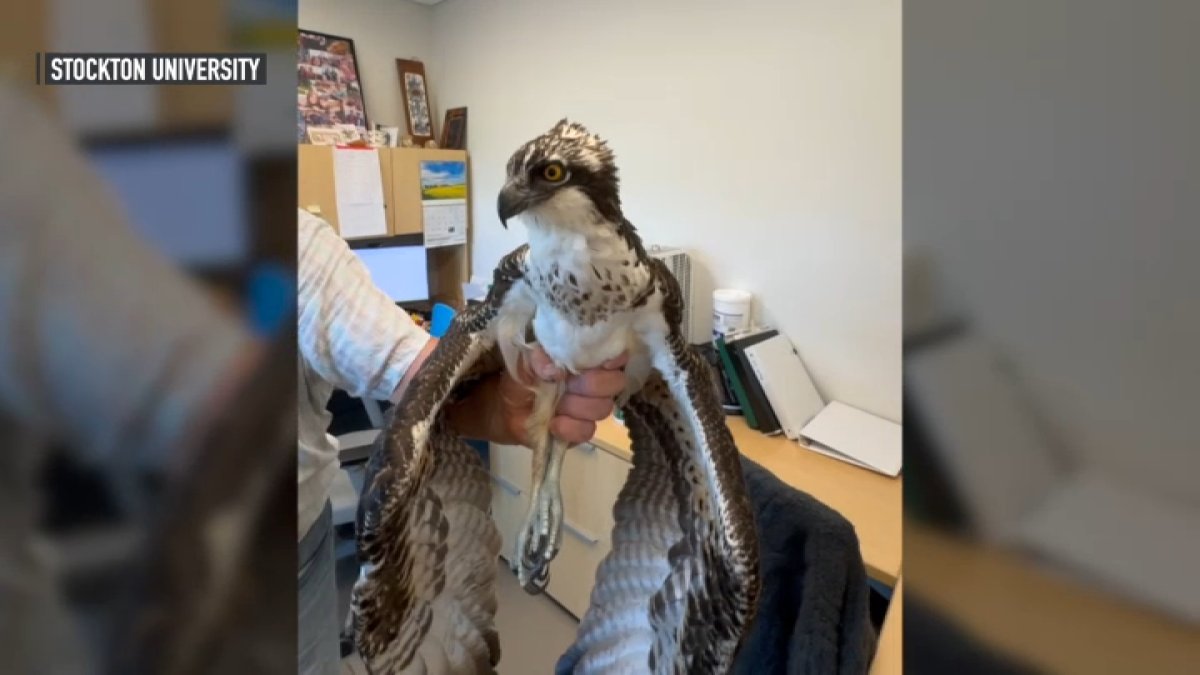
Stockton junior Stephen Gamba spotted a young osprey on campus last week and knew something was wrong.
“He just stood there. He didn’t fly away. He didn’t get scared,” Gamba said.
The osprey was captured but died while being transported to a bird rehabilitation facility.
“It was very emaciated. So it was obviously having a hard time finding food,” John Rokita of the Stockton University Vivarium said.
Schroer believes the bird was experiencing the same food stress researchers had been seeing elsewhere.
“I think that the chick that we found here at Stockton unfortunately was experiencing the same types of food stress that we’ve seen out in the field all summer,” Schroer said.
The problem extends beyond the nests monitored by Stockton researchers.
Ben Wurst with the Conserve Wildlife Foundation of New Jersey has documented similar conditions around Barnegat Bay, part of a troubling pattern stretching along the Jersey Shore and much of the East Coast.
“Those results are looking to be even worse than last year, which was the worst year for Osprey’s in recent history,” Wurst said.
Experts are focused on the continuing scarcity of Atlantic menhaden, a type of fish also known as bunker. Menhaden are used for bait and nutritional supplements and are a critical food source for ospreys and other wildlife.
“There’s no current explanation as to why this is happening,” Wurst said.
The concerns come as fisheries managers consider reducing the cap on menhaden caught commercially in Chesapeake Bay by up to 50% and spreading the harvest more evenly throughout the year. A public comment period is open until Oct. 9.
“We want to reduce the number that are allowed to be caught as much as possible to leave more in the water, especially during critical breeding times,” Schroer said.
The two troubling nesting seasons came just after ospreys were removed from New Jersey’s endangered species list.
“It is definitely concerning to see just how much that is impacting them, especially this year,” Gamba said.
“This story was originally reported for broadcast by NBC Philadelphia. AI tools helped convert the story to a digital article, and an NBC Philadelphia journalist edited the article for publication.”