
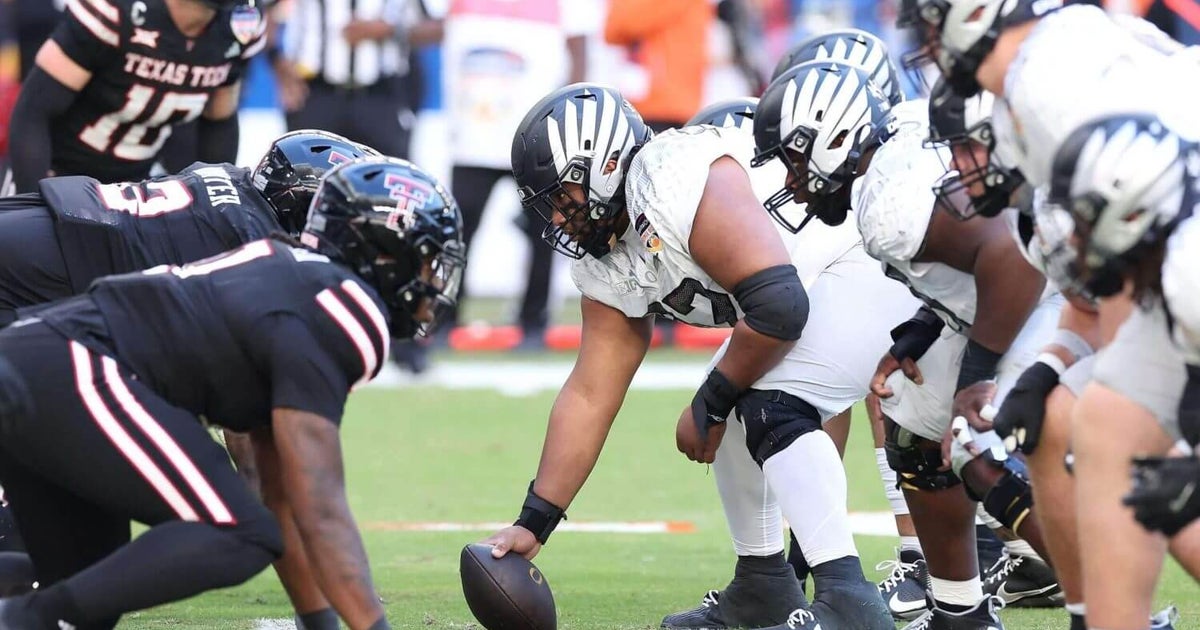
In 2024, Ohio State athletic director Ross Bjork revealed the Buckeyes’ football roster cost $20 million that season, a rare instance of a school publicizing the money it was directing players’ way. That figure was believed to be the highest in the country at the time, and the roster it assembled went on to win the national championship.
Two years later, a $20 million roster would rank near the bottom of the Big Ten and nowhere near other national title contenders. In fact, Ohio State and the team it just played, Texas, are believed to be spending roughly $50 million.
Coaches and administrators hoped the 2025 House settlement, which allowed schools to share up to $20.5 million a year (now $21.3 million) with their athletes in an effort to tamp down antitrust lawsuits, would stabilize the market. Instead, prices nearly doubled in a year, with the top quarterbacks in the transfer portal landing $5-6 million deals, as schools devised creative workarounds to spend well beyond the cap.
So this summer, The Athletic’s college football staff embarked on an ambitious project to find out how much every P4 school spent on its 2026 roster. We reached out to more than 70 sources across the sport for information, working to get as many independent, trustworthy estimates as possible from people inside and outside a program.
You can look at the full data here. Here are 10 things we learned:
1. We quickly realized that reliably reporting exact numbers was unrealistic, for two reasons:
Few people inside a football building know that number, and even if they do, many don’t feel comfortable sharing it, even anonymously.
Even if they do spill, coaches often undersell the number, either to temper fans’ expectations or keep their players from asking for even more. Meanwhile, administrators want people to think the number is higher than it is so that they look like great fundraisers.
2. On the other hand, people love to tell you how much their competitors have, especially if it’s considerably more than they have, so they can go back to their bosses or boosters and say, “See, we need more.” But even their intel isn’t necessarily gospel.
3. The zenith of 2026 roster budgets was roughly $50 million. Ohio State, Oregon, LSU, Miami and Texas all at least approach that high-water mark.
4. Some people may be surprised to see that Texas Tech ($38-42 million) did not land in our highest spending tier and was in fact behind bigger spenders like Notre Dame and Texas A&M. Keep in mind, though, Tech likely shaved $3-4 million when embattled quarterback Brendan Sorsby, a coveted transfer from Cincinnati found to have committed thousands of NCAA gambling violations, left the team this summer and abandoned a fight to retain his eligibility.
5. If it feels like Alabama ($38-42 million) and Georgia ($31-34 million) aren’t quite as loaded as they were pre-NIL, these numbers offer a hint as to why. Crimson Tide coach Kalen DeBoer, and particularly Georgia’s Kirby Smart, don’t seem to be swimming in the same pool as other perceived national championship contenders.
6. After beating Miami in the national title game, Indiana coach Curt Cignetti said, “Our NIL is nowhere near where people think it is.” But in fact, the Hoosiers ($36-40 million) are top-five in the Big Ten, right in line with blue bloods Michigan and USC.
7. Except Miami ($44-50 million) and Texas Tech ($38-42 million), most ACC and Big 12 rosters lag behind their Big Ten and SEC peers. Here are the median ranges for each conference:
Big 12: $18-22 million
ACC: $20-24 million
Big Ten: $24-28 million
SEC: $31-35 million
8. That $7 million gap between the SEC and Big Ten is an eye-opener, but it mirrors the perception that the Big Ten is top-heavy. The SEC has 10 teams spending at least $29 million, and the Big Ten has seven. Fairly comparable. But the Big Ten has five teams with a starting range of $20 million or less. No SEC team starts lower than $22 million.
9. Meanwhile, a whopping 12 of the 16 Big 12 teams have ranges starting below $20 million, compared with six in the ACC and four in the Big Ten.
10. There are only four teams in the country with a starting range below $15 million: Arizona ($13-18 million), Iowa State ($13-17 million), Duke ($12-15 million) — which shed $3-4 million when quarterback Darian Mensah bolted for Miami in January — and poor Boston College ($8-13 million), the only team with an estimated range starting in the single-digit-millions.