
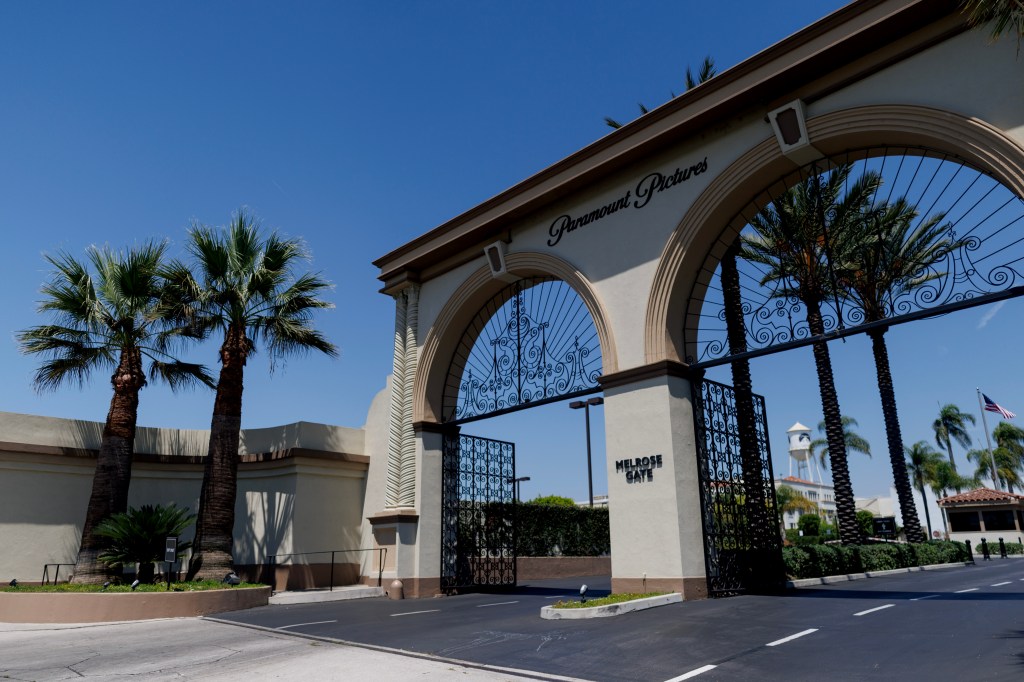
Paramount CEO David Ellison has let it be known that he is willing to take his Paramount ball and leave California if the state doesn’t ditch its effort to block the company’s pending merger with Warner Bros Discovery.
And now it looks like the ball really is in play.
Paramount brass have told key officials and stakeholders the company is “deadly serious” about leaving California and the home of Hollywood after over 100 years, sources tell Deadline. Among those told a deposit has been put down on the moving trucks is L.A. Mayor Karen Bass and state Attorney General Rob Bonta. The AG joined with 11 other states to file an antitrust lawsuit against the $110 billion merger. The Writers Guild of America has also sued.
“Mayor Bass is focused on protecting and fighting for jobs in L.A., including critical jobs in the entertainment industry that have been a vital part of Los Angeles’ economy,” a spokesperson for City Hall told Deadline today. “She’s been engaged on this issue and will continue to fight to make sure L.A. is home to Hollywood,” the mayor’s office added.
Thousands of jobs will be lost if Paramount’s corporate headquarters were to shift to Georgia, Tennessee or Texas, three sites reportedly floated by the company. Even without a move, a merged company would likely see layoffs as it looks to deliver shareholders $6 billion in promised cost savings.
Bonta has over the past several months called out Paramount for engaging in “blackmail” in its efforts to sway the court of public opinion over the merger. He is likely to express that sentiment again on Thursday at a conference in New York City, where he is slated to appear on an antitrust panel along with AGs from Pennsylvania and New Hampshire.
As the exit plan appeared to be taking more concrete shape on Wednesday, the AGs office again accused Paramount of saber-rattling.
“We cannot comment on a company’s plans,” a spokesperson for AG Bonta told Deadline Wednesday over the moving notice. “It’s no secret that Paramount has been making this threat, despite its alleged commitment to California and Hollywood. What Paramount decides to do is Paramount’s choice alone. We’ll continue to apply the law without fear or favor and continue to be open to coming to the table for good faith discussions.”
Paramount had no comment when contacted by Deadline about the current state of exit plans. TMZ first reported that the company had contacted city and state officials about an exit announcement.
The limbo state of the merger since the mid-July filing of the lawsuits has ratcheted up anxiety levels in an industry already contending with the rise of Big Tech, production leaving the U.S. and other challenges. The trial date of March 2 feels like an eternity from now for an industry on edge. The parties will hold court-ordered settlement meetings next month and a hearing will be held next week on Paramount’s request for a $1.88 billion bond from the plaintiffs to cover “extraordinary losses” the company anticipates due to having to pay a “ticking fee” during litigation. Beyond that, it’s anyone’s guess.
Ellison’s big move to move comes almost two weeks before the October 1 date when the ticking fee, which Paramount voluntarily added as a sweetener in its battle with Netflix over buying WBD, starts kicking in. At roughly $7.2 million a day, the fee would reach $635 million for the full quarter, paid directly to WBD shareholders.

California Attorney General Rob Bonta left, Paramount CEO David Ellison
Getty Images
Despite the storm of speculation about the red state/blue state dynamic of the potential move, the fact is any exit will have little immediate impact on the antitrust suit’s route through the federal courts – at least for now. The optics would be very immediate if Paramount really does leave. One plus for the company, in theory, arrived Tuesday when the U.S. Department of Justice sided with Paramount on jurisdiction and the bond request and a possible SCOTUS intervention, the optics are very immediate if Paramount really leaves.
The economic devastation of a move would be real, a recent report from L.A. County warned.
“At a minimum, relocating Paramount’s headquarters and other operations out of California would result in losses of 2,750 and 5,550 job-years in California across all industries and losses of between $1.01 billion and $2.03 billion in economic output between October 1, 2026, and September 30, 2031,” the county’s Economic Development Corporation wrote in a September 10 document.
The third such report from the powerful Board of Supervisors last week is very similar to language in a Paramount statement of September 8 detailing harsh consequences if the merger falters.
“Once Paramount completed the entire relocation of its headquarters and other operations out of California, the state would experience the permanent loss of approximately 28,990 to 57,980 full-time jobs statewide across all industries, and losses of between $10.6 billion and $21.2 billion annually in economic output,” the county document says.
With a projected $80 billion in debt, the merged company is widely expected to cut its workforce, though Paramount execs have insisted to date that job losses would be minimal. Efficiencies, they say, will be realized through improved technology and other means.
The EDC did identify one bright spot: Ellison’s repeated assurances that the merger would not reduce the collective theatrical release output of the legacy studios. Combined, they will release at least 30 films a year, executives have promised, winning praise from exhibitors and trade groups.
“Paramount’s post-merger production commitment of 30 features a year for three years would generate a total of between 1,020 and 2,760 job-years in California across all industries and between $377.7 million and $1.01 billion in economic output between October 1, 2026, and September 30, 2031,” the county estimates.