
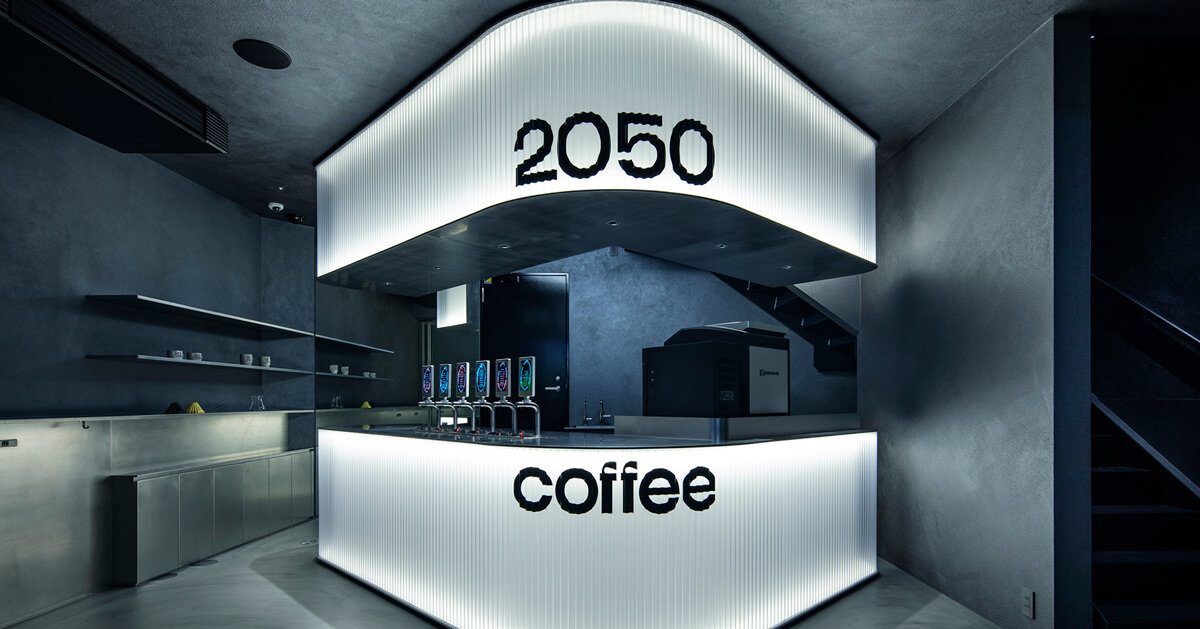
Diagonal geometries shift the movement of Midosuji upwards
Set along Osaka’s iconic Midosuji, 2050 Coffee’s new branch by TEKI Design introduces a new angle to the city’s historic axis. Through diagonal geometries and a vertical spatial experience, the café transforms everyday movement into discovery while reflecting 2050 Coffee’s vision for a more sustainable future.
Midosuji, the boulevard running through Shinsaibashi, began in the Edo period as a pilgrimage route connecting the Kita Mido and Minami Mido temples. During the early Showa era, it developed into Osaka’s primary north–south axis, linking Umeda and Namba and contributing to the city’s subsequent urban growth. Today, the boulevard remains a major urban artery and a defining element of Osaka. Situated alongside the shopping arcade, 2050 Coffee Shinsaibashi draws on the movement of the surrounding street and reinterprets its horizontal flow within the vertical organisation of the café. The spatial experience shifts movement upwards, creating a different relationship between the compact interior and the dense urban setting.
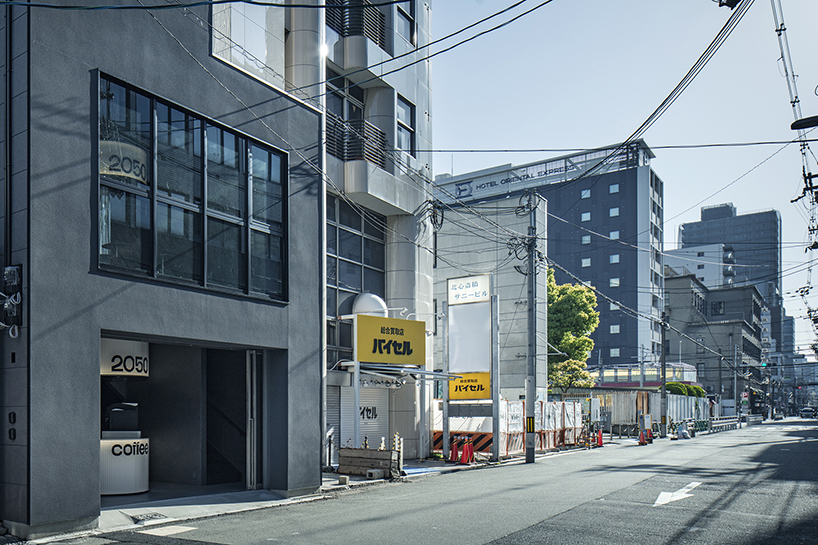
2050 Coffee Shinsaibashi occupies a site along Midosuji in Osaka | all images ©Kenta Hasegawa
Curves and diagonal lines reshape movement through the café
The design does not attempt to replicate Midosuji’s strong linear character. Instead, it introduces diagonal lines, curves, and angled geometries that contrast with the boulevard’s straight north–south axis. These elements alter the direction of movement and views through the space, creating a sequence that encourages visitors to experience the café through changing perspectives. The contrast between the linear boulevard and the café’s angled geometry establishes a distinct spatial identity while maintaining a connection to its urban context. The vertical arrangement extends the movement of the surrounding city into the interior, turning circulation into part of the architectural experience.
This approach also relates to the identity of 2050 Coffee, which considers the future of coffee and the development of a more sustainable coffee culture. At Shinsaibashi, this idea is expressed through a spatial intervention that introduces a different angle to the established urban axis of Midosuji. By combining diagonal geometries, curves, and vertical movement, studio TEKI Design creates a new perspective within one of Osaka’s most established urban settings, positioning the space as both a destination and a point of connection within the city.
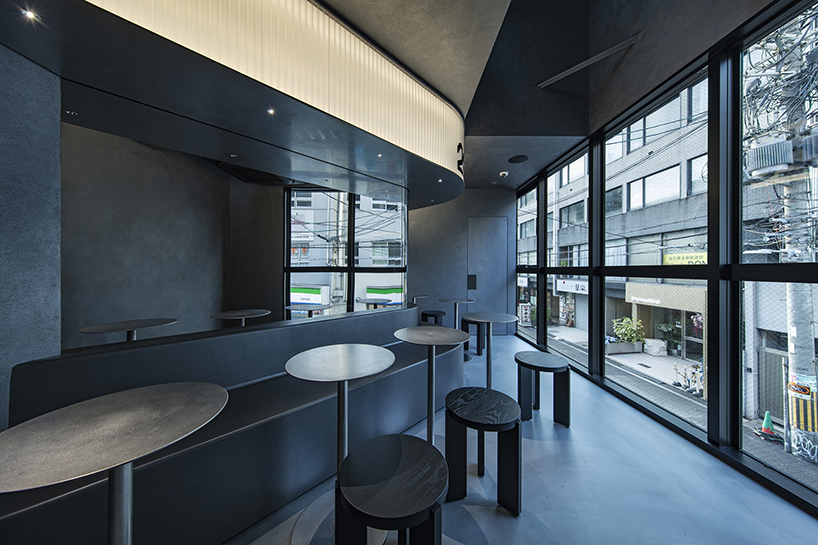
the café sits alongside the Shinsaibashi shopping arcade
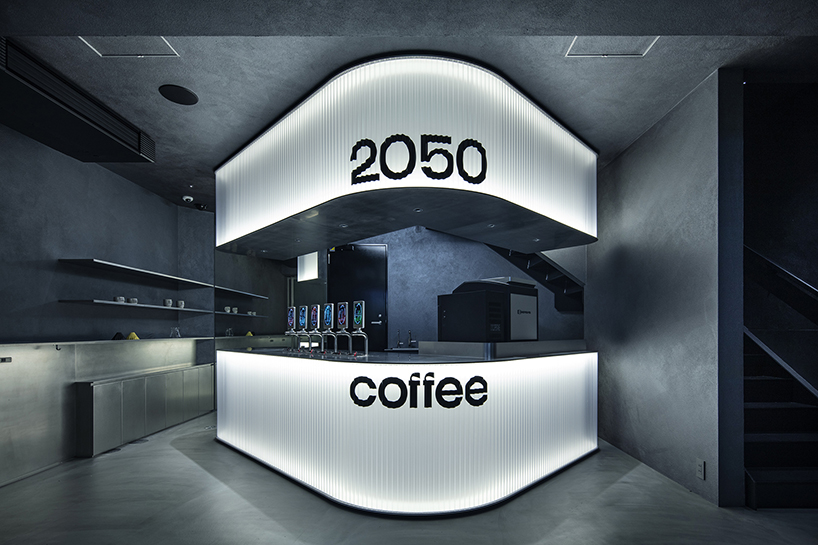
diagonal geometries contrast with Midosuji’s straight north–south axis
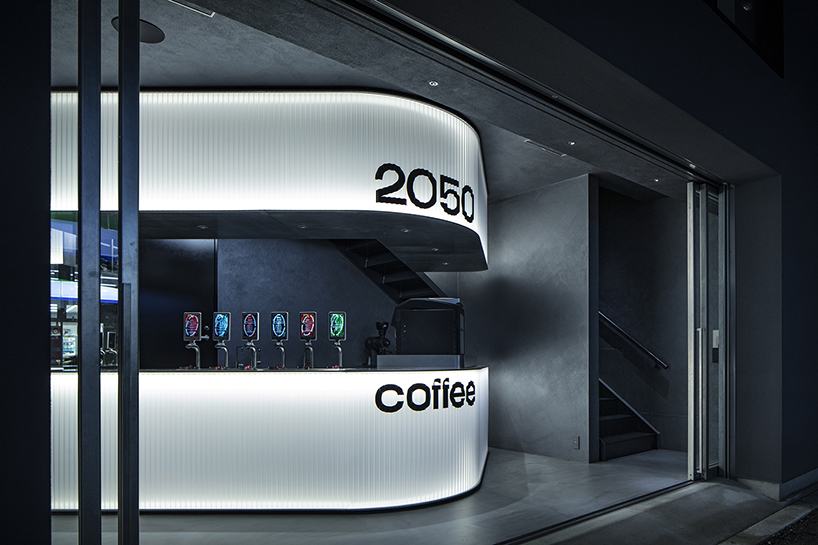
angled lines shift the direction of movement through the interior