
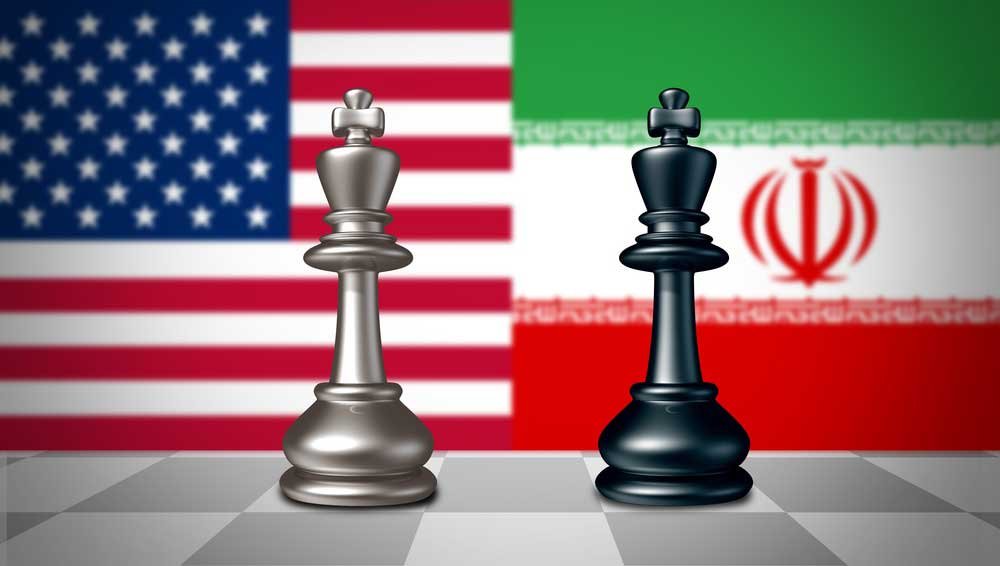
The distinction between disrupting an order and constructing one is therefore essential. Iran has demonstrated repeatedly that it possesses the capacity to disrupt regional arrangements that exclude its interests. The more difficult question is whether it possesses the political, economic, and diplomatic capacity to help construct an alternative order and sustain it over time.
A state can possess veto power without possessing order-building power. It can make an arrangement impossible without being capable of creating a durable replacement.
Iran’s leadership transition following the death of Ayatollah Ali Khamenei provides an early test of this capacity. The appointment of Ayatollah Mojtaba Khamenei as supreme leader in March 2026 provided early evidence of institutional continuity under extraordinarily difficult wartime conditions.[xxii] But it would be premature to treat the smooth initial transition as proof of longer-term institutional resilience. That will depend on economic conditions, relations among political institutions, public support, reconstruction, and the new leadership’s ability to manage relations with the United States and Iran’s neighbours. The question is therefore not simply whether Iran can withstand pressure, but whether it can translate institutional continuity into a sustainable regional strategy.
Iran’s geographic position provides considerable structural leverage; its military capabilities offer coercive options; and its relationships with China, Russia, Pakistan, Iraq, and other regional actors provide diplomatic channels beyond Washington. But none of these automatically makes Iran an architect of regional security. For Tehran, the opportunity created by the current crisis therefore comes with an equally significant challenge: demonstrating that its security interests can be pursued through arrangements that other regional states are willing to accept. That would require more than deterrence. It would require diplomacy, reassurance, economic interdependence, confidence-building measures, and a willingness to recognize the security concerns of neighbouring states.
The broader geopolitical environment makes the answer particularly consequential. China has a major interest in the stability of Gulf energy flows and in preventing disruption to maritime trade. Pakistan has demonstrated that middle powers with relationships across opposing camps can potentially create diplomatic channels unavailable to the primary conflicting parties. Russia also retains a significant interest in the regional balance, although its preferences do not necessarily coincide with those of Tehran or the Gulf states.
These actors do not form a coherent alternative bloc. Nor does their involvement mean that American influence has disappeared. A plausible development is therefore a gradual diversification of the regional diplomatic architecture. The United States is likely to remain an indispensable military and economic actor in the Gulf. But the war may make it harder for Washington to operate as the region’s sole security arbiter. Washington may remain the most powerful external actor while becoming one participant in a more pluralistic regional balance.
The most plausible long-term outcome may therefore be neither Iranian hegemony nor Iranian exclusion. It may be something closer to Iranian veto power: a regional environment in which major security, energy, and maritime arrangements cannot be sustained without accounting for Iran’s interests and capabilities. That is a narrower claim than saying Iran will become the architect of the next regional order. It is also a claim more consistent with the evidence.
Iran’s structural importance does not depend on neighbouring states sharing Tehran’s views and regional priorities, and endorsing its policies. It requires only recognition of a geographical and strategic reality: Iran is too large, too geographically central, too militarily capable, and too deeply embedded in the Gulf’s security environment to be treated as an external variable. The question is whether that recognition becomes institutionalized. It could occur through regional security mechanisms, maritime arrangements, energy agreements, bilateral confidence-building measures, or broader multilateral diplomacy.
But none of these outcomes is guaranteed. Indeed, the current trajectory could move in the opposite direction if Gulf states conclude that their safest strategy is to reduce their dependence on Iran’s geography, strengthen their military capabilities, and deepen external security partnerships. The competition between these two trajectories – accommodation and balancing – will likely shape the next phase of the regional order.