
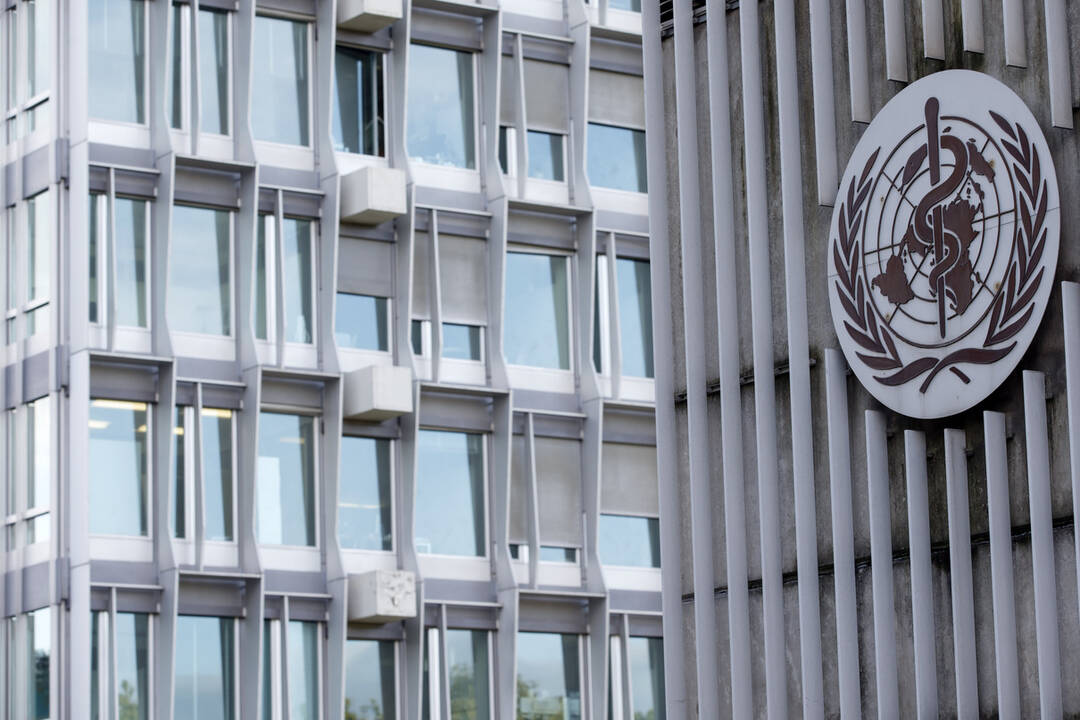
As the nomination deadline nears for the global health body, some candidates may be better placed than others to win support from key member states amid the agency’s geopolitical realignment.
A final list of candidates vying to run the World Health Organization (WHO) is set to be confirmed on 24 September, just months after the United States withdrew from the agency. With Washington now out of the building, many will be watching the role that China, now the biggest funder, as well as Europe and wealthy Gulf states, may play in the race, and what it may ultimately mean.
In recent months, several officials have been seen as potential candidates to succeed director general Tedros Adhanom Ghebreyesus when his term ends next August. The four official candidates so far are Hanan Balkhy, the Saudi WHO director for the Eastern Mediterranean region; Hanan Al Kuwari, Qatar’s health minister; Hans Kluge, the Belgian WHO Europe director; and Indonesian health minister Budi Gunadi Sadikin.
Money matters
Foremost among candidates’ considerations will be ensuring donor support, after two years of financial turmoil at the organisation. Since early 2025, nearly a quarter of jobs – over 2,300 posts – were cut due to donor funding cuts, mostly by Washington. The United States’ exit in March – which President Donald Trump promised during his election campaigning – left behind some $260 million in unpaid membership dues. Trump accused the WHO’s leadership of not doing enough to press China on information regarding the Covid-19 outbreak.
As Beijing has risen to become the agency’s top contributor, China’s pick for the director-general role will matter. Kieran Bligh, a PhD student and researcher on the WHO leadership process at George Washington University, explains that Beijing’s recent appointment as a Western Pacific representative to the WHO’s Executive Board – one of 34 members to choose top contenders before the final vote next May – signals its direct influence over the selection process.
“Money matters,” he says about the influence China could have within the board, noting how its investments in key infrastructure, including roads, ports and mines in Africa, may weigh in on other board members. “Those influences do not disappear when governments walk into a secret ballot, and debt exposure can be powerful leverage.”
For now, Gunadi Sadikin may be one to watch, he says, given Beijing’s close ties to Jakarta. Despite his lack of medical or public health training, the Indonesian candidate, who was chief executive officer of Bank Mandiri, the country’s largest financial institution before becoming health minister, may have an advantage as the agency navigates the funding crisis. “He brings something genuinely different: transformation, fiscal responsibility, charisma and likeability, with a profile that is politically palatable across regions”, he says.
Balkhy, who is regarded as having successfully managed sexual misconduct and abuse allegations in her region, is well-connected, and Riyadh has also been lobbying intensively; she may also fit the bill to lead the WHO from the perspective of China, which has deepened ties with the kingdom, particularly in trade, energy and finance.
Riyadh’s equally close relations with Washington, which may be watching the process, albeit from the sidelines, could also play in Balkhy’s favour.
Ubi es, Europe?
With former WHO assistant director general Jeremy Farrar, a Brit who had been rumoured to be a possible candidate, now seemingly out of the running after accepting a senior role at Path, a health non-profit, Kluge remains Europe’s only candidate. But his bid has so far failed to receive backing from the European Union, which Bligh writes may signal either the bloc’s preference to wait until all bids are in before announcing its support, or concerns about his ability to deliver organisational reform.
Last week, the EU Commission’s health emergencies director, Florika Fink-Hooijer, praised Gunadi Sadikin in a social media post after a meeting with the candidate in Jakarta, leading some to question whether that amounted to an endorsement.
“Europe looks surprisingly leaderless,” the researcher says. Germany, a major contributor to the organisation, recently told Health Policy Watch that it will not nominate a candidate to lead WHO.
Kluge, the only Western contender, is expected to receive the backing of Israel, an Executive Board member – a move that may become a political liability if made too publicly, prompting others to reconsider support for the Belgian.
Other issues may also work against him. As a European, he could be seen by some developing countries as too closely tied to the pharmaceutical industry, which they blame for stalling Pabs negotiations aimed at ensuring better access to vaccines and drugs. His nationality from a country with a history of brutal colonialist policies in Congo may also be a factor in how those board members vote.
Which way for the WHO?
Bligh warns of what a lack of leadership from Western countries may mean for the leadership race. “The bigger risk is that Washington vacates the space and China fills it,” he says. “The WHO could increasingly become a tool used against US interests while (Washington) has no seat at the table.”
After the nominations deadline closes, candidates will follow a recently refined set of requirements, similar to the UN leadership race, to provide more transparency on high-level appointments. Candidates for the top job will participate in a live forum in November before the organisation’s Executive Board selects three contenders at its session in late January. Those candidates will then be presented at the World Health Assembly in May for a final vote, after a second interactive forum. Tedros’ term will end on 15 August 2027.