
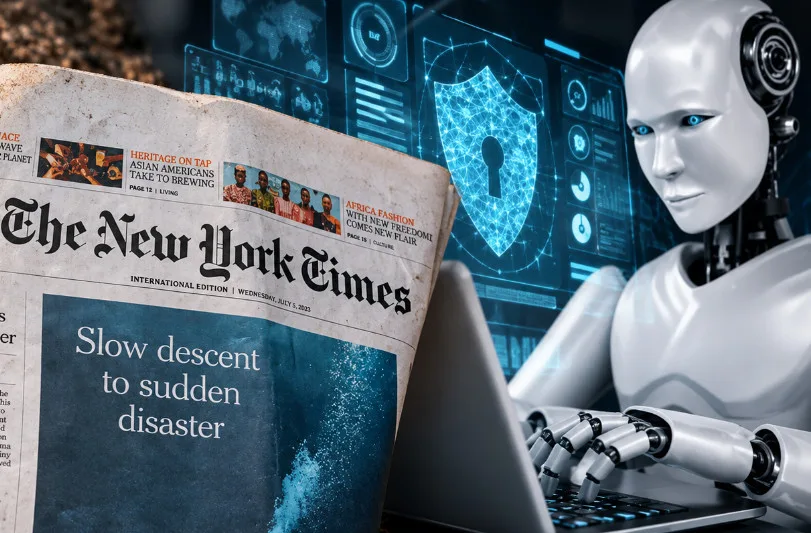
Comments from Microsoft and OpenAI representatives may contradict their public stance on using copyrighted materials to train AI models.
One of the most significant controversies surrounding generative artificial intelligence (AI) concerns the materials technology companies use to train their models. Microsoft and OpenAI contend that using copyrighted content for AI training falls under the fair use doctrine. However, internal company documents contain statements that may suggest a different assessment of this practice.
According to The Washington Post, Brent Hecht, Microsoft’s Applied Sciences Director, stated in court documents that the public worldwide might perceive large language models as an unprecedented scale of theft.
These documents were released on Thursday as part of an ongoing lawsuit between several media companies and technology firms.
Statements from Microsoft’s Representative
In the latest court filing, Hecht described the approach taken by Microsoft, OpenAI, and other companies in training models on vast amounts of material from the open internet.
He suggested that generative AI could become “the largest labour theft in human history.”
These comments relate to a copyright case filed by The New York Times at the end of 2023. The publication accuses technology companies of using its materials to train AI models.
Microsoft and OpenAI, for their part, argue that training AI on articles from The New York Times and other publications constitutes fair use—analogous to how a student reads books.
The defendants also claim that the results produced by generative AI based on such materials sufficiently transform the original content.
OpenAI Acknowledged ChatGPT’s Ability to Reproduce Material
Concurrently, the court filing contains internal comments from OpenAI representatives regarding the AI’s ability to reproduce news materials.
Specifically, OpenAI CEO Greg Brockman admitted that ChatGPT can predict and complete sentences from The New York Times articles when processing the publication’s content.
Hecht also noted that to win the lawsuit, the defendants might have to “completely ridicule the very idea of fair use.”
AI’s Threat to the Media Business
Another important aspect of The New York Times’ lawsuit is the impact of generative AI on the business model of news media.
Google and other search engines already provide users with AI-generated summaries of articles in response to search queries. This potentially reduces the number of readers who visit media websites directly.
In this week’s court filing, an OpenAI representative involved in developing ChatGPT stated that publishers face an existential threat due to the development of artificial intelligence.
Subscribe to our Telegram channel t.me/sudua and to Google News SUD.UA, as well as to our VIBER and WhatsApp, page on Facebook, on Instagram and on X to stay informed about the most important events.