
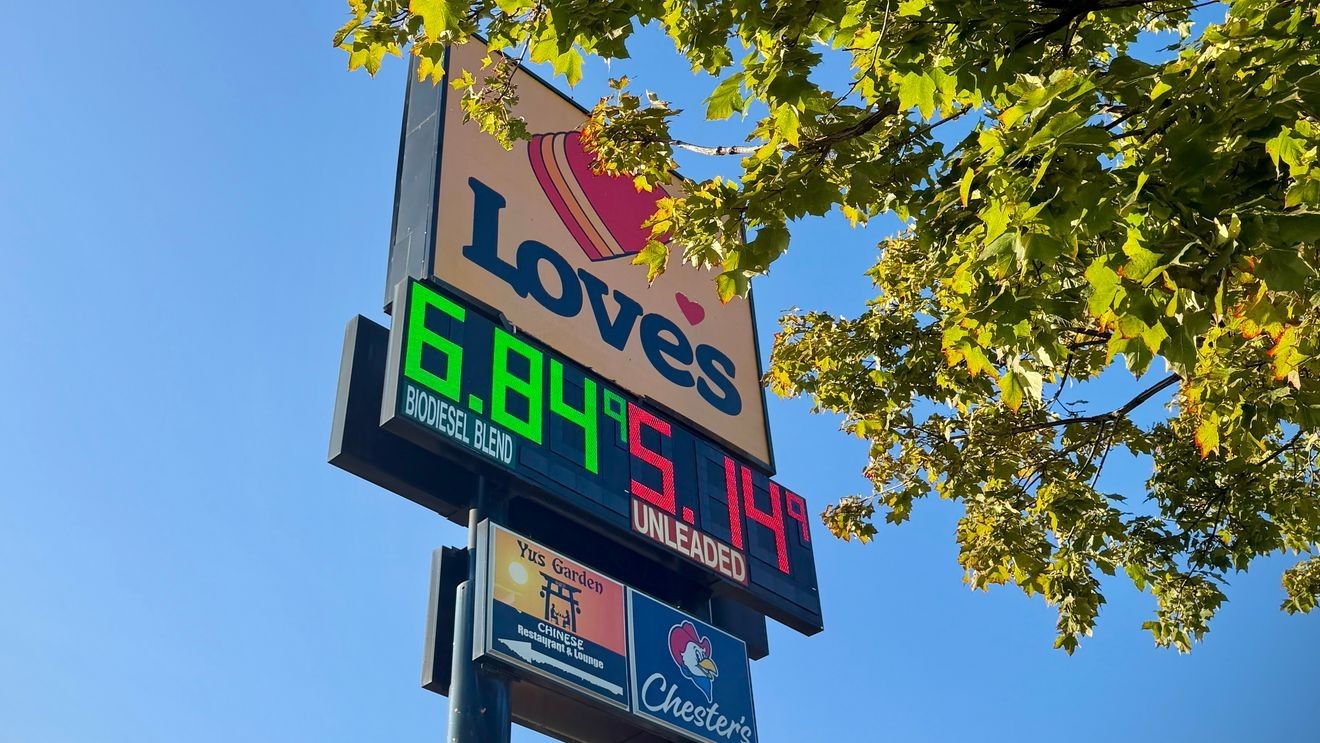
TROUTDALE, Ore. (KATU) — Record diesel prices are putting pressure on truck drivers and could eventually increase the cost of groceries, cars and home-building supplies.
The national average for diesel is about $6.45 per gallon, while Oregon’s average is approximately $6.83, according to AAA. Both are record highs.
GasBuddy’s historical data shows diesel was around $3.50 nationally and about $4.10 in Oregon in January.
POLL: Gas prices surge across Oregon, Washington. How have you been impacted?
For owner-operator Vatissa Rhodes, the increase has nearly doubled her weekly fuel bill.
“My paycheck has been cut maybe about a third,” Rhodes said. “When I would normally, going across country, spend no more than maybe $1,700 to $2,000 a week, now I’m spending about $3,500 a week or more.”
Rhodes said the cost has climbed even higher during the past two weeks.
Driver considers parking her truck
Rhodes has worked as an owner-operator for six years. She bought her truck hoping to earn more money, build her savings and invest in her business.
Instead, she said she is falling into debt.
“I’m actually already looking to drive for another company to park my truck,” Rhodes said. “It’s getting to be too much.”
Rhodes said the job already requires truckers to spend long periods away from their families.
“I’ve got a daughter in college. My son’s a senior,” she said. “I’m out here, you know, we sacrifice our time on the road away from home, using public facilities, and you name it. It’s a whole lifestyle, but it’s becoming, it’s getting to the point where it’s not worth it.”
Rhodes said she expected owning a truck would allow her business to grow.
“Financially, I bought the truck so that I could increase my income, save more, and instead, I’m losing money,” Rhodes said. “I’ve been an owner-operator for six years, and it’s increasingly harder and harder every year.”
She said she has not been able to expand, save or invest.
“I’m actually going into debt,” Rhodes said.
Refrigerated loads require more fuel
Rhodes transports food in a refrigerated trailer. That means she must buy diesel for her truck and additional fuel to keep the trailer cold.
“I transport food, so my trailer is like a big refrigerator or freezer,” Rhodes said. “And when you have frozen loads, it eats more fuel just to keep the food inside fresh to get to the grocery store warehouses and grocery stores.”
Rhodes said fuel surcharges have not increased enough to cover her added expenses. She also said the rates offered to transport freight have not kept pace with fuel prices.
“There isn’t much transparency with the brokers,” Rhodes said. “I know that the prices in the stores are going up, but we’re still not seeing an increase, so it’s hurting the drivers and the companies that are paying for the fuel.”
Small trucking companies face cash-flow pressure
Jana Jarvis, president and CEO of the Oregon Trucking Association, said fuel and labor are the two largest expenses for trucking companies.
She said about 90% to 95% of trucking companies operate five trucks or fewer, leaving small businesses especially vulnerable to sudden price increases.
Many trucking contracts include fuel surcharges that allow carriers to charge customers more when diesel prices rise. However, those surcharges may not immediately solve the problem.
“It can create a real cash-flow problem because they often aren’t paid for several weeks while they have to pay for the fuel right up front,” Jarvis said.
Jarvis said some trucks can carry about 250 gallons of diesel. At $6.83 per gallon, filling that amount would cost more than $1,700.
She said most trucking companies eventually pass increased transportation expenses to their customers.
“As their costs increase, they’re going to fold that into the cost to consumers,” Jarvis said. “Prices always eventually get pushed onto the consumer.”
When could consumers feel the impact?
Higher transportation expenses could eventually add to the cost of groceries, vehicles and home-building supplies.
Truck driver Anthony Metcalf transports building materials. He expects the higher cost of moving those materials will eventually reach homebuyers.
“People that are wanting new houses still, it’s going to start passing down to them,” Metcalf said.
Metcalf said lumber, shingles and siding could all become more expensive.
Grocery prices are already high, but experts say the recent diesel spike could take weeks or months to appear at the checkout line. Many freight rates are established through contracts, which can delay when additional transportation expenses are passed to stores and consumers.
Diesel is also used throughout the food supply chain, including in farm equipment and refrigerated trucks. Economists told Reuters that prolonged diesel prices could increase food costs, although fuel represents only one part of a product’s final price.
Global disruptions tighten diesel supply
Diesel prices are expected to remain elevated and could continue rising.
Much of the surge has been linked to global supply disruptions caused by the war involving the United States, Israel and Iran, which has slowed the flow of oil. Damage to critical refineries, attacks on Russian energy infrastructure and restrictions on fuel exports have also reduced global diesel supplies.
RELATED: More fuel price spikes expected as Saudi pipeline could stay closed for month or more
The U.S. Energy Information Administration says diesel prices are affected by crude oil costs, refining margins, taxes and distribution expenses.
Rhodes worries continued financial pressure could force more small operators off the road.
“A lot of my friends are owner-operators as well,” Rhodes said. “We’re the ones when the big companies can’t cover all the loads, they come to us, and we get the job done.”
She warned that fewer independent drivers could eventually disrupt deliveries.
“There’s gonna be a lot of stuff missing on the shelves if we get off the road,” Rhodes said.