
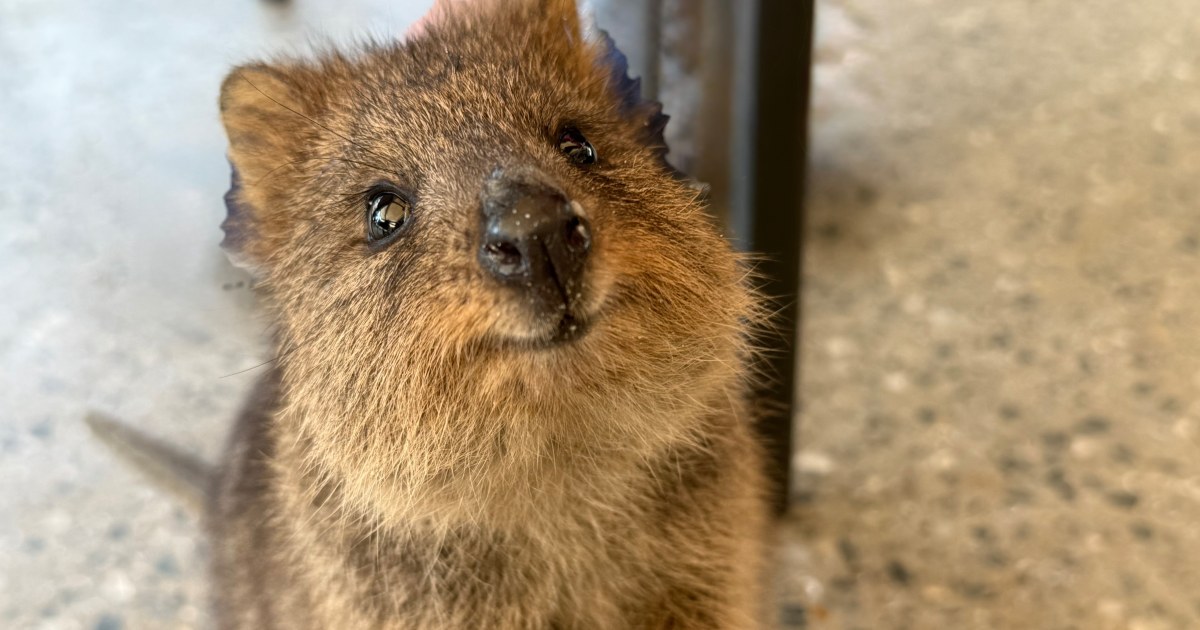
When you think of animals in Australia, kangaroos and koala bears probably come to mind. But there’s another that people are flocking to see — or should we say “quokking” to see.
Yes, we’re talking about the quokka.
Quokkkas are small, furry animals that have become famous online as the “world’s happiest animal” and are one of the reasons people head out to Rottnest Island, about 20 miles west of Perth.
Quokkas are related to kangaroos, and the cheery animals are “known for their friendly demeanor and heart-warming smiles,” according to the Australia Zoo.
“They didn’t really evolve with predators,” American conservation scientist Dan Gwinn, who spends time each day the animals, told TODAY in an interview that aired Sept. 22.
“They’re willing to allow you to be close to them, so, you get to have that close-up and intimate experience,” Gwinn added. “That’s pretty rare.”
At this time of year, quokka babies, also known as joeys, pop out of their mothers’ pouches and are the guests of honor at a birthday party to welcome them. They’re loved, but don’t seem to realize they’re so famous.
“They have no idea,” Gwinn said. “They’re so photogenic, it’s ridiculous.”
Quokkas look like they’re smiling due to their bone structure. And that has prompted celebrities like Katy Perry, Chris Hemsworth and Margot Robbie to snap selfies with the creatures. Roger Federer once took a selfie that was so adorable that we here at TODAY wrote about it.
If you ever get the chance to get a picture with a quokka, just remember to go low, wait and let the animal come to you, as NBC News correspondent Janis Mackey Frayer learned first hand.
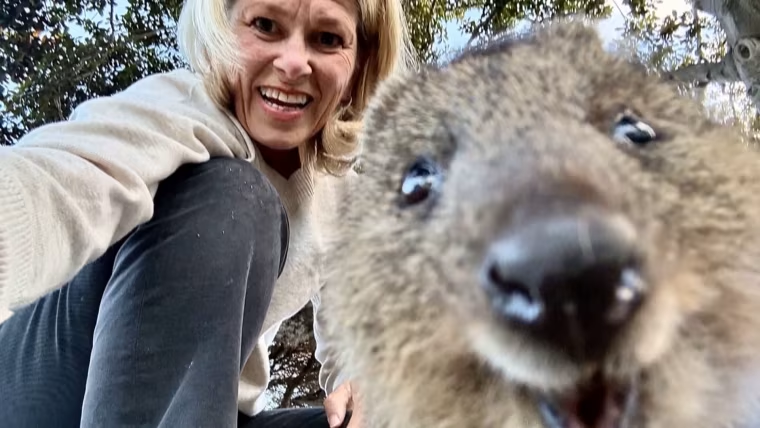 Smile!TODAY
People who visit Rottnest Island are not allowed to touch or feed the animals who flourish there due to the absence of natural predators. Conservation for all animals is funded by tourists who head to the island to get a look at the quokkas.
“By protecting the quokkas, you’re protecting all of the other animals and plants that live on the island so the whole island can thrive,” park ranger Kye Adams said.
Quokkas are known to try and take food from people, while the species itself is considered vulnerable — even as the island population is stable — so conservation efforts are aimed at keeping them safe and happy.