
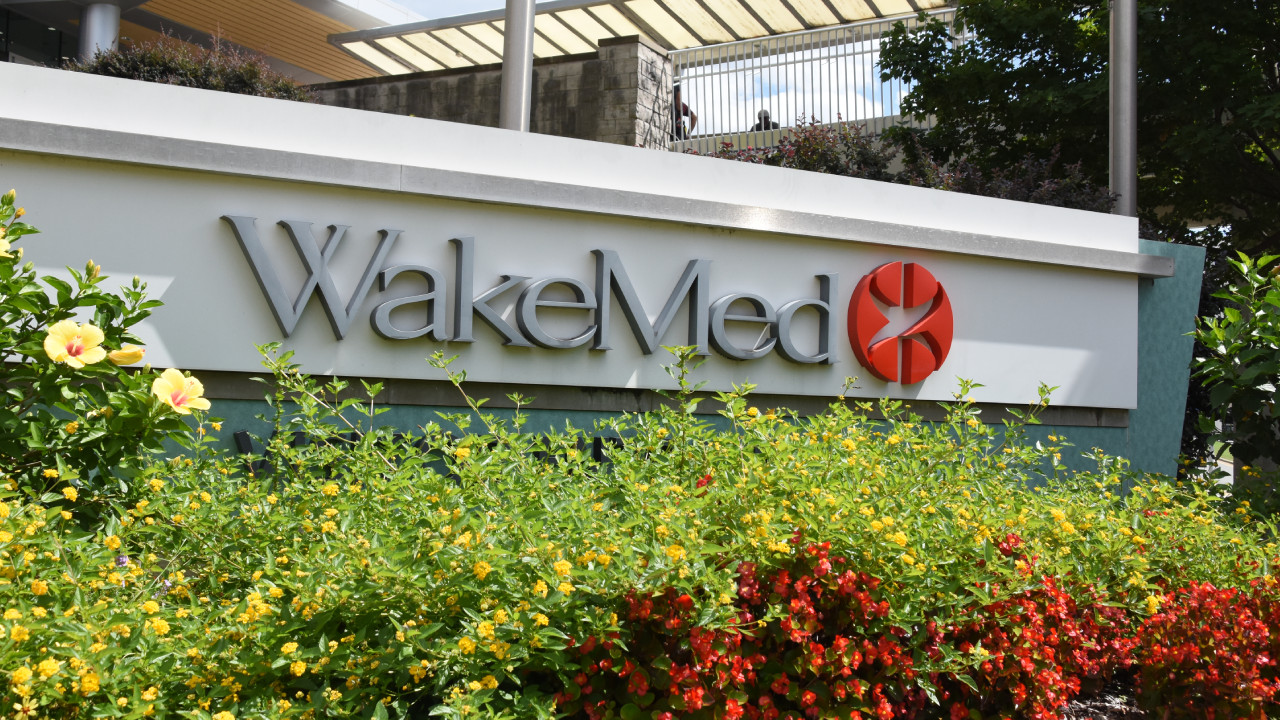
State and federal regulators still need to sign off on a proposed combination between WakeMed and Atrium Health, even after a vote to approve it Monday night. And the fight against the proposed transaction could carry on until the deal is done.
The vote on Monday by the Wake County Board of Commissioners was a win for the hospital chains’ executives, who said in a joint statement that it will expand access to care, add local jobs, increase investment in community-based organizations and “catalyze innovation and improve the health and well-being of Wake County for generations to come.”
But it’s a loss for critics who fear the consequences of a merger.“While we’re not surprised by this outcome, we remain profoundly concerned by it,” Republican State Treasurer Brad Briner, who opposed the deal from the start, said in a video Tuesday. Briner and other officials have raised concerns that the deal will increase prices for patients, including state employees and retirees on the State Health Plan, which he oversees.
© WRAL
“The people of Wake County and the taxpayers of North Carolina deserve better than what has happened here so far,” Briner said. “But it’s not too late to back away.”
An Atrium spokesperson said that for Briner or others who share his concerns, they want to give reassurance that the deal will not reduce competition for healthcare in Wake County, and added: “We share the Treasurer’s commitment to making healthcare more affordable.”
Either way, the fight isn’t over yet.
The county commissioners voted 5-2 Monday to approve amendments to WakeMed’s articles of incorporation and a transfer agreement, allowing the proposed deal to move into the next phase.
WakeMed hasn’t been owned by the county since 1997, but county has retained some oversight of the nonprofit hospital system, requiring the county-level vote to enable WakeMed to be absorbed into the much larger Atrium chain.
WakeMed and Atrium have said the combination would bring major investment to Wake County. Their latest agreement includes a $150 million Wake County Whole Health Program and a strengthened charity care commitment. Atrium has also committed to investing $2 billion in WakeMed.
“This combination will expand access to affordable, nationally leading care, strengthen mental health and other critical services, grow local jobs, increase investment in nonprofit and community-based organizations, address social drivers of health, catalyze innovation and improve the health and well-being of Wake County for generations to come,” the hospitals said in a joint written statement.
But the merger isn’t final until it also wins approval at the state and federal level, too.
What’s next?
The proposed combination now moves into the regulatory review process, including review under federal antitrust law.
WakeMed and Atrium said Monday night that the county’s vote was a “historic milestone,” while acknowledging that more work remains.
“This vote brings us to the next chapter of the process, and important work remains ahead,” the organizations said in a joint statement.
One of those next steps is approval by the attorney general’s office. And while it’s possible that Attorney General Jeff Jackson could reject the proposed merger, state law gives him very limited legal authority to do so. His office didn’t immediately respond to a request for comment Tuesday and Jackson has previously kept his statements on the proposal neutral. A spokesperson for Jackson told WRAL in May that if the deal were to advance to this stage, Jackson’s review would focus “on ensuring patients can continue to get high-quality healthcare they can afford, no matter where in the state they seek care.”
State Sen. Jim Burgin filed a bill this session — before the proposed merger became public knowledge — to give the attorney general’s office more power to stop such deals, but that legislative effort was unsuccessful. The Harnett County Republican, who is co-chair of the state Senate’s healthcare committee, plans to try again in the coming legislative session if he wins reelection.
Burgin worries that hospital mergers could weaken healthcare in rural parts of the state — a concern that has led to a bipartisan alliance between him and the state’s present and past Democratic attorneys general, Jackson and Josh Stein. Stein is now the state’s governor.
“I’ve spoken repeatedly about my concern that North Carolina is going to end up with three or four major healthcare entities and everybody else in rural North Carolina is going to be left to try to find care,” Burgin told WRAL on Tuesday.
Burgin pointed to an example from western North Carolina involving local Mission Health being bought by Tennessee-based HCA, which quickly moved to shut down clinics and later also closed Asheville Specialty Hospital, the only long-term acute care facility in the western part of the state. HCA didn’t immediately respond to a request for comment.
As attorney general, Stein allowed the deal to go through in 2019. But by 2023, Stein was in court fighting to undo it, saying the newly merged company had broken promises it made as part of the 2019 deal. The effort has been unsuccessful.
Burgin worked with Stein on crafting his bill this year giving the attorney general more power to stop future mergers — something Stein also called for earlier this year, and again on Sunday ahead of the vote.
“Since my time as attorney general, I have been urging the General Assembly to give the attorney general’s office more authority to review hospital transactions and protect North Carolinians from the increased prices and decreased quality they often bring,” Stein wrote Sunday. “Healthcare costs are too high, and additional oversight and authority would better protect patients.”
New promises
The governor’s office expressed skepticism about the deal previously. The merger proposal “deserves close scrutiny and careful consideration,” Stein’s deputy general counsel South Moore wrote in a letter to WakeMed officials last month. The office had questioned whether the deal would lead to higher costs for patients and pressed executives on the level of charity care promised under the terms of the deal.
By late Sunday, WakeMed and Atrium had agreed to several concessions to win his more confident support. While there’s nothing the governor can legally do to stop a hospital merger, no hospital company would like to have such a well-known politician criticizing it. Stein is a Democrat, and the Wake County Board of Commissioners consists entirely of Democrats.
Under the new terms of the agreement, WakeMed would provide indigent care and other services for low-income people equal to at least 8% of its total adjusted revenue each year, up from less than 5%. It would also cap price hikes at certain levels, based on Medicare rates, for the first five years of the deal. Hospital mergers typically result in price hikes, according to academic studies cited by Briner.
“Hospital consolidation leads to less competition and higher prices,” Briner said Tuesday, calling the promise to cap price hikes for only a few years a “minor” concession. An Atrium spokesperson pushed back on that description, saying they believe this is the only proposed hospital merger deal in the nation that includes a cap on price hikes tied to Medicare rates, which are typically lower than other rates.
WakeMed and Atrium made a number of other agreements related to Wake County that Stein praised Sunday ahead of the county vote, including:
The hospitals’ promise to spend $15 million a year, for 10 years, to expand mental health services in Wake County.The ability for Wake County commissioners to retain power to approve or deny some proposals related to WakeMed’s governance.Language shoring up new investment in Wake County, changing what had been a proposal to spend $2 billion locally on new capital investments into a requirement to do so.
Stein said that with those and other changes now agreed to in the last few days, the proposal “has improved substantially” and he won’t oppose it.
“I am pleased that Atrium and WakeMed agreed to my request to protect families by capping price increases at WakeMed for the next five years,” Stein added. “Now that the commission has voted, I welcome the Attorney General’s review of the proposed transaction and his office’s independent assessment of it.”
Briner, however, remains less impressed by the concessions. “Nothing has fundamentally changed from the original proposal,” he said Tuesday.
Briner called on Jackson to conduct an independent review of the deal, its effect on prices, competition, and access to healthcare. “And I’m hopeful that federal regulators will step in to consider how crossmarket mergers like this one harm competition,” he added.
An Atrium spokesperson expressed confidence that the deal will continue winning approval, saying: “The Wake County commissioners spent an incredible amount of time over the last several months, assessing all of the detail related to this combination. We’re grateful for their thoughtful due diligence.”
FTC authorization also needed
Federal regulators have more power over the fate of the deal. The Federal Trade Commission, which will have to sign off on the deal, told WRAL it generally does not comment on pending mergers or acquisitions.
If the agency decides to oppose a merger, that stance can often — but not always — spell doom for the deal. In 2022, an analysis by the Kaiser Family Foundation healthcare research group found, there were 53 hospital merger announcements. The FTC opposed three of them, and all three of those deals fell apart in the face of that opposition. But in other recent years, hospitals have taken the FTC to court and sometimes won approval to merge despite the agency’s opposition.
The agency told WRAL its standard merger review process generally includes a 30-day waiting period for most transactions. The agencies can allow the deal to proceed after that review, or they can request additional information if they have competition concerns.
For the WakeMed-Atrium deal, competition is one of the issues that has drawn scrutiny from the general public as well as some local politicians.
Wake County Commissioner Vickie Adamson, who voted against the deal on Monday, questioned whether there was enough opportunity for competing bids to merge with WakeMed. WakeMed got an unsolicited $5 billion proposal from UNC Health that would have reduced competition in Wake County.
“We’ve been assuming the FTC was a given,” Adamson said, “but since there was no competitive process here. There was data given on other hospitals, but they weren’t given an opportunity to bid on this.”
Depending on what information comes to light if regulators raise their own concerns about competition, the review process can be extended. The agency could ultimately close its investigation, negotiate a settlement or take legal action to challenge the deal.
WRAL reporters Bailey Stamos and Caroline Yaffa contributed reporting.