
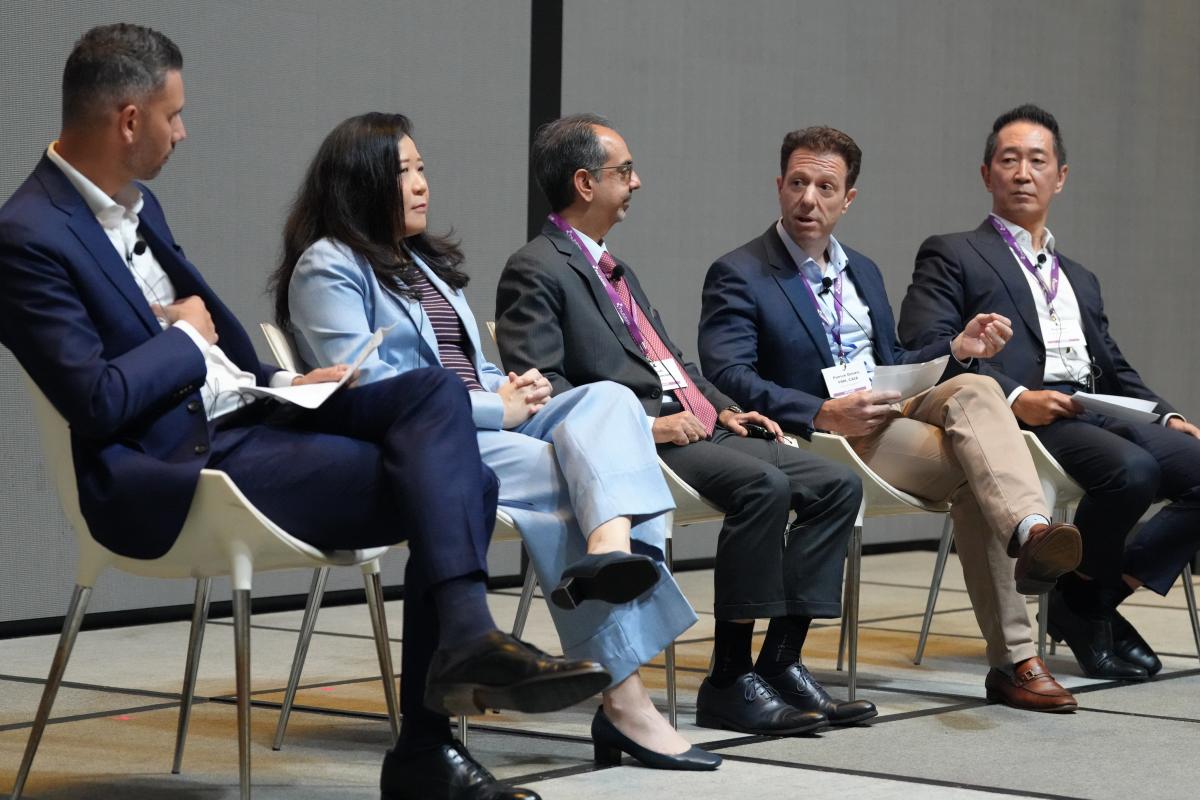
The second panel at the Hubbis Investment Forum – Singapore 2026 examined how Asian wealth managers can improve advice without turning personalisation into a purely manual service. Panellists worked from a portfolio-level framework in which every investment is judged against the client’s total return potential, risk, liquidity and existing concentrations. Central research and analytics can support that process, but the recommendation still has to reflect the client’s wider finances.
Both discretionary and advisory mandates have a role. A managed core can provide asset-allocation discipline, while client-directed positions preserve control and engagement. Technology is moving deeper into meeting preparation, portfolio diagnostics and follow-up, although survey evidence and the panellists’ experience continued to support a hybrid model in which advisers interpret the output and remain accountable for the discussion.
Chair: Brett Kennedy, Managing Director – Investments, Hubbis
Panellists
Rajesh Hathiramani, Managing Director, Head of Active Advisory, Investment Services, BNP Paribas Wealth Management
Patrick Donze, FRM, CAIA, Head CIO Lab, Bank of Singapore
Wei Mei Tan, CFA, CA, CAIA, Managing Director, Global and Asia Head of Advisory, HSBC Bank
Ron Lee, Investments, Executive Director, Bordier & Cie Singapore
Key Takeaways
Portfolio-level advice evaluates each investment by its contribution to total risk, return, liquidity and concentration, rather than treating products or asset classes in isolation.
Factor analysis, stress testing and robust optimisation can expose risks that conventional asset-class labels or a single market forecast may miss.
A consolidated risk view can accommodate discretionary mandates, advisory holdings, private assets, structured products and positions that clients manage themselves.
A managed core with client-directed satellites gives clients long-term asset-allocation discipline without requiring them to surrender all investment control.
Systematic screening can help advisers match house views and investment ideas to relevant portfolios, but client suitability and human review remain essential.
The right balance between advisers and technology varies by segment. Private-bank clients may expect more human contact, while broader retail delivery requires more automation.
Artificial intelligence can improve the entire advisory workflow, but better prompts, reliable data and human interpretation matter more than access to the tools themselves.
Advice Is Moving to the Portfolio Level
The panel described a shift from product-by-product transactions towards advice based on the whole portfolio. The Whole Portfolio Approach (WPA), adapted from the institutional Total Portfolio Approach (TPA), connects the client’s objectives with strategic asset allocation, implementation, risk and liquidity instead of optimising each asset-class bucket separately.
The practical work includes factor analysis, stress testing and scenario analysis. A portfolio may appear diversified across asset classes while remaining heavily exposed to the same drivers, such as economic growth, interest rates or liquidity. Robust optimisation can also reduce dependence on one precise forecast by testing whether the allocation remains coherent across a wider range of plausible conditions.
The selection test was concise: “A good investment is not enough. It has to earn its place against everything else the client owns.” The adviser must establish what an idea changes in the total portfolio and whether another holding already performs the same role more efficiently.
One Risk View Can Cover Different Assets
Private clients rarely arrive with a clean portfolio. Their wealth may include shares in an operating company, listed securities accumulated over time, private-market funds, structured products and investments held through separate mandates. The first task is to identify what anchors the family’s wealth and how the remaining assets interact with that concentration.
A founder with a large holding in one company may need a liquid portfolio built around different risk drivers. A client with substantial private-market exposure needs enough liquidity elsewhere to meet spending, capital calls and unexpected withdrawals. Structured products and independently traded shares also have to be assessed by the exposure they add, not simply by the account in which they sit.
No single manager has to control every decision. Discretionary portfolio management (DPM), advisory holdings and client-directed positions can coexist if reporting brings them into one consolidated risk view. That allows the adviser to see the combined exposure while preserving the ownership and decision rights attached to each part of the portfolio.
Managed Cores and Client Satellites Can Coexist
DPM was positioned as a way to establish a stable, long-term core. Clients who want greater involvement can retain advisory or self-directed satellite holdings around it. One participant described those positions as the client’s “financial entertainment”, reflecting the continuing appeal of trading without allowing every tactical idea to determine the family’s strategic allocation.
This structure also fits the Asian preference for control. First-generation clients focused on preservation and succession may use DPM for part of their wealth, while digitally confident family members may implement more ideas themselves. The panel still expected both discretionary and advisory mandates to grow as firms move clients away from a purely transactional brokerage relationship.
Mandates can also reflect specific restrictions or exposures. A standard risk-profile portfolio may sit beside a sub-portfolio of private assets or client-selected positions, while consolidated reporting preserves an overall view.
Personalisation Requires a Repeatable Process
A larger product list will not scale advisory work. One bank combined top-down views from its chief investment office (CIO) with ideas from equity, fixed-income and fund specialists. Its fee-based advisory service then used portfolio data to identify which clients might benefit from a recommendation.
An internal engine called Active Portfolio Suggestions (APS) monitored events such as company earnings, large price moves and rating changes. It screened across hundreds of clients and helped the advisory team identify where an idea might be relevant. The example given was a possible switch from Alphabet to Meta, followed by review from the appropriate specialists and adviser.
APS was presented as a firm-specific example rather than an independently tested system. Its value depends on the quality of the screening rules, the portfolio data and the review that follows. Automation can narrow the audience for an idea, but it cannot establish suitability without the client’s mandate, circumstances and risk constraints.
A CIO strategy fund can also package disciplined asset allocation with public markets, private assets, alternatives and commodities. This may suit clients who want a managed portfolio through one vehicle, although any claim of distinctiveness still depends on the fund’s exposures, terms and implementation.
The Human and Technology Mix Varies by Segment
Private-bank clients have historically received more human attention and often continue to value an adviser’s experience and judgement. A retail bank serving a much larger population cannot provide the same level of contact at the same cost. Its platform therefore has to carry more of the research, servicing and delivery work.
The capacity problem was equally direct: “We cannot scale the business simply by continuing to hire more advisers.” The required balance will vary by client segment and complexity. Technology can extend an adviser’s reach, but indiscriminate cuts to human contact may remove the part of the service that private clients value most.
A 2026 survey of around 10,000 affluent and high net worth (HNW) investors across ten markets illustrated that distinction. Although 73% had used artificial intelligence (AI) for financial or investment purposes, only 12% said it was the most influential factor in their latest investment decision. Half preferred a combination of AI and a professional adviser for future decisions.
Artificial Intelligence Is Entering the Adviser Workflow
The most immediate AI use cases sit around the client meeting. Beforehand, an adviser can gather research, generate portfolio observations and review investment ideas. During the meeting, software can record the discussion, identify possible actions and prompt the adviser on the next best step. Afterwards, it can help prepare proposals, portfolio reviews and follow-up notes.
Firms represented on the panel had created centres of excellence, demonstration environments and internal challenges to develop practical applications. The examples extended from client onboarding and document processing to investment analysis. The difficult part was deciding which ideas could be governed properly and moved into daily use.
Agentic AI could take the model further by carrying out multi-step tasks. One possible future described on the panel involved a client’s digital agent communicating directly with the bank’s agent. That was presented as a potential operating model, not a service already established across the market. Investment recommendations still required a human in the loop.
Clients Are Raising the Standard with Their Own Tools
Clients increasingly shape the analytical starting point. They can use generative tools before a meeting, compare the bank’s view with an external model and arrive with questions the adviser has not anticipated. A participant had already seen the change: “Clients are uploading their portfolios to Claude and arriving with a full set of ideas. Some of them are genuine curveballs.”
In another case, a client sent AI-generated meeting notes listing the discussion and agreed actions. That shortened the expected response time and made incomplete follow-up more visible. Advisers therefore need tools that help them prepare and respond at a similar speed, while still checking whether an apparently persuasive output rests on accurate data or a sensible assumption.
The next analytical step is to use AI to identify what the adviser may have missed, including hidden portfolio risks, weak diversification or opportunities created by a change in market conditions. Those findings still need interpretation. A signal becomes useful only when someone can explain what it means for this client and what action, if any, follows from it.
Human Interpretation Remains the Final Control
Volatile markets expose the limit of automated information. Clients want to know what a shock means for their wealth, whether the strategic plan still holds and who is responsible for the recommendation. An adviser can test the assumptions and explain the choice in the family’s context.
Digital interfaces can still improve access. One banking group had introduced an invitation-only beta using avatars to provide portfolio information, relevant news, house views and risk analysis by voice or text. The panel treated it as another route into the bank, while preserving direct conversation.
Access to AI is already widespread. One participant summarised the remaining advantage: “It is no longer about who has access to AI. The difference is what you ask and how you ask it.” Good prompts help, but firms also need reliable data, clear permissions, review controls and advisers able to judge the result.
Conditions for Better Advice at Scale
Better advice at scale depends on a shared portfolio framework, reliable data and technology that prepares the adviser more quickly. Consolidated reporting must still accommodate liquidity needs, concentrated business wealth and the client’s appetite for control. The adviser remains responsible for turning that information into a suitable recommendation and explaining it clearly.
**
Disclaimer: This article summarises a panel discussion and reflects information available as at 23 September 2026. It is provided for general information only and does not constitute, and must not be construed or relied upon as, tax, legal, financial, investment or other professional advice, guidance or a recommendation. The information may not apply to individual circumstances, particular products or every jurisdiction. Hubbis accepts no responsibility or liability for any action taken, or not taken, in reliance on this article. Readers should obtain independent advice from appropriately qualified professionals before making any decision.