
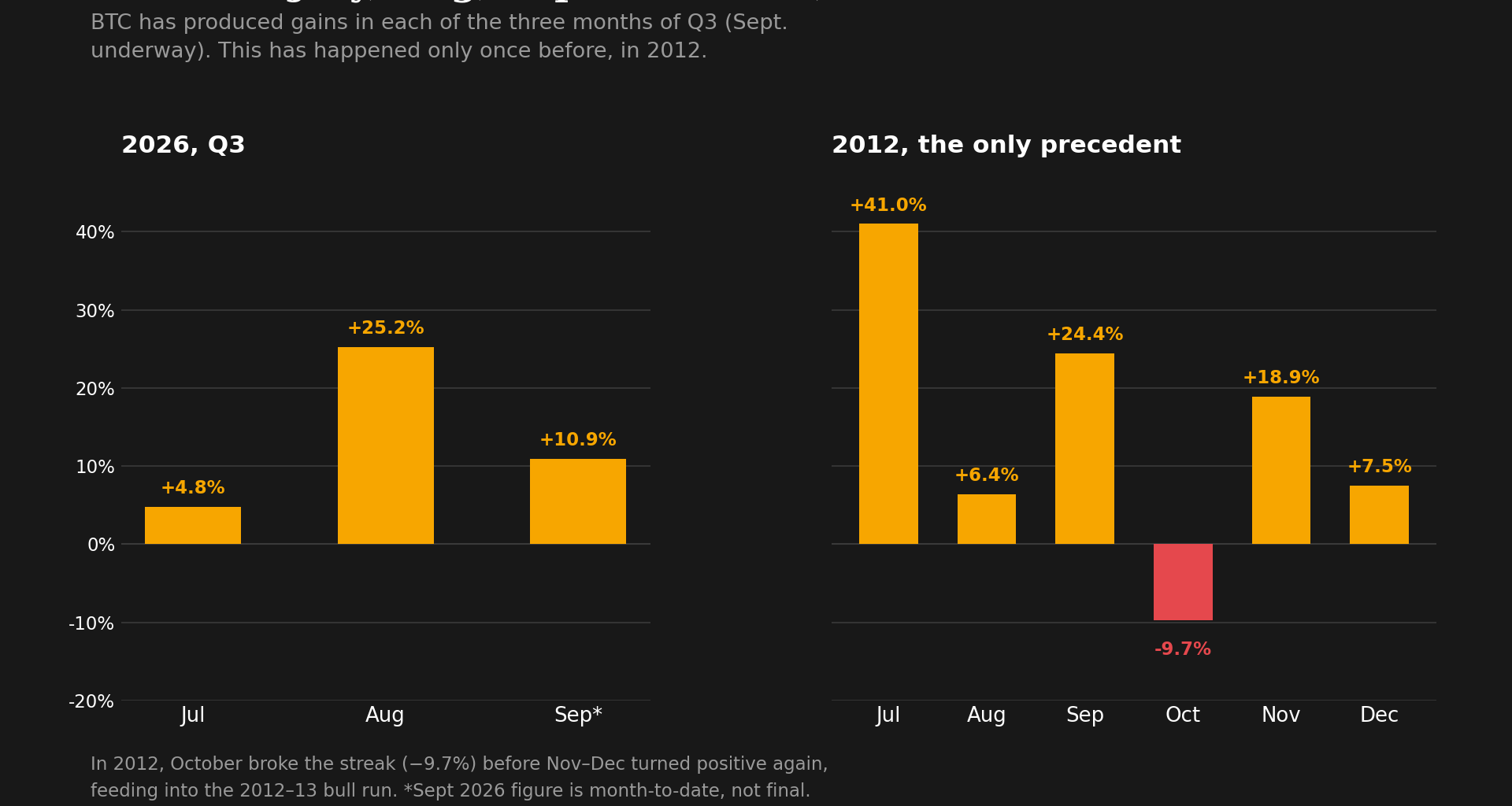
“Bitcoin now belongs to a global asset class with institutional ownership. Spot ETFs have created a regulated channel for investment. Derivatives markets have changed how risk is transferred. The rally of more than 2,000% that followed the 2012 sequence cannot become a reasonable expectation for 2026,” Vikram Subburaj, CEO of India-based Giottus exchange, said commenting on the data.
He explained that the present market structure is different and driven by institutional capital.
“The real change is therefore one of market structure. Bitcoin’s rise in 2012 began in a market that could be transformed by a small pool of buyers. The case in 2026 depends on whether large pools of capital continue allocating after the easiest gains have been made,” he noted.
Institutions have returned to the crypto market, if the U.S.-listed spot ETFs are a proxy. These funds have pulled in over $5.5 billion in investor money since August, according to data source SoSoValue.
“The durability of those allocations matters more,” Subburaj said.
History often rhymes
Nansen’s Senior Research Analyst Nicolai Sondergaard said history doesn’t repeat itself, but it often rhymes, referring to the rare pattern and four-year cycles.
“We always look for patterns, and Bitcoin has, for better or worse, continued to adhere to the 4-year cycle. Sometimes slightly late, sometimes early, so it is not unsurprising that we see certain patterns play out again and again (to a certain degree, of course),” Sondergaard told CoinDesk.