
Today, new research from the Federal Reserve Bank of Boston sheds light on when Massachusetts’ job market lost its mojo. Plus: Never mind the bollocks, the Pistols (most of ’em) are back. But first . . .
In recent weeks, the Globe has run a series of stories examining the challenges facing the Massachusetts economy. (There are more in the works.)
The premise: Once the envy of other states, Massachusetts has lost its economic vibrancy, its swagger — its mojo.
Exhibit A is the job market, where hiring has trailed the country as a whole over the past four years. Unemployment remains low — 4.3 percent in August — but that’s largely because the ranks of available workers are shrinking as boomers retire and immigration is restricted.
I’ve been quick to blame the usual suspects for the state’s economic malaise, including a dearth of reasonably priced housing, high living costs, an inhospitable business climate, and, more recently, hostile Trump administration policies.
But a new report from the Federal Reserve Bank of Boston adds another layer to the explanation: Massachusetts simply couldn’t continue to create jobs faster than the rest of the country, as it had done for most of 2009 through 2022 (the COVID shutdown of February through April 2020 being the key exception).
Much of Massachusetts’ outperformance came from a few industries that were growing at a pace they couldn’t sustain over the long haul — and when they slowed, so did the whole state.
The latest: Massachusetts’ rapid employment growth was powered primarily by professional and business services firms, health care and social assistance providers, and construction related to those sectors, Boston Fed researchers Riley Sullivan and Jeffrey P. Thompson said in a brief released Thursday.
These industries accounted for one-third of employment in the state in early 2009, and they were responsible for nearly two-thirds of the jobs that were added from that year to early 2020.
“The rates of growth in these sectors during the pre-pandemic expansion and the early phases of the pandemic, for example, were above trend and likely unsustainable over the longer term,” they wrote.
Why it matters: Housing affordability, taxes, and business regulations are frequently cited as factors behind the sluggish Massachusetts job market and low competitiveness rankings versus other states.
But such shortcomings aren’t unique to Massachusetts.
“Housing costs, for example, surged in the Boston metro area following the onset of the COVID-19 pandemic, but the increases were in line with national trends. . . Compared with those of other major US high-tech hubs, Boston’s housing costs are in the middle of the pack,” according to the Boston Fed report.
The cost of housing is “not crucial to the survival of the cutting-edge innovation sector,” Thompson said in an interview, because salaries are high.
Zoom in: Sullivan and Thompson chart Massachusetts’ employment boom during the 2010s and the slowdown that began in mid-2022.
From January 2007, prior to the financial crisis, through January 2020, statewide payrolls expanded 14 percent, compared with 11 percent nationally.After the shutdown, from April 2020 to July 2022, Massachusetts employment growth also outpaced the US average.But starting in mid-2022, the state fell behind, with payrolls expanding 0.6 percent through July 2026, compared with 3.8 percent nationally.
What went wrong: The same sectors that fueled the state’s hiring binge are now holding back growth.
Professional and business services employment growth has lagged the US average by 4.5 percentage points since mid-2022, while growth in health care and social assistance has trailed by 13 percentage points. Construction job growth has been 5 percentage points below the national rate, in large part because a glut of empty laboratory space halted new projects.
The Boston Fed paper didn’t try to explain what triggered the deceleration. Thompson told me that the post-COVID employment surge in these sectors was unlikely to last.
In health care and medical research, “some of the hiring was in response to COVID,” he said. In tech and elsewhere, “overhiring was a response to short-term demand. . . [But] it doesn’t explain everything.”
The researchers estimate that Massachusetts would have added 215,000 more jobs from January 2020 to July 2026 if employment growth had matched the national rate.
Final thought: The state’s knowledge-intensive, high-paying sectors are growing slowly but are not foundering, according to Sullivan and Thompson.
They remain “highly productive and competitive relative to their national counterparts,” the researchers said.
What will jolt the local job market out of its torpor? The Boston Fed’s brief didn’t include a forecast, but Thompson noted that San Francisco has bounced back on the strength of artificial intelligence.
“It can happen in other places,” he said.
“The interests of China and the United States are deeply intertwined.”
— President Xi Jinping of China, arriving at the White House Thursday morning, adding that the two countries must avoid the “Thucydides Trap” — a phrase coined by Harvard political scientist Graham Allison meaning that war is likely when an ascending power threatens to displace an established one.
On the mend: The median operating margin of the state’s nearly two dozen acute-care health systems was 0.2 percent in fiscal 2025, marking a return to the black after at least four years in the red, according to a state report.
🏢 Commercial Real Estate
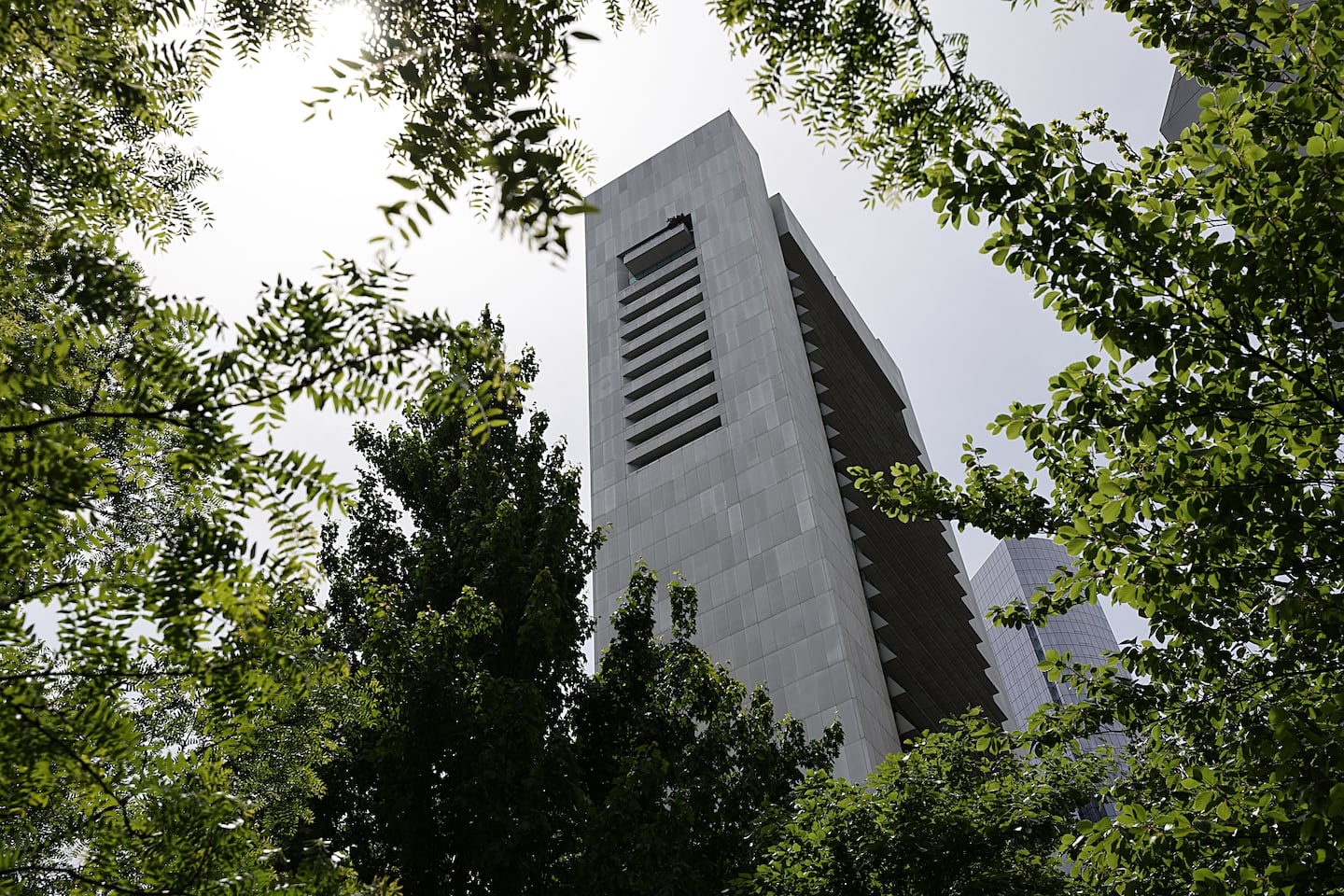
Going, going…: The office tower at 100 Summer St. in Boston, which was acquired for $806 million in 2019, is set to be sold at a foreclosure auction next month.
Staying put: Blitzy, an artificial intelligence firm founded in Cambridge, signed a 52,000-square-foot office lease at One Kendall Square, the largest office lease in the city this year.
Lights out: Starbucks plans to shut 250 North American stores this week, in the second big round of closures in two years.
Last call: Blanchards is closing its flagship liquor store on Harvard Avenue in Allston after 72 years at the location.
End of the line: Frugal Fannie’s Fashion Warehouse in Westwood is going out of business after more than four decades.
Skip the packie: In the first full month of online Lottery games, bettors spent nearly $140 million on the platform, which launched in late July.
33 months
— The expected wait time for processing Canadian citizenship applications, up from about nine months in December.
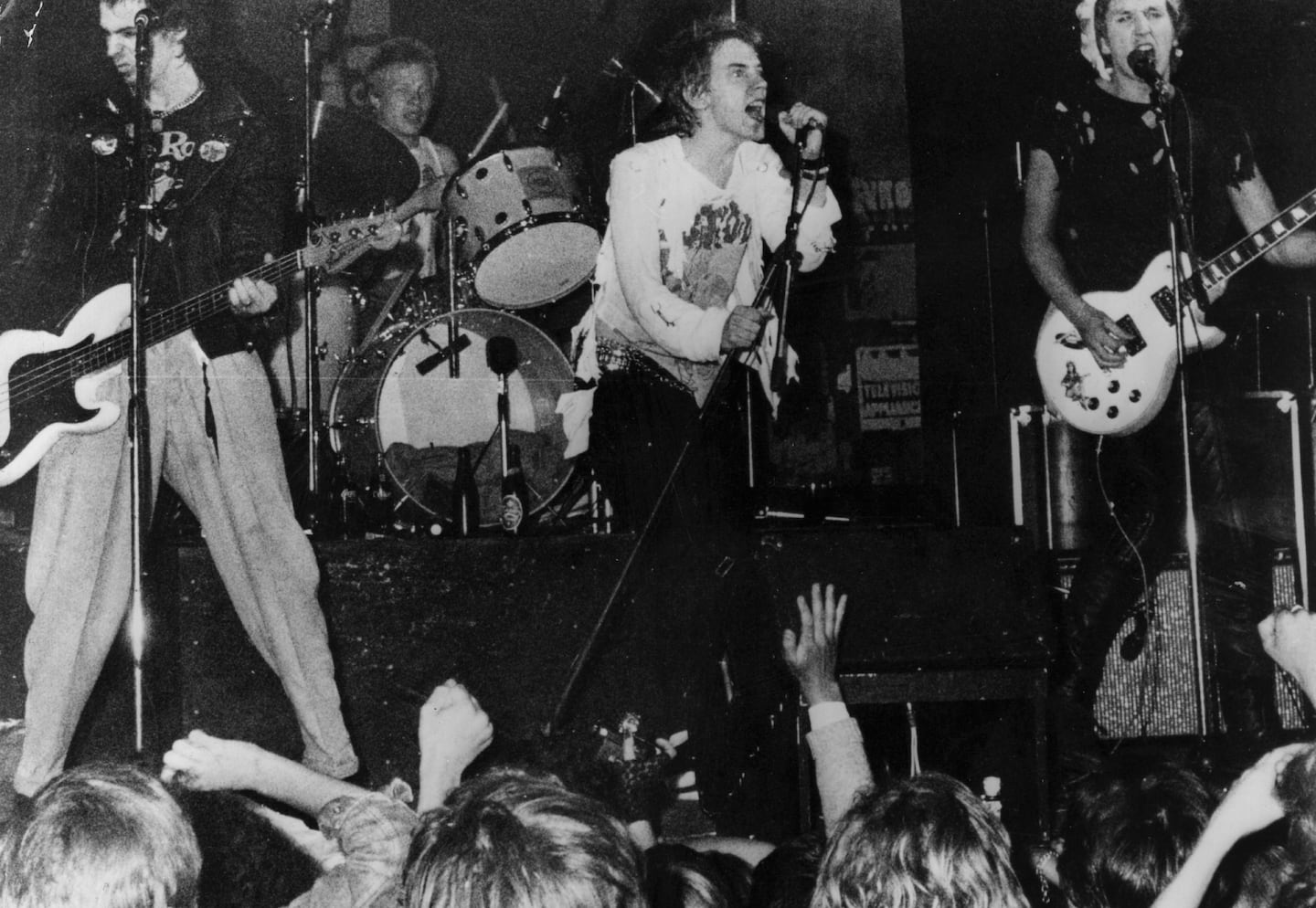 The Sex Pistols playing live in Copenhagen in July 1977.Keystone Features/Getty Images
The Clash were better and lasted longer, but the Sex Pistols were first.
The Pistols’ first single, “Anarchy in the UK” only reached No. 38 on the British charts in 1976, but it put punk rock on the map. The rest was a great rock ‘n’ swindle.
Three of the four original Pistols — guitarist Steve Jones, bassist Glen Matlock (who was later replaced by Sid Vicious), and drummer Paul Cook — will be in Boston Monday night at Royale. Expect a short show — a little over an hour — crammed with classics including “Pretty Vacant,” “God Save the Queen,” and ”Holidays in the Sun.”
Johnny “Rotten” Lydon, the band’s frontman, is on his own tour with the current version of Public Image Ltd., the band he formed after the Pistols self-destructed.
📆 On this date in 1869, thousands of businessmen were ruined in a Wall Street panic known as “Black Friday” after financiers Jay Gould and James Fisk attempted to corner the gold market.
👋 Thanks for reading. Trendlines will be back Monday.
✍🏼 If someone sent you this newsletter, you can sign up for your own copy.
Larry Edelman can be reached at larry.edelman@globe.com.