
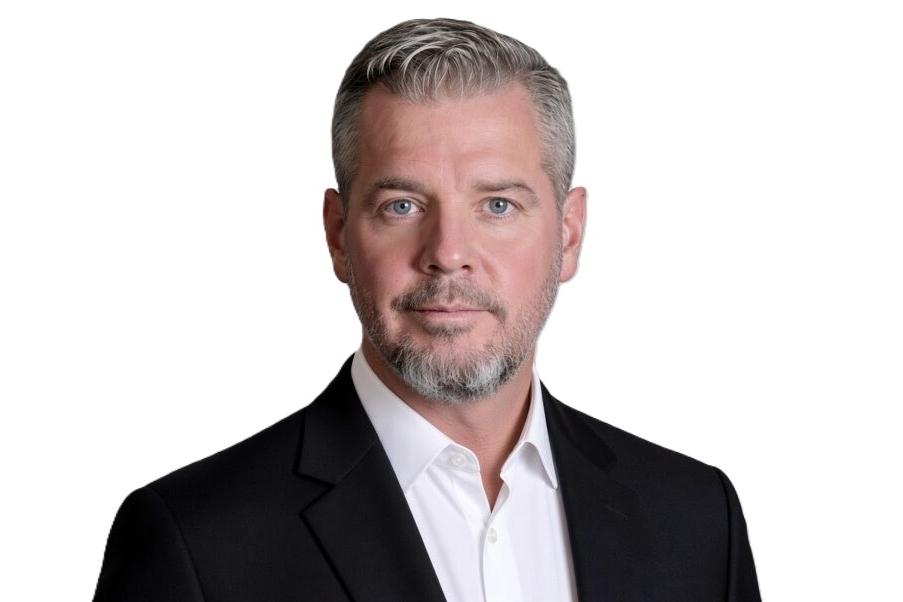
1291 Group appointed Shawn Parker as Head of Sales in Dubai in August 2026, bringing an insurance executive with more than 16 years of industry experience into a senior regional role. In an exclusive interview with Hubbis, one of his first since taking up the position, Parker explains the planning needs he sees among wealthy families and the priorities he is setting for the business.
Key Takeaways
Estate liquidity: Wealth held in businesses and property may leave too little cash to settle loans and other liabilities at death. A universal life policy can help fill that gap.
Business succession: Insurance proceeds can provide working capital and help retain key employees while the next generation takes control.
Tax and family income: Cover can help meet valid estate-tax liabilities and continuing family costs. It does not remove tax.
Choosing a solution: Universal life and PPLI serve different needs. Parker says the client’s assets, objectives and relevant jurisdictions should determine whether either is suitable.
Private-bank advice: Parker wants bankers to identify planning needs early and explain a policy’s costs, commitments and risks clearly.
Regional growth: He aims to deepen private-bank relationships from Dubai and sees room to develop business in Europe, Africa and Latin America.
Parker’s Mandate in Dubai
Parker arrived in Dubai in 2010 and has spent more than 16 years in insurance, with experience in universal life, estate planning and cross-border cases involving the Middle East, Africa, Asia and Europe. Before joining 1291 Group, he worked with private banks and specialist financial firms and provided leadership to estate planning teams in Dubai, Hong Kong and Singapore.
His new role gives him responsibility for developing sales from Dubai while strengthening the conversations that precede a recommendation. He wants bankers and other advisers to recognise a liquidity, succession or income-replacement problem early, then bring in the right specialists rather than begin with a product.
That approach also shapes his growth plans. Parker sees established demand in Dubai, Hong Kong and Singapore, but believes there is room to build a stronger presence in Europe, Africa and Latin America. The immediate task is to use 1291 Group’s existing relationships and global carrier access more effectively, while keeping each case grounded in the client’s circumstances.
Building Liquidity into the Estate
Parker begins with the composition of a client’s wealth. An individual may have a net worth of USD100 million but hold 90 per cent of it in property, a private business or other fixed assets. If that person also uses borrowing to finance the portfolio, the family may inherit valuable assets alongside loans and immediate estate costs.
Parker calls this the liquidity gap. An estate may be valuable on paper and still lack the cash required at death. A universal life policy can provide a death benefit without requiring the family to dispose of an operating company or sell property under pressure.
“A client can be worth a hundred million dollars, but 90 per cent may be in fixed assets,” Parker says. “The concern is whether the family will have enough liquidity to cover the outstanding loans and liabilities. That is the gap we are trying to solve.”
Keeping a Business Stable After the Founder
Business succession creates a related problem. Parker uses the example of a founder-led company in Kenya that produces reliable annual turnover but depends heavily on a small group of executives. If the founder dies, those employees may leave rather than work with the next generation, weakening the company at the point when lenders and family members need stability.
Insurance proceeds can provide working capital and fund retention bonuses for key employees. An agreement might pay selected executives for remaining with the company for five years, with a clawback if they leave early. The structure gives the family time to assume control and can reassure local banks that the business has a plan for retaining the people on whom its cash flow depends.
“The family needs an opportunity to work through a difficult period and know that it can rely on the key individuals,” Parker says. “The extra liquidity can also give the company working capital and make its lenders more comfortable with the succession plan.”
Funding Estate Tax and Family Income
Property held in the United Kingdom or the United States can create a further call on cash. The United Kingdom applies inheritance tax, while the United States applies federal estate-tax rules. The amount due depends on factors including ownership, domicile, asset location, available reliefs and any relevant treaty. Parker’s point is that a family may need to fund the liability even when the underlying wealth remains tied up in property.
Insurance does not remove the tax. A policy can provide cash at death so that the family can meet a valid liability without an urgent sale. Reporting under the Common Reporting Standard has also made financial arrangements more transparent to participating tax authorities, reinforcing the need for compliant, properly advised structures.
Income replacement addresses a different risk. In many Middle Eastern families, one person generates most of the household income. A life policy held through a trust can provide instructions for the death benefit to be paid over time. Parker gives the example of a USD10 million policy supporting annual family costs of USD1 million for ten years, including housing, education and general living expenses.
“There is nothing that makes the tax liability go away,” he says. “The policy is designed to create the liquidity the family may need. The same principle applies to income replacement: the family can continue meeting its obligations without having to reorganise everything immediately.”
Using a Wider Planning Toolbox
Universal life is one part of 1291 Group’s offering. The firm also works with private placement life insurance (PPLI), savings plans and annuities, drawing on specialists across several jurisdictions. The choice depends on the client’s residence, assets, objectives and tax position.
PPLI may be relevant where a non-US client is considering the treatment of certain US-source investment income or where a portfolio managed through Switzerland may incur securities transfer stamp duty. The tax result is not automatic. It depends on the policy, the investor, the underlying assets and every jurisdiction involved. Parker is therefore cautious about treating the structure as a universal answer.
“We have a very wide toolbox,” he says. “Universal life is not for everyone, and PPLI is not for everyone. We need to identify the problem and the correct solution to fill the gap.”
A Changing Market in the Middle East
Parker has worked in the region since 2010 and has watched universal life move from a relatively unfamiliar proposition for wealthy families to a much more prominent part of the planning conversation. In his experience, the UAE has become one of the strongest markets for these policies.
He connects that growth with the composition of wealth in the region. Many entrepreneurs and investors use bank finance to expand businesses and property holdings. Their estates can therefore combine substantial fixed assets with significant borrowing, creating a clear need for liquidity when the principal borrower dies.
The same growth has drawn many more brokers and advisers into the sector, making the market much more competitive.
Key Priorities
Deepening Private Bank Relationships
Parker wants to make better use of 1291 Group’s existing relationships with private banks. Closer engagement could help bankers recognise estate planning needs earlier, bring specialists into the conversation and determine whether insurance is relevant before selecting a product.
Improving Suitability Conversations
Universal life and PPLI are not suitable for every wealthy client. Parker wants bankers to recognise likely liquidity, succession or income-replacement needs and know when insurance does not fit.
“The conversation should not begin with commissions or what someone can gain financially,” he says. “We are trying to solve a client’s problem. The bank needs to identify that problem first, then determine the correct solution to fill the gap.”
Developing More Markets
Hong Kong, Singapore and Dubai are the firm’s principal markets in Parker’s view. He also wants to understand the European opportunity more fully and build greater traction in Africa and Latin America, where partner insurers may already be open to business but distribution remains less developed.
Into the Future
Closer Links Between Insurers and Banks
Parker expects insurance distribution to become more direct over the next five years. Some carriers may form closer arrangements with banks, reducing the role of brokers that currently compare several providers. He sees that as the clearest competitive risk to the traditional independent-broker model.
“When a broker enters the conversation, we shop the market and consider several insurance companies,” he says. “The biggest risk to that model is a direct relationship between the carrier and the bank.”
Demand Driven by Leverage and Tax Complexity
Parker also expects the underlying need for life insurance to grow. Clients continue to borrow against businesses, property and investment assets, while cross-border tax rules are becoming no simpler. Both trends can increase the value of having a defined source of liquidity at death.
Geopolitical fragmentation may also encourage families to consider solutions in more than one jurisdiction. 1291 Group works with more than 50 carriers across 16 jurisdictions, allowing advisers to consider a single preferred location or a broader mix where that suits the client.
Competition and Transparent Advice
Parker estimates that the number of people marketing these products in Dubai has risen from perhaps 15 around the COVID period to about 120 today. The figures are his own assessment, but they illustrate how much more crowded he believes the market has become.
His concern is that some presentations focus on benefits without giving equal weight to how a policy works or where it can fail. He believes the industry must be more explicit about charges, premium commitments, financing, carrier risk and the consequences if assumptions do not hold.
“These products have to be marketed transparently,” Parker says. “Clients need to understand the downside and the risks involved, not only the benefit being presented to them.”
Getting Personal with Shawn Parker
Parker was born and educated in Montreal, Canada. He entered business after high school and began his career far from financial services, importing products for the pet industry and supplying retailers across Canada.
His move into insurance came through relationship-building rather than a formal background in finance. A former employer recognised his ability to maintain long-term client relationships and believed the technical side of insurance could be taught.
“I was not a financial expert or an insurance person,” he says. “I was a people person. They felt that building relationships was something natural that could not easily be taught, while the insurance knowledge was something I could learn.”
Parker moved to Dubai in 2010. The most rewarding part of his time in the region has been meeting entrepreneurs with deep expertise in a particular business, including owners building consumer companies in Africa and trading commodities such as sugar and flour.
Reflecting on his move to 1291 Group, Parker says “my goals and values are closely aligned with those of the entire 1291 Group. I am confident that, with our shared vision, expertise, and commitment to excellence, 1291 Group is well positioned to become the world’s leading estate planning solutions firm.”
He is due to marry his Lebanese fiancée in November. With one family speaking Arabic and the other English, the couple plans a small destination wedding and a translated video so both sides can share the occasion.
Away from work, Parker is a keen wildlife photographer. He has invested heavily in specialist cameras and lenses, and often builds personal travel around opportunities to photograph animals, from mountain gorillas and safari wildlife to polar bears in the Arctic Circle. The images give his social-media presence a rather different character from his professional work in estate planning.
About 1291 Group
Founded in Zurich in 2000 by Marc-André Sola, now Founder and Chairman, 1291 Group is an independent insurance broker focused on wealth protection and estate planning for high-net-worth and ultra-high-net-worth families and their professional advisers. It works with private banks, family offices, trustees, lawyers and tax advisers to identify planning needs, compare suitable solutions and help put the chosen structure in place. Its offering includes universal life insurance, private placement life insurance, savings plans and annuities.
The group has offices in more than ten locations, is licensed in more than 35 jurisdictions and works with more than 50 insurance carriers across 16 jurisdictions. From Dubai, it serves families and advisers across the Middle East while drawing on specialists and insurance markets in Asia, Europe and the Americas. This international reach matters for clients whose family members, businesses and assets span several countries.
1291 Group are supporting the upcoming Hubbis Wealth Planning & Structuring Forum – Dubai, taking place on 7 October, and the Hubbis HNW Insurance Summit – Zurich, taking place on 24 September.