
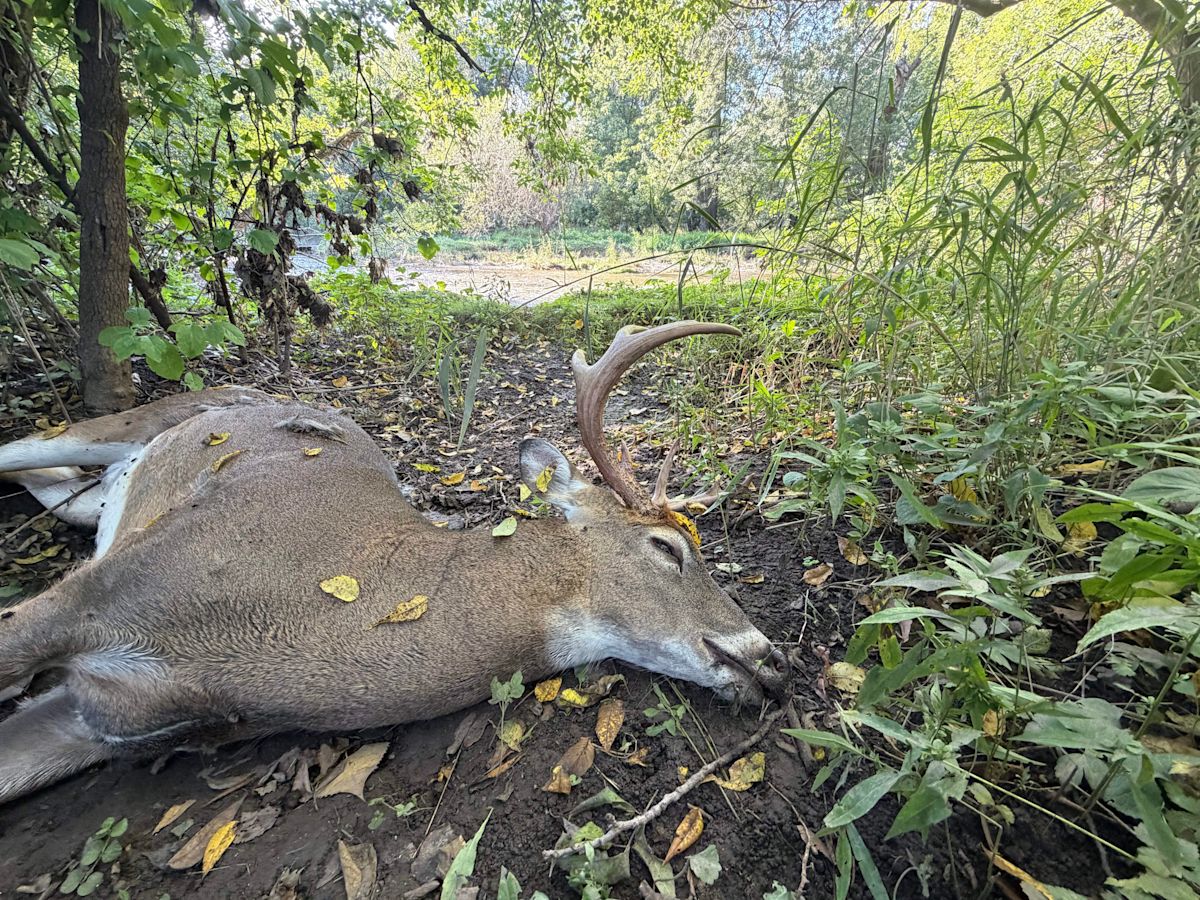
The state’s largest outbreak of epizootic hemorrhagic disease has likely spread to six counties in southeastern Wisconsin and is linked to at least 1,700 dead white-tailed deer, according to the Department of Natural Resources.
The insect-borne disease, commonly called EHD, was detected in August after reports of an unusually high number of dead deer in Washington County.
Samples taken from dead deer in August in Richfield and West Bend in Washington County confirmed the presence of the EHD virus.
Another sample obtained in September from a dead deer near Dousman in Waukesha County also was positive for EHD, said Erin Larson, DNR herd health specialist.
Based on reports of dead and sick deer over the last two months, the disease has now likely spread to at least six counties, Larson said.
As of Sept. 25, the DNR listed the following information of dead deer reported during the EHD outbreak: Washington County, slightly more than 1,200; Waukesha County, slightly more than 390; Dodge County, about 80; Ozaukee County, about 80; Milwaukee County, about 10; and Jefferson County, less than 10.
The numbers reflect only deer reported; many more animals have likely been affected.
The DNR continues to catalogue all reports of potentially impacted deer, but sampling is prioritized in regions where the virus has not already been confirmed, Larson said.
In previous Wisconsin outbreaks the local deer herds have recovered quickly, according to the DNR.
The agency has said it does not plan to reduce the availability of antlerless deer tags or otherwise try to curtail hunting in the counties affected by the outbreak.
Outbreaks of EHD typically end after the first hard frost, when insect populations fall, according to the DNR.
The viruses that cause hemorrhagic disease do not infect humans, according to the DNR.

A map of southeastern Wisconsin shows sites of dead deer reported as of Sept. 22, 2026 during an outbreak of epizootic hemorrhagic disease, or EHD. The disease is spread to deer by the bites of midges.
Epizootic hemorrhagic disease is an acute, often fatal, viral disease that affects white-tailed deer and other hoofed animals, according to the DNR. It is spread through the bites of midges.
Hemorrhagic disease typically affects deer in the late summer and fall, when the insects are most abundant. The disease kills deer by causing severe internal bleeding, a very high fever and organ damage.
The disease moves fast, and sick deer often die within three to 36 hours after symptoms show up, according to the Ohio Department of Natural Resources.
Due to the fever symptoms, deer affected by EHD often seek water in an attempt to cool.
The disease has been found in Wisconsin since at least 2002, according to DNR records. It likely is active each year but with varying intensity and effects on deer.
In fall 2012, an EHD outbreak was suspected of killing approximately 380 deer in Dane and Columbia counties. A single case was confirmed in 2017 in the state. And in 2019, an EHD outbreak in Crawford and six surrounding counties affected approximately 300 deer, according to DNR records.
The 2026 outbreak is the largest in Wisconsin history, Larson said.
Symptoms of EHD in deer include appearing lethargic, disoriented, lame or unresponsive, though these can be symptoms of other deer maladies or injuries as well.
Deer infected with EHD may show bloody discharge from the nose and mouth, a swollen or blue-tinged tongue and swelling of the eyelids and around the neck or head. EHD can only be confirmed through testing by a qualified laboratory.
In areas where the disease regularly occurs, such as the southern and western United States, death rates are lower, usually less than 25% of the affected population. In Wisconsin, where the disease occurs less frequently, death rates can be much higher, as deer populations have limited previous exposure to the virus, according to the DNR.
The DNR is seeking to learn more about the outbreak by testing the Waukesha County sample for the disease serotype. Larson said EHD serotypes 2 and 6 are most common in the Midwest but the DNR wants additional information on the current outbreak. Results of the serotype testing should be available in the coming weeks.
The DNR is encouraging the public to continue to report information on the outbreak with the dead or sick wildlife form on its wildlife health webpage.
Take a look at young animals captured by Snapshot Wisconsin trail cams
1 of 14
A white-tailed deer fawn and doe in Pierce County were captured in this July 2024 Snapshot Wisconsin trail cam image. (Snapshot Wisconsin, Department of Natural Resources)
This article originally appeared on Milwaukee Journal Sentinel: EHD outbreak in deer likely has expanded to six Wisconsin counties