
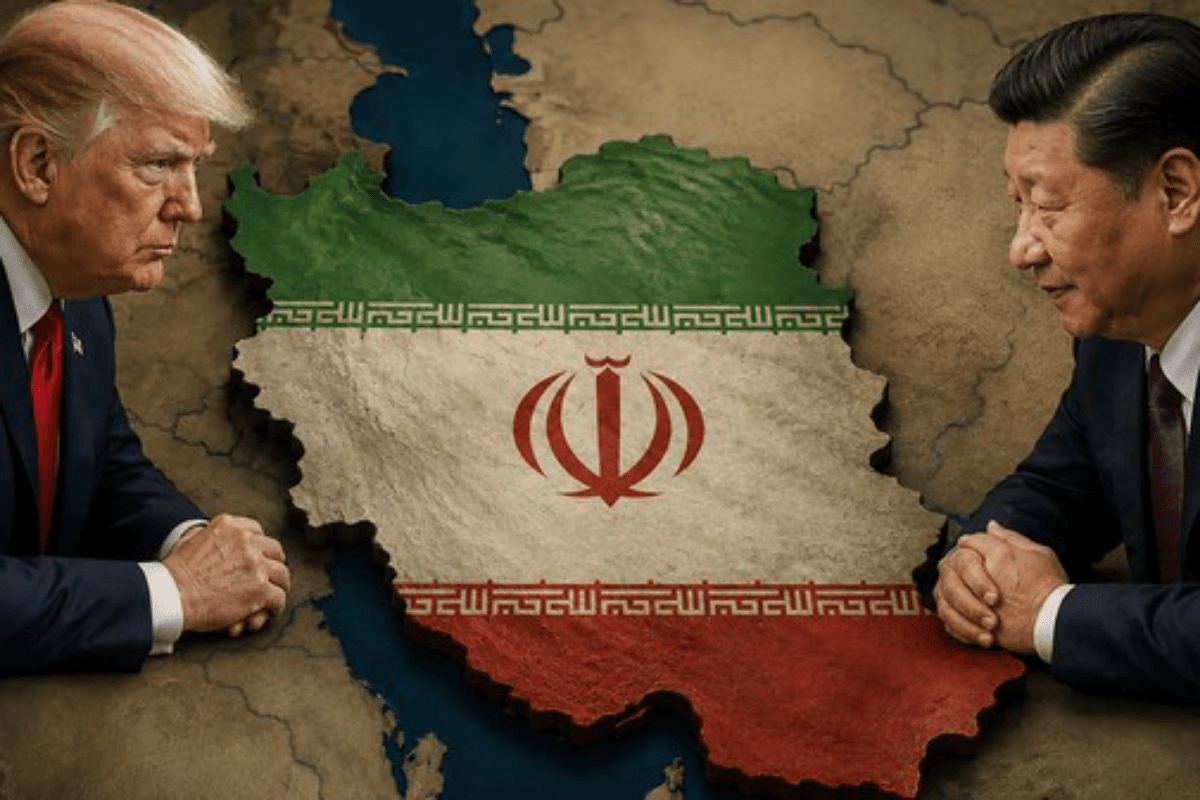
WANA (Sep 27) – Despite roughly $600 billion in trade with the United States, China has refused to join Washington’s pressure campaign against Iran. This is because Iran’s importance to Beijing goes far beyond the volume of bilateral trade. Iran holds a strategic position in China’s security and geopolitical calculations, particularly when it comes to the security of China’s western borders and its trade routes.
One of the key questions surrounding China’s position toward U.S. pressure on Iran is why Beijing, despite having a far larger volume of trade with Washington, has refused to join efforts to pressure Iran, even though trade between Iran and China stands at around $60 billion.
The answer cannot be found in trade figures alone. Every country faces a combination of geopolitical, historical, economic and security opportunities and constraints, and its foreign policy is shaped to a significant extent by these factors. Over the past several decades, China has significantly strengthened its position in areas such as the economy, technology and agriculture. Yet the country’s geographical position remains one of the most important variables shaping its national security.
China faces a range of geopolitical challenges along its western flank. For Beijing, Central Asia is not merely a neighboring region; it is part of its strategic and security hinterland and one of the key routes connecting China to the West. In recent years, the United States has also expanded its political and economic presence in the region as part of its broader efforts to contain China, including through increased investment in areas such as mining.
 Why Is China Standing With Iran?
WANA (Aug 27) – Beijing’s latest warning to Washington over Iran-related sanctions has once again highlighted an important reality: the relationship between China and Iran is no longer merely a trade partnership. It has become part of the broader equation of competition between China and the United States, as well as Beijing’s efforts to shape […]
Against this backdrop, the expansion of Central Asia’s links with the Caucasus, Türkiye and Europe has become increasingly significant. The Middle Corridor of China’s East-West trade network also runs through Central Asia and the Caucasus, and its importance has grown following the Ukraine war and restrictions affecting the Trans-Siberian route.
Under these circumstances, developments in the South Caucasus have also taken on greater significance for China. The so-called “Trump Route,” if implemented, could reshape transportation and connectivity between Central Asia, the Caucasus and Europe — a network that is also linked to China’s trade routes to Europe.
At the same time, growing political and security ties between some Central Asian countries and Israel could, from Beijing’s perspective, add new security dimensions to developments in the region. Central Asia is also adjacent to China’s Xinjiang region, which holds particular importance for Beijing because of security concerns and issues related to separatist and extremist activities.
Iran’s geographical position gives it an important role in China’s security and transit calculations. Iran is located in West Asia and is connected to Central Asia and Afghanistan on one side, while providing access to the Persian Gulf and the Gulf of Oman on the other. This position makes Iran an important element in China’s calculations regarding alternative routes linking the country to the West.
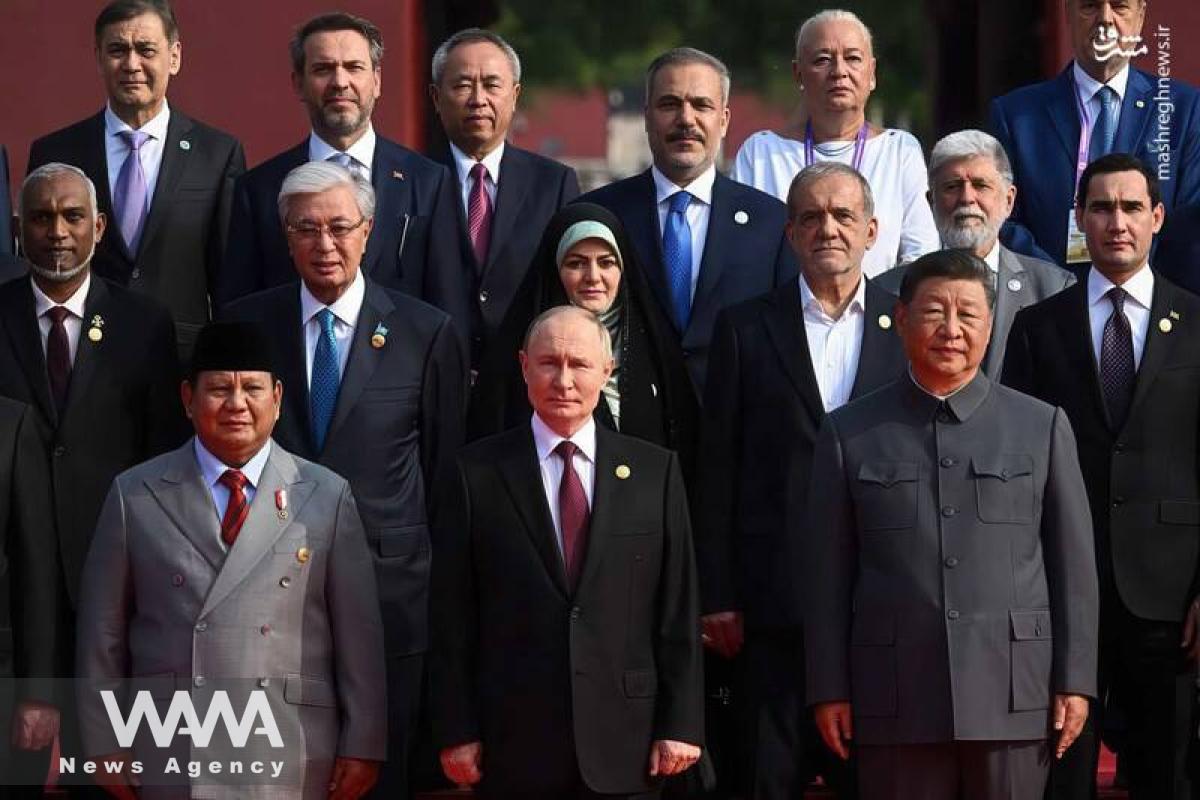
Pezeshkian’s Attendance at China’s Military Parade. Social Media / WANA News Agency
From this perspective, widespread instability in Iran could have consequences extending beyond the country’s borders, potentially affecting the security of China’s trade routes and its wider strategic environment. For Beijing, maintaining access to diversified trade routes and preventing the emergence of a geopolitical pressure ring around its western borders is more important than the volume of bilateral trade with Iran alone.
This is why China’s relationship with Iran cannot be explained simply by comparing the value of its trade with Iran and the United States. China’s trade with the U.S. may be several times larger than its trade with Iran, but Iran’s geopolitical role in certain areas cannot easily be replaced by China’s commercial relationship with Washington.
The Strait of Hormuz is another major component of this equation. Located at the entrance to the Persian Gulf, the waterway connects the Gulf to the Gulf of Oman, and any sustained disruption to its security and maritime traffic could affect regional energy markets and global shipping routes. For China, one of the world’s largest energy consumers, securing energy supplies and maintaining access to diversified sources is a key strategic consideration.
 Iran Expresses Gratitude to Russia and China for Blocking U.S. Anti-Iran Resolution
WANA (Sep 18) – Iran’s Permanent Mission to the United Nations announced that it had expressed gratitude to Russia and China for casting vetoes to block a U.S.-proposed Security Council resolution. The mission stated that the draft measure had aimed to extend the mandate of a sanctions monitoring panel overseeing Tehran. The Iranian delegation […]
Against this backdrop, Iran’s importance to China should be viewed through a combination of factors, including its geographical position, transit routes, the security of Central Asia, access to open waters and the strategic significance of the Strait of Hormuz. The value of these factors is not necessarily reflected in bilateral trade figures.
For Iran, maintaining stability around the Strait of Hormuz and preventing it from becoming a permanent flashpoint is also strategically important, as the country’s geopolitical position is one of its most significant assets in dealing with major powers.
At the same time, Tehran could use China’s geopolitical interests in the region as a basis for deepening strategic cooperation. Areas such as the aviation industry, space technologies, satellites and launch infrastructure, as well as advanced microelectronics and telecommunications technologies, could be pursued as part of a long-term strategic partnership.
Ultimately, China’s response to U.S. pressure on Iran cannot be explained solely by the volume of trade Beijing has with either side. For China, Iran is part of a much broader equation in which the security of its western borders, trade routes, energy access and the strategic position of the Strait of Hormuz are closely interconnected.