
For instance, the students will have access to virtual scanners, “which is wonderful because that way we can make mistakes without irradiating people,” he said. At the end of the course, in about 27 weeks, the students will be prepared to take the exam to become certified at CT techs.

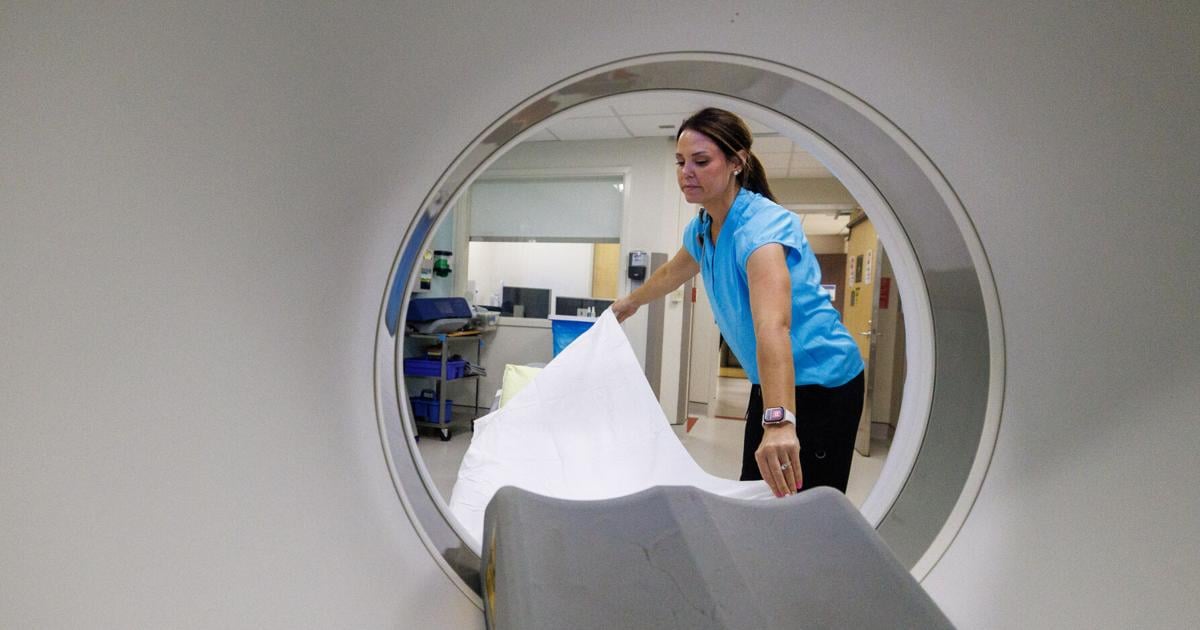
Heather Knight prepares a paitent for a CT scan at the Medical University of South Carolina on Monday, Sept. 21, 2026, in Charleston.
Grace Beahm Alford/Staff
All of the students have completed a two-year associates degree and are already registered radiologic technologists, Howard said. The new training, which is a paid intensive program, will launch them into the CT field faster.
The new students were interested in the field, but the need for those jobs was a revelation. William Golden spent four months working in X-rays as part of his clinical training but saw how few people were working in the other imaging departments.
“They need help,” he said.
Guercio said his wife, a nurse, was always talking about the need for more people in health care. Then he saw that hospitals and clinics are willing to pay to fill those positions.
“There’s so many incentive bonuses,” Guercio said.
Heather Knight perfomes a CT scan on a paitent at the Medical University of South Carolina on Monday, Sept. 21, 2026, in Charleston.
Grace Beahm Alford/Staff
Kyle Walters got a degree in exercise science from College of Charleston but became more interested in the imaging field after watching a YouTube video. Then training to be an X-ray tech really opened his eyes.
“That’s when you get to actually see, hey, there’s all these different paths you can take, all these different modalities, all these different imaging departments,” he said. “It’s not just one thing.”
For their part, though, it will be CT training and an intense six months immersed in it. But they are ready for it.
“We’re used to hitting the ground running,” Golden said.
“Keep the foot on the gas,” Guercio added.