
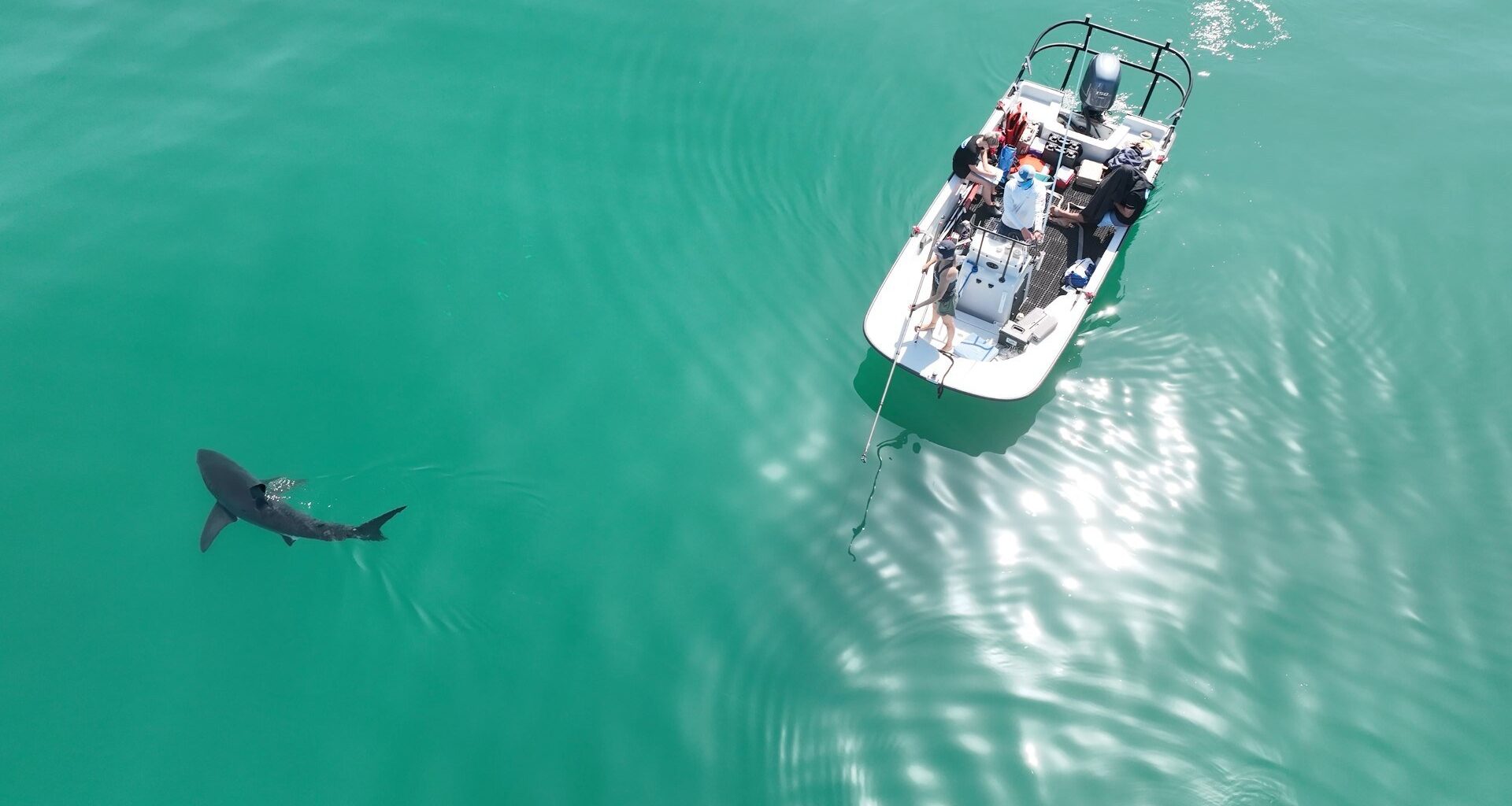
With warmer ocean waters and an anticipated El Niño weather event quickly approaching, local scientists are expecting some unusual guests off the Southern California coast — including hammerhead sharks, devil rays and whale sharks near La Jolla.
The National Oceanic and Atmospheric Administration is forecasting that the 2026-2027 El Niño weather pattern could be among the strongest on record, bringing warmer-than-average ocean temperatures and wetter, more intense winters to California.
In preparation, scientists at the La Jolla-based Scripps Institution of Oceanography launched its El Niño Resource Hub in late August to outline the ways in which El Niño could impact ocean life. The streamlined website tackles frequently asked questions from local scientists’ perspectives, drawing upon data from previous El Niño events and others like it.
“We’re at the edge of a very strong El Niño that’s bringing pretty warm water to the Southern California area, and with that we’re seeing species that are popping up that we don’t typically see in this area,” Jack Elstner, a Ph.D. candidate for biological oceanography at Scripps, told the La Jolla Light.
Elstner’s focus is on sharks, and in particular, juvenile white sharks whose nursery hotspots are along the Southern California coast. Typically, these sharks are observed mostly in summer and fall before migrating south in the winter. But this isn’t a typical year.
The difference this year is that sharks are expected to linger on the California coast for longer than usual. He reports that the hotspots for juvenile white sharks changes from year to year, and this year Santa Barbara is particularly active. In prior years, Torrey Pines and Del Mar were considered active sites.
With El Niño slated to take place starting in December, he said other shark species that typically live in much warmer waters such as Baja California could find themselves as far north as San Diego.
“We had a lot of reports of hammerhead sharks,” said Elstner, adding that some have been seen right off La Jolla. “We’ve seen devil rays in the area, which is a tropical species we don’t typically see here. And in the past several weeks, people have also seen whale sharks. So we’re getting a lot of species that we don’t typically see in this area with this warm weather.”
Sealife impacts during an El Niño can extend beyond rare shark sightings. Mark Ohman, a distinguished professor in the graduate division of biological oceanography at Scripps, said in a release that during times like these, warmer waters can bring subtropical and tropical plankton and fish species.
Specifically in San Diego, there have sometimes been major influxes of swimming red crabs that would typically breed in Baja California during El Niño events. While there haven’t been more swimming red crab sightings yet, researchers are preparing for the possibility of an increase, similar to what was seen in past events.
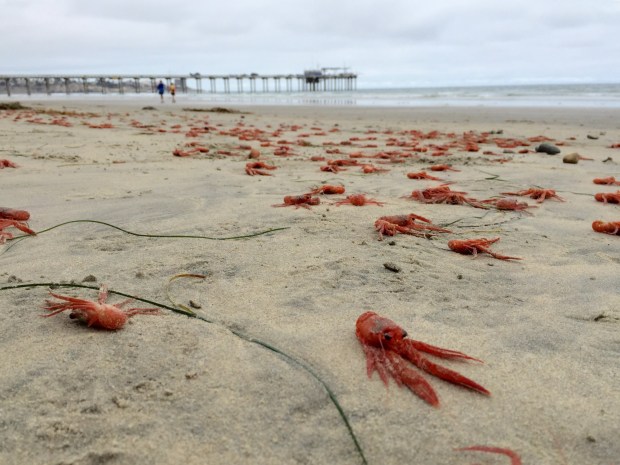 Large numbers of bright red tuna crabs washed up on San Diego beaches from Ocean Beach to La Jolla in 2015, seen here at Scripps Pier on June 11 that year. (Brittany Hook / Scripps Institution of Oceanography)
Now, Scripps researchers hope that their tracking and documentation of unusual guests in Southern California waters can be a community effort.
Scripps’ Marine Vertebrate Collection manager Ben Frable said warmer waters tend to bring more tropical and unusual fish to Southern California. During a marine heatwave from 2014-2016 that concluded with a “very large” El Niño, his team recorded 36 new or barely seen species in California. Should more be spotted this year, Scripps is asking surfers, divers, photographers, anglers and beachgoers to let them know.
Photos of rare findings can submitted via Scripps’ El Niño Fish Records Form, which asks swimmers and divers what they saw, where they encountered it, the time in which they spotted it and any additional context to support their account.
Disruptions in food chains during El Niño weather patterns can also cause seabirds and marine mammals to adjust their typical migration schedule, he added, as warm waters and disrupted production at the base of the food web can lead to insufficient nutrition, lowered reproductive success, and ultimately, a higher mortality rate.
Acknowledging that “when these types of climate events happen, people have questions about how marine ecosystems are going to respond,” Elstner said, Scripps scientists will host a town hall meeting at 3:30 p.m., Wednesday, Oct. 7 at the Scripps Seaside Forum in La Jolla. Attendees are encouraged to register at luma.com/g812l4a ahead of the event.
To learn more about El Niño and Scripps scientists’ latest insights, visit scripps.ucsd.edu/news/el-nino.