
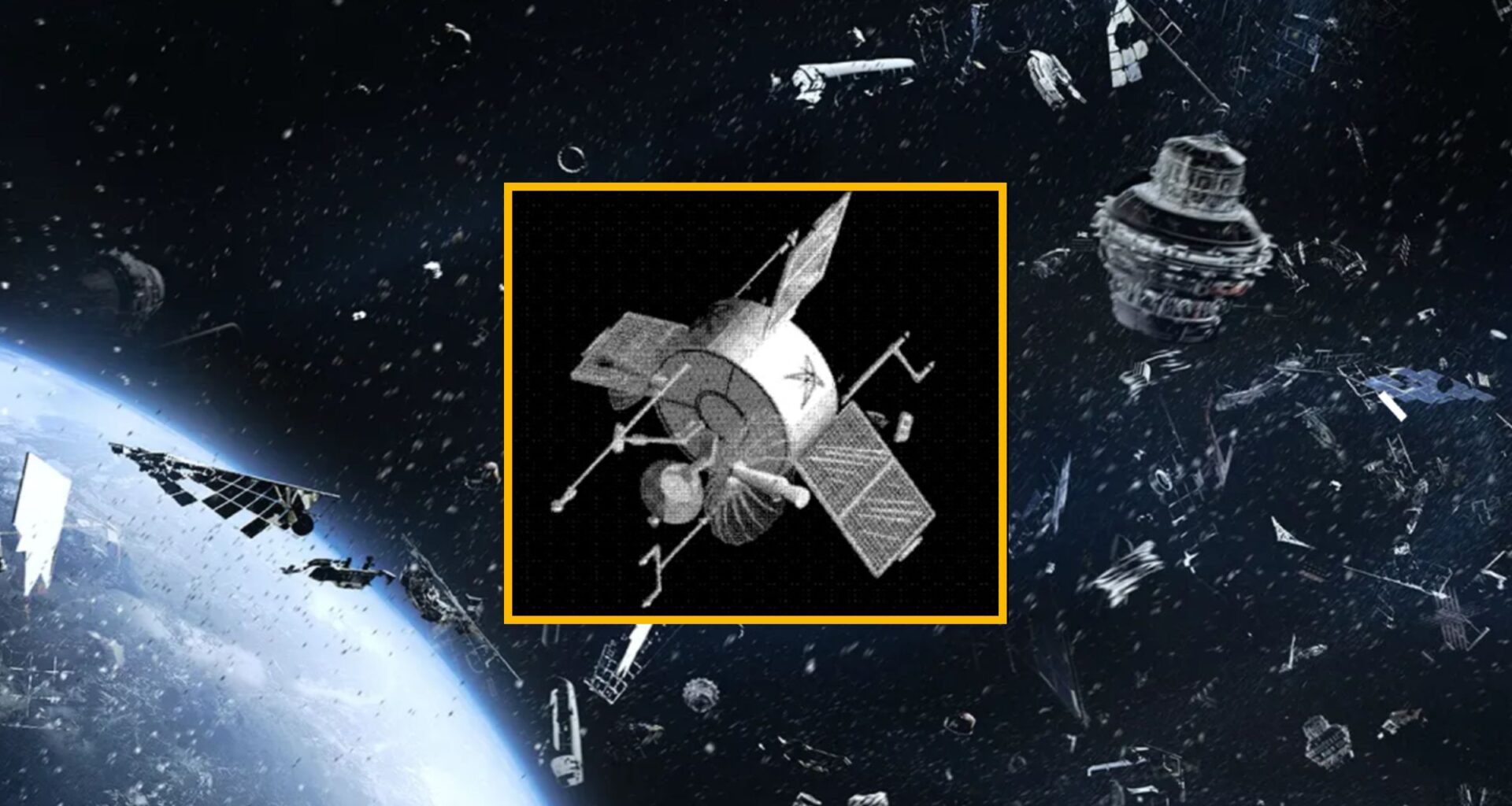
An American spy satellite deployed during the Cold War has exploded above our planet without warning — and, so far, scientists can’t explain why. The debris cloud from this sudden fragmentation, which experts are still trying to measure, could pose a very “real threat” to other spacecraft in a highly crowded region of low Earth orbit (LEO), experts warn.
The spacecraft, known as USA 32 or Farrah III, was launched by the National Reconnaissance Office (NRO) in 1988. Its mission, which was only fully declassified earlier this year, was to intercept Soviet radar and radio signals from space, according to Futura. The cylindrical spacecraft, whose shape has been described as a giant “tuna can,” likely stopped functioning decades ago and has been silently circling Earth ever since. (It was nicknamed after actor Farrah Fawcett, in line with the NRO’s former custom of naming its satellites after famous figures from the 1970s and ’80s.)
Latest Videos FromLive Science
You may like
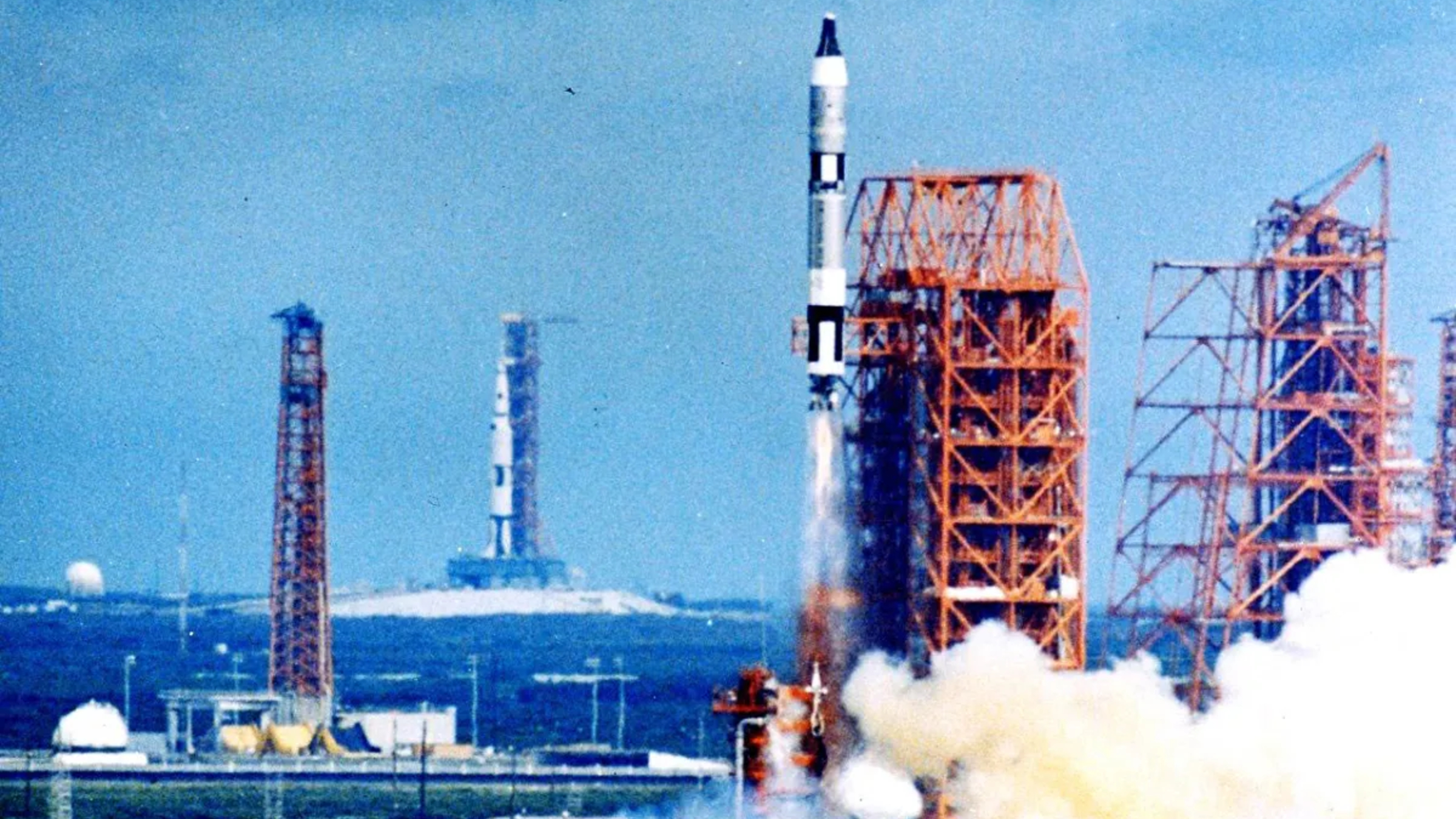
USA 32 was launched on a Titan II rocket, similar to the one in this photograph, which launched astronauts on board NASA’s Gemini 11 mission in 1966.
(Image credit: NASA)
What happened to USA 32?
What to read next
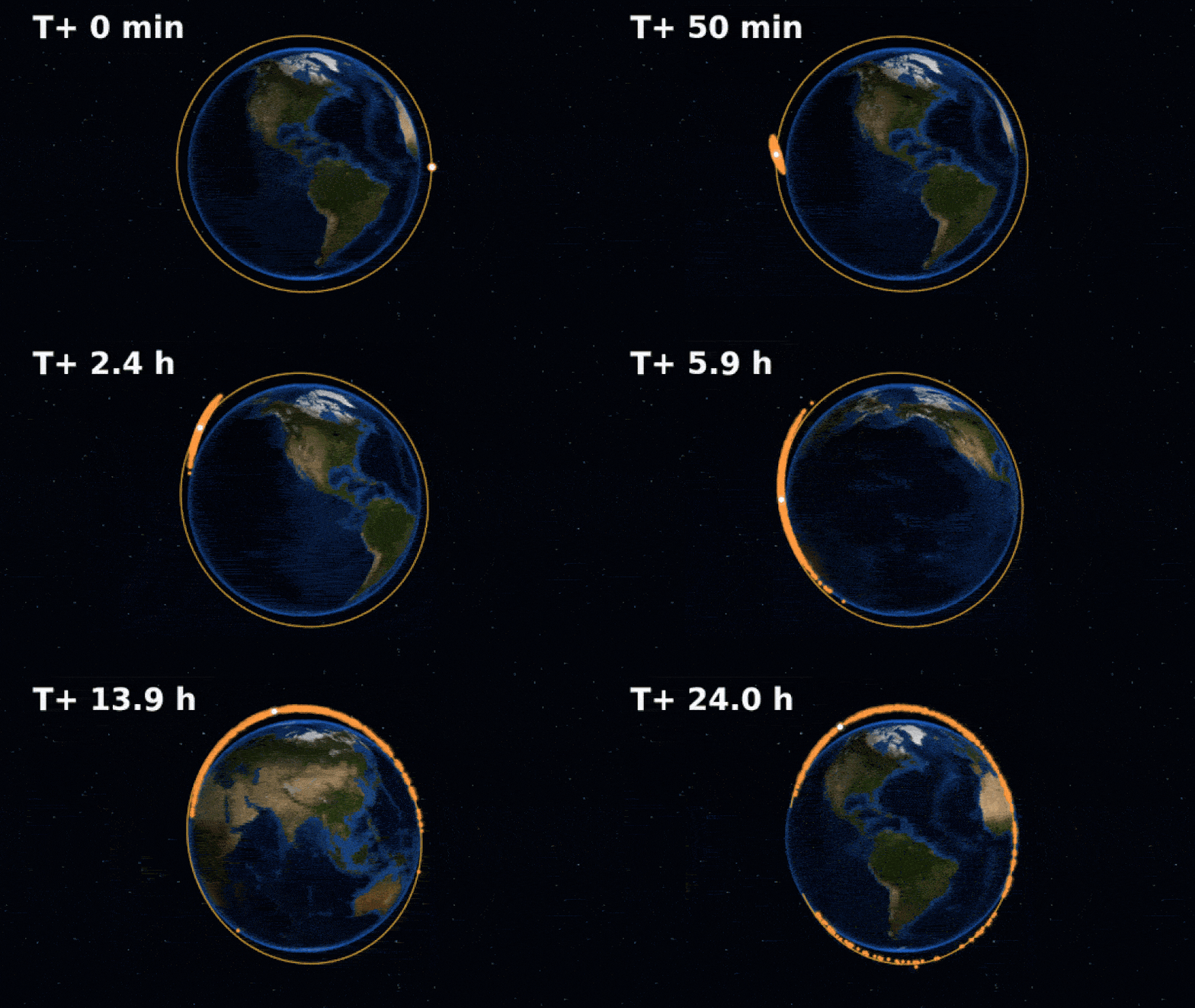
A simulation from Spaceweather.com suggests that the debris from the explosion could have dispersed across the satellite’s orbital pathway within 24 hours of its breakup.
(Image credit: Spaceweather.com)
“The collision threat is real”
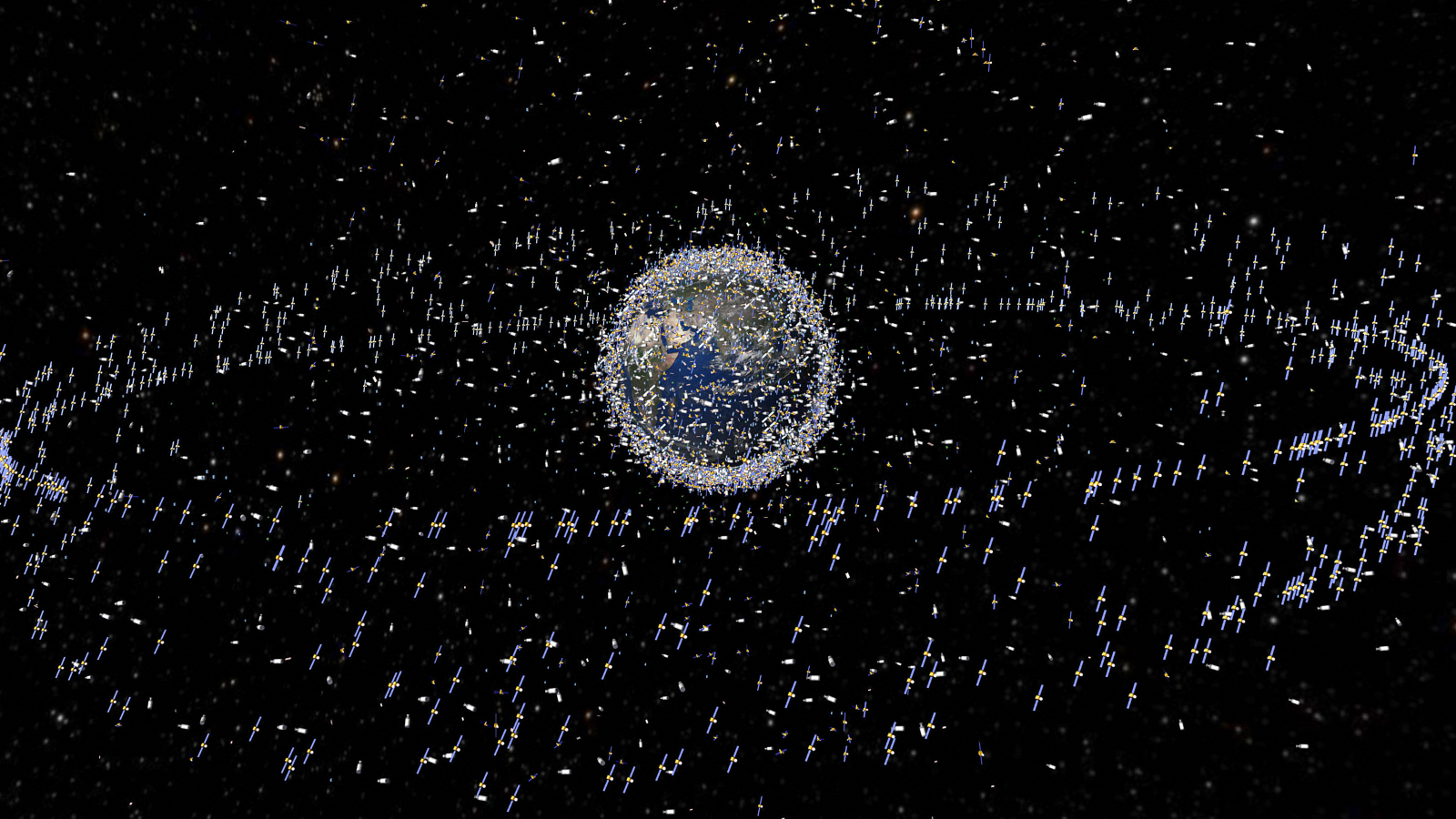
As the number of Earth-orbiting spacecraft increases, so too does the risk that they will start colliding with one another.
(Image credit: ESA/AFP via Getty Images)
Could it happen again?