
What This Story Is About
Oak Ridge National Laboratory has opened its fully operational, 100,000-square-foot Translational Research Capability facility, uniting multidisciplinary scientists to accelerate breakthroughs in quantum computing, grid storage and battery technology.
Why It Matters
From keeping smartphones charged longer to building utility-scale batteries for AI data centers and deploying the nation’s first scientific-scale quantum computer, the research happening inside the TRC directly impacts consumer technology and national energy security.
What Happens Next
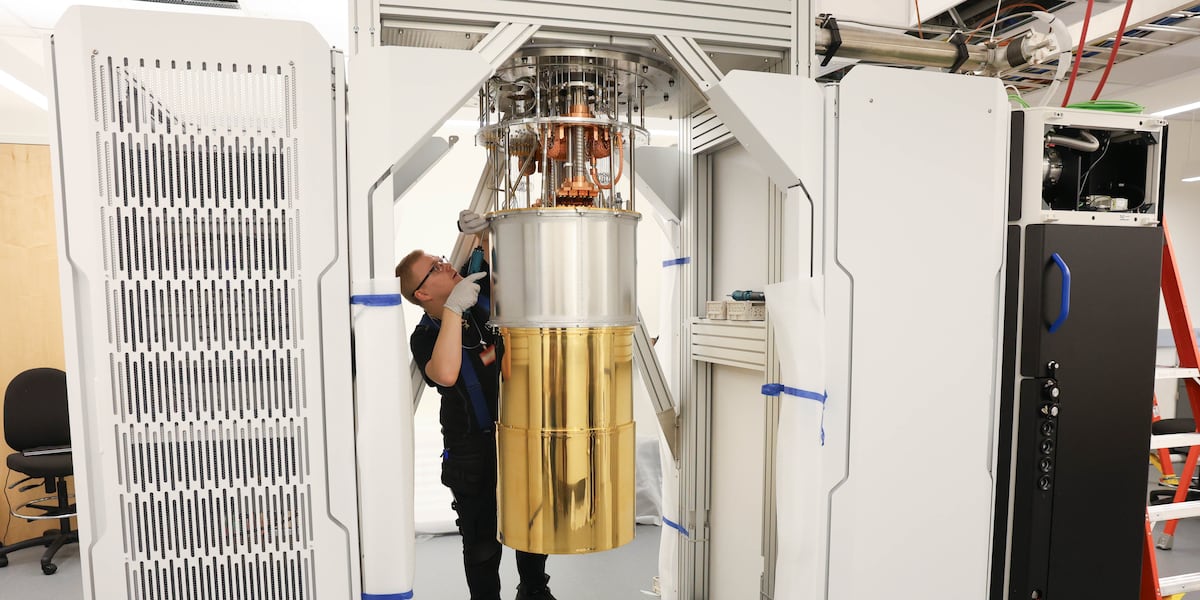
Scientists have begun operating specialized testbeds, including the “Pathfinder” quantum computing testbed, with long-term plans to deploy a large-scale quantum computer within the next five to 10 years.
For Context
The TRC features purpose-built spaces designed to eliminate vibration and electromagnetic interference, alongside one of the driest laboratory environments in the entire Department of Energy complex.
OAK RIDGE, Tenn. (WVLT) – Just a few hundred yards from the historic Graphite Reactor that helped launch the atomic age more than 80 years ago, Oak Ridge National Laboratory has officially opened its newest scientific powerhouse: the 100,000-square-foot Translational Research Capability (TRC).
The facility brings together once-scattered research teams under one roof, bridging fundamental science with real-world applications in quantum computing, advanced materials and next-generation battery storage.
One of the Driest Rooms in America
Among the TRC’s standout visual features is an ultra-specialized “dry room” engineered specifically for battery synthesis. With a dew point of minus 75 degrees and a moisture concentration of only 20 parts per million, it represents one of the most arid working environments in the world.
“If you’re out in the warm Tennessee air, it’s thousands and thousands of water molecules,” explained Cynthia Jenks, Associate Laboratory Director for Physical Sciences at ORNL. “Here, for every million particles, there are only 20 of water. Water reacts with materials used to make new batteries. To make better energy storage devices, we must remove the impact of water.”

The environment is so devoid of moisture that researchers can physically feel the air pulling hydration from their mouths and skin, requiring strict buddy-system safety protocols and limited shift durations to prevent dehydration.
Consolidating into this space allows scientists to take materials from microscopic atomic arrangements to working prototypes.
“Previously, our battery portfolio had grown, and we were in 10 different laboratories,” said materials scientist Andrew Westover. “Consolidating into this space gives us material synthesis and characterization capabilities, but the real enabling piece is this dry room. It allows us to actually make batteries at scale.”
Powering Phones, Electric Vehicles, and AI Data Centers
Inside the battery labs, researchers manufacture thousands of experimental coin batteries daily while engineering next-generation solid-state and lithium-ion cells for electric vehicles, smartphones and aviation.
The facility is also tackling energy demands driven by the artificial intelligence boom. Tucked in the corner of the lab sits a prototype redox flow battery, a large-scale storage system designed to back up power grids and massive data centers.
“We’re going through an AI revolution right now,” Westover said. “This prototype redox flow battery is specifically designed to enable data centers and that AI revolution, helping manage power consumption and improving grid reliability.”
The Next Frontier: Scientific-Scale Quantum Computing
Beyond energy storage, the TRC serves as the nerve center for ORNL’s quantum information science initiatives. The building features specialized quantum labs isolated from outside electromagnetic noise and ground vibration.
A few months ago, teams deployed the “Pathfinder” quantum computing testbed inside the building, allowing material scientists, experimentalists and computer scientists to work side-by-side.
“We are at the bleeding edge of quantum information science, and it takes a broad range of scientific domains to make quantum computing the next important chapter in scientific computing,” said Gina Tourassi, Associate Laboratory Director for Computing and Computational Sciences.
Tourassi noted that the ultimate goal over the next decade is deploying the first large-scale scientific quantum computer dedicated to open science, accelerating discoveries across chemistry, physics, and national energy priorities.
“We have always been at the bleeding edge, deploying what we call ‘serial number one,’” Tourassi said. “We see quantum computing as the next frontier.”
The TRC is intended to accelerate collaboration and help translate fundamental research into technologies with real-world impact.
Copyright 2026 WVLT. All rights reserved.