
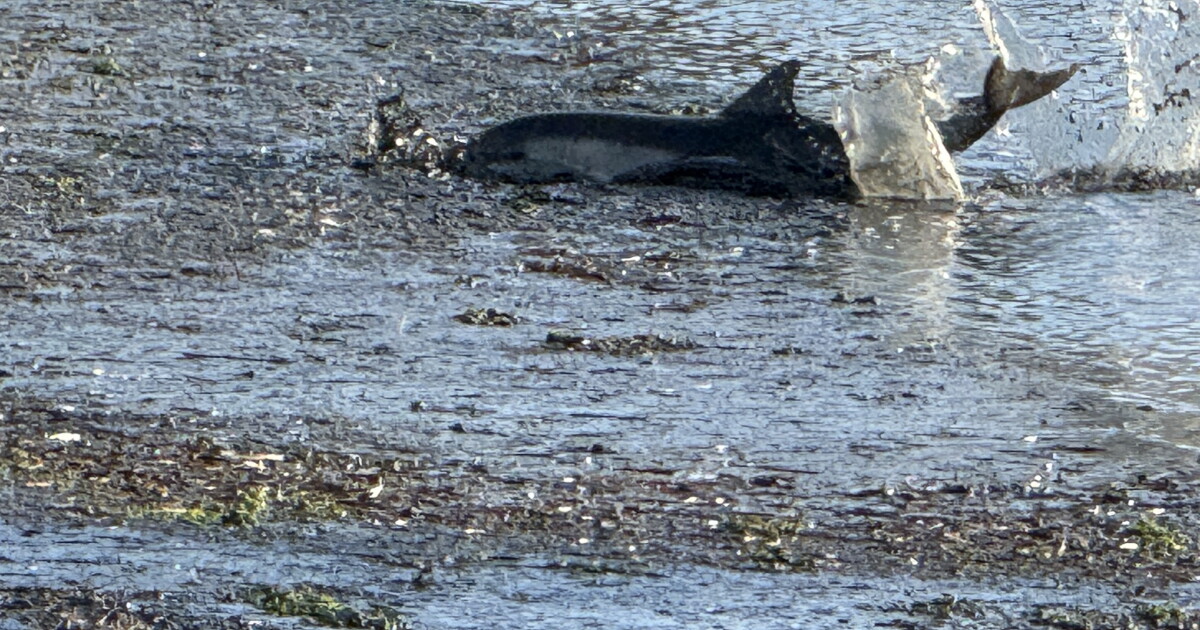
UPDATE (11:58 a.m.) – The Marine Mammal Center (MMC) confirms to KSBY that three of the dolphins were successfully released on Wednesday.
The MMC describes the community support as “incredible,” stating neighbors were bringing out blankets and mattresses to help with transportation and stabilization of the dolphins during their transport to harbor patrol prior to their release.
A MMC spokesperson also says members of the Chumash Tribe were on site to sing on behalf of the dolphins.
—
UPDATE (Wednesday 10:40 a.m.): – One dolphin has died and three others are being released after a pod of dolphins became stranded in the bay outside Morro Bay on Tuesday.
The Marine Mammal Center (MMC) and California Department of Fish and Wildlife responded to the area near Cuesta Inlet early Tuesday evening.
The dolphins, identified by the MMC as common dolphins, included a mother, calf, and two other adults, and were first spotted foraging in the bay Tuesday morning, drawing spectators throughout the day.
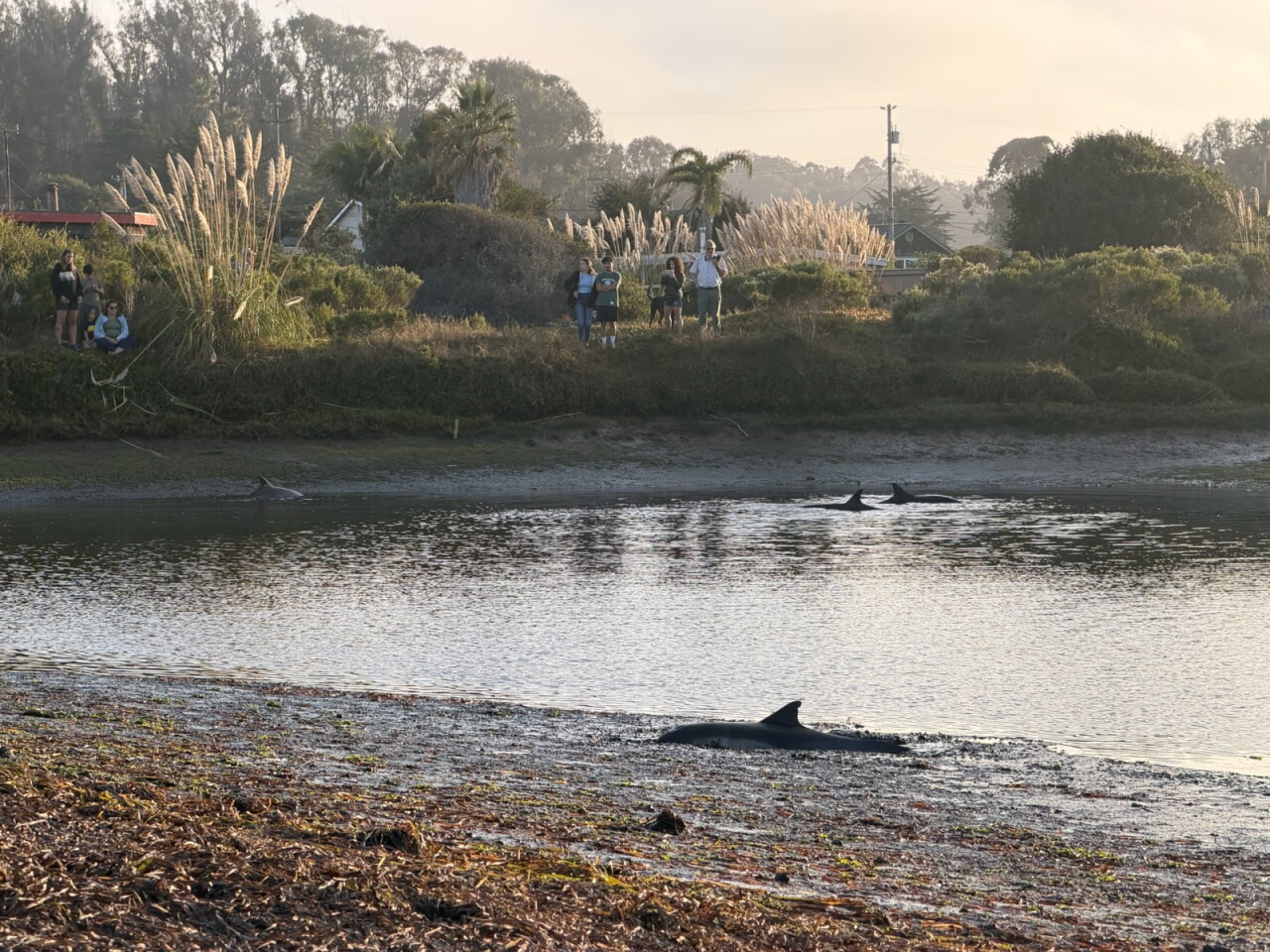
As the tide receded, the dolphins had not made their way out of the bay. Three adults and one calf became stranded in Cuesta Inlet, while another adult dolphin became stuck in nearby Shark Inlet.
Marine Mammal Center
Dolphins stranded in Cuesta Inlet Tuesday evening
“Because these were wild, native animals exhibiting normal behaviors prior to the strandings, the best-case scenario was for the dolphins to make their way out of the inlet on their own. Unfortunately, the animals did not navigate the area in time to deeper waters as tidal conditions worsened and became actively stuck in the mudflats,” said Giancarlo Rulli, the associate director of public relations for the MMC, in an email to KSBY. Rulli said that due to poor and unsafe conditions, the trained response personnel were unable to help guide the animals to open water.
MMC experts resumed efforts Wednesday morning and, by late morning, were working with Harbor Patrol to release three dolphins outside the bay, Rulli said.
One dolphin in Cuesta Inlet was found dead Wednesday morning. The animal was collected and will reportedly undergo a necropsy.
“Seeing an animal in distress is emotionally distressing, and our team feels that too. This has been a heroic effort by many partners including Harbor Patrol and the community to give these animals a second chance,” says Sarah Pattison, the Marine Mammal Center’s director of hospital operations. “We are doing all we can to minimize further stress on the surviving animals prior to release back in the open ocean.”
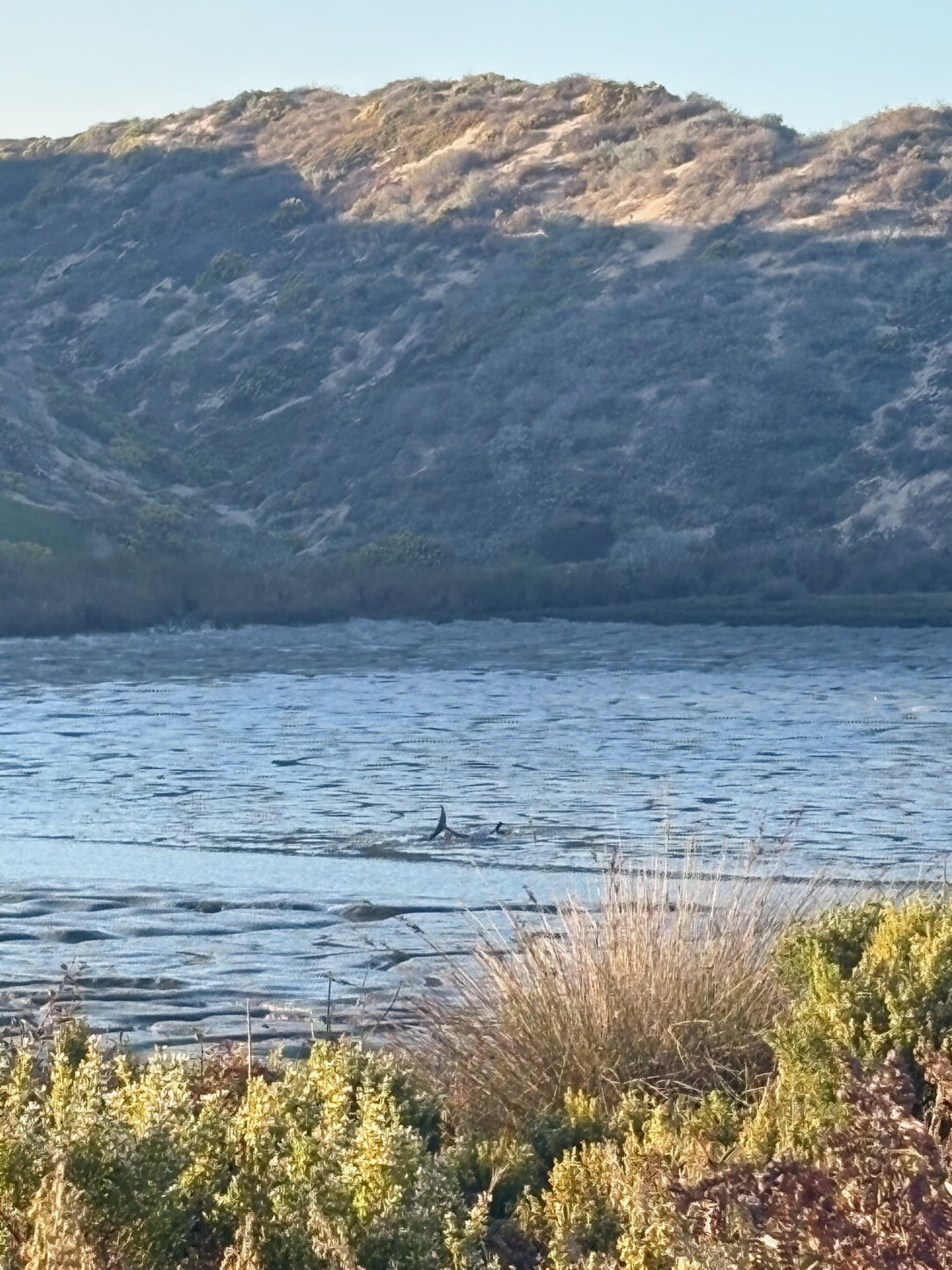
A fifth dolphin, previously seen in Shark Inlet, was not spotted Wednesday morning, Rulli said.
Marine Mammal Center
A dolphin stuck in Shark Inlet on Tuesday
He said it is unclear why the dolphins entered the bay, but noted that climate change and marine heat waves can affect dolphins both directly and indirectly by altering ocean conditions and food sources.
“Past marine heat waves, such as the ‘Blob,’ have contributed to warmer waters, which can influence where dolphins live and the prey available to them. Warmer waters can also shift the distribution of fish and other prey, potentially requiring dolphins to adapt their feeding behavior and seek new food sources,” he said.
Rulli added that dolphins are capable of traveling long distances in a short amount of time.
The MMC recommends giving dolphins plenty of space by staying at least 100 yards away and never chasing, following, or surrounding them.
Dolphin sightings can be reported through the Marine Mammal Center’s website.
The Marine Mammal Center is a nonprofit that describes itself on its website as a veterinary research hospital and educational center dedicated to rescuing ill and injured marine mammals.
—
ORIGINAL STORY (Tuesday): Central Coast residents gathered in Los Osos on the morning of September 29 to witness a group of dolphins swimming in Cuesta Inlet. However, as the evening tide lowered, multiple dolphins became stuck in the mud.
According to the Marine Mammal Center, the dolphins arrived in the inlet at around 8:30 a.m. The group included a mix of adult and calf dolphins.
Experts from the center said that while the dolphins were observed to be behaving normally, there were questions about whether or not they would return to the bay.
As the tide lowered in the afternoon, three adults and one calf became stuck in the Cuesta Inlet, with an additional adult dolphin stuck in the nearby Shark Inlet.
Marine Mammal officials are hoping the dolphins will return to the bay when the tide rises on the morning of September 30th.
“We’re hoping by that time that the dolphins swim out of the inlet and back into the bay, where they have deeper water. However, if they don’t, we will continue to monitor and reevaluate the situation,” said Operations Coordinator with the Marine Mammal Center Emily Pomeroy.
If the dolphins do not swim out to the bay in the morning, officials plan to reassess the situation and possibly move them manually back to the ocean.
The exposed mud currently makes it unsafe for officials to enter the water and release the dolphins overnight.