
SASKATOON — Canada’s grain sector will have a tough time meeting prime minister Mark Carney’s goal of doubling non-U.S. exports by 2035, according to Canada’s grain monitor.
Carney wants to double the trade of all commodities to non-U.S. destinations to $600 billion from about $300 billion today.
That is going to be a tall order for Canada’s grain industry.
“You’re not going to double the volume of traffic that we export in a short timeframe like 10 years,” said Mark Hemmes, president of Quorum Corp.
It would require massive efficiency improvements in the supply chain.
“That’s saying something because in Canada, we have figured out a lot of stuff over the years and I think we’re as efficient as anybody else in the world and in many cases far more so,” he said.
Canada’s ambitious diversification goals may be hard to achieve.
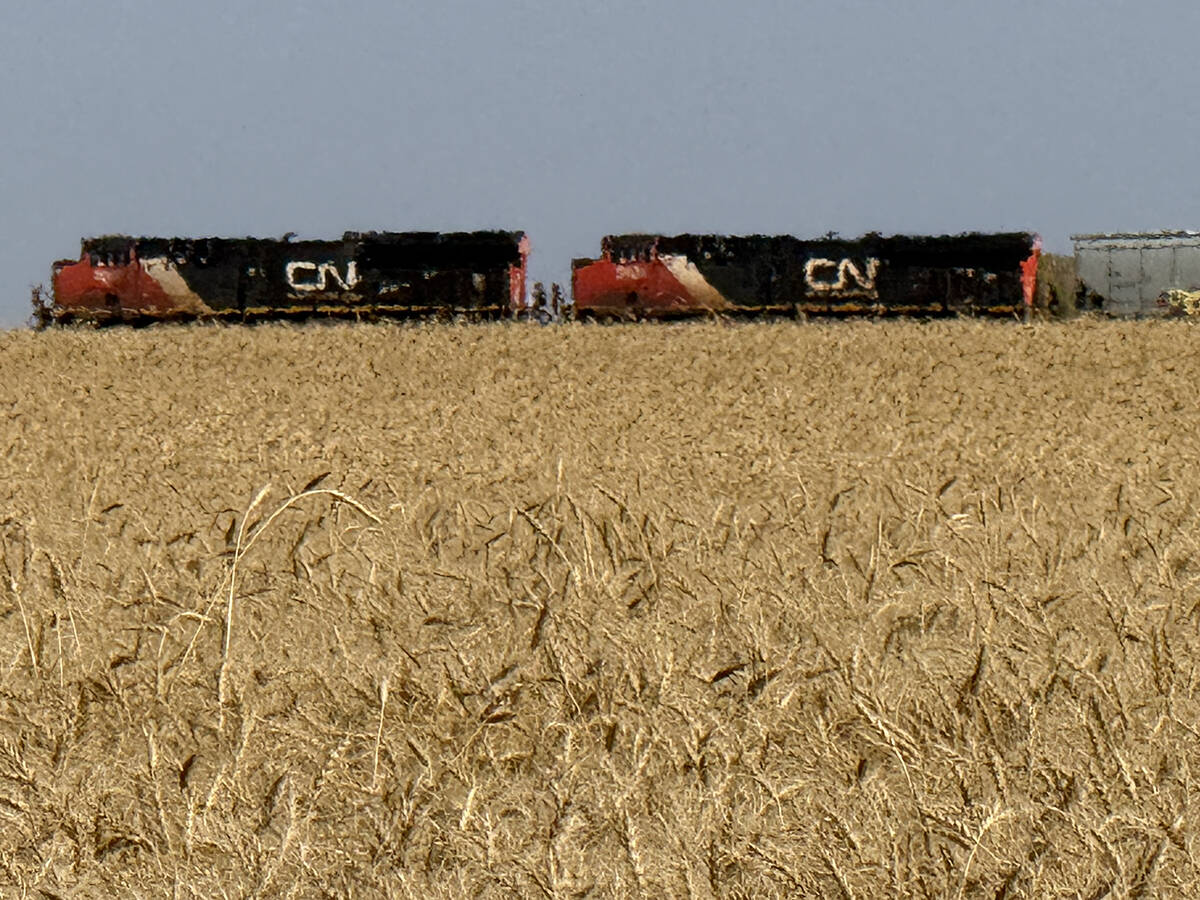
The biggest impediment to doubling exports in a decade is Canada’s two national railways.
Read Also

“That’s a no brainer,” said Hemmes.
He acknowledged that Canadian National Railway and Canadian Pacific Kansas City railway are probably not operating at maximum capacity, so there is room for improvement.
However, a doubling of their east/west traffic seems like a stretch. It would require big investments in locomotives, rail cars, people and track infrastructure.
Hemmes said buying a locomotive is not like purchasing a vehicle. If you order one today, it might be ready for service in a few years.
And railways don’t really like the Field of Dreams — if you build it, they will come — approach to capital investment.
They prefer to respond to market signals — if extra business materializes, they will build the capacity.
Even if the railways were somehow able to double their east-west capacity, they would be confronted by existing bottlenecks in that last mile of track.
There would have to be vast improvements in managing volumes heading into ports and the empty containers coming back out.
There would also have to be significant investment in port terminals and transportation infrastructure.
Hemmes isn’t the only skeptic.
The Fraser Institute found that over the last 50 years, numerous Canadian governments have implemented programs designed to reduce Canada’s economic dependence on the U.S.
“In fact, since 1999, despite repeated efforts by successive Canadian governments to diversify exports away from the U.S., the total share of good exports going to the U.S. decreased only modestly, going from 86.7 per cent in 1999 to 76.3 per cent in 2024,” the institute said in an April press release promoting its report: Assessing Canada’s Trade Dependence on the U.S.
The think-tank said Canada’s geographic proximity to the world’s largest economy, our shared language, similar legal standards and business practices, lower transportation costs and well-developed cross-border transportation networks have shaped Canada’s north-south trade flows.
“There are myriad reasons why so many Canadian exports flow to the United States, and counteracting those powerful factors to steer trade away from the U.S. has proven difficult in the past,” Steven Globerman, senior fellow with the institute, said in the press release.
Hemmes noted that on the grain side of things, a doubling of grain exports would require a doubling of crop production, which is not going to happen in a decade.
Railways would also have to improve their resiliency. Climate change could result in harsher winters and more flooding of rail lines, disrupting shipments.
He noted that shareholders are typically not fond of costly risk management strategies.
“When you build in resilience, you’re taking away from some of their profit,” said Hemmes.
The other factor to consider is that whatever progress is made on Canada’s ambitious new non-U.S. export target will likely be met by non-agricultural commodities.
He thinks the growth will come from projects such as the $3 billion expansion of the K+S Potash Canada mine in Bethune, Sask., and the anticipated increase in minerals and metals exports out of northern Ontario.
That is a concern for grain shippers because it means more competition for Canada’s limited export infrastructure.
However, for the here and now, things are looking pretty good. The railways are doing a nice job moving the 2026 crop, there are lots of stocks in port position and vessels are getting loaded.
Canada exported six million tonnes of bulk grain through week seven of the 2026-27 crop year, up from 4.46 million tonnes the same time a year ago.
“It’s starting off really well this year,” said Hemmes.
“Knock on wood.”