
CANAAN VALLEY, W.Va. (WCHS) — Photography has certainly evolved since it’s inception in the early 1800s.
From the crude daguerreotypes all the way to today’s slick digital images, the art form has changed to a point where it’s difficult to tell what’s real or manipulated.
Mark Moody of Tucker County is a student of the exposed image, learning his craft and appreciating it’s ever evolving processes.
“It started as a hobby then snowballed into a profession,” Moody said. “I got really interested in shooting on film and exploring analog photography, and just kept going down these different rabbit holes. I eventually landed on an interest exploring tintypes.”
Essentially, a tintype is an archival process of photography that dates back to the 1850s and was invented by Francis Scott Archer. It involves coating a tin plate with a collodion solution mixed with silver that’s exposed to light which eventually develops a negative.
It sounds like a lot of steps, but some photographers, like Moody, still use it today.
How would someone begin shooting tintypes in the present? Moody explains it’s actually quite easy.
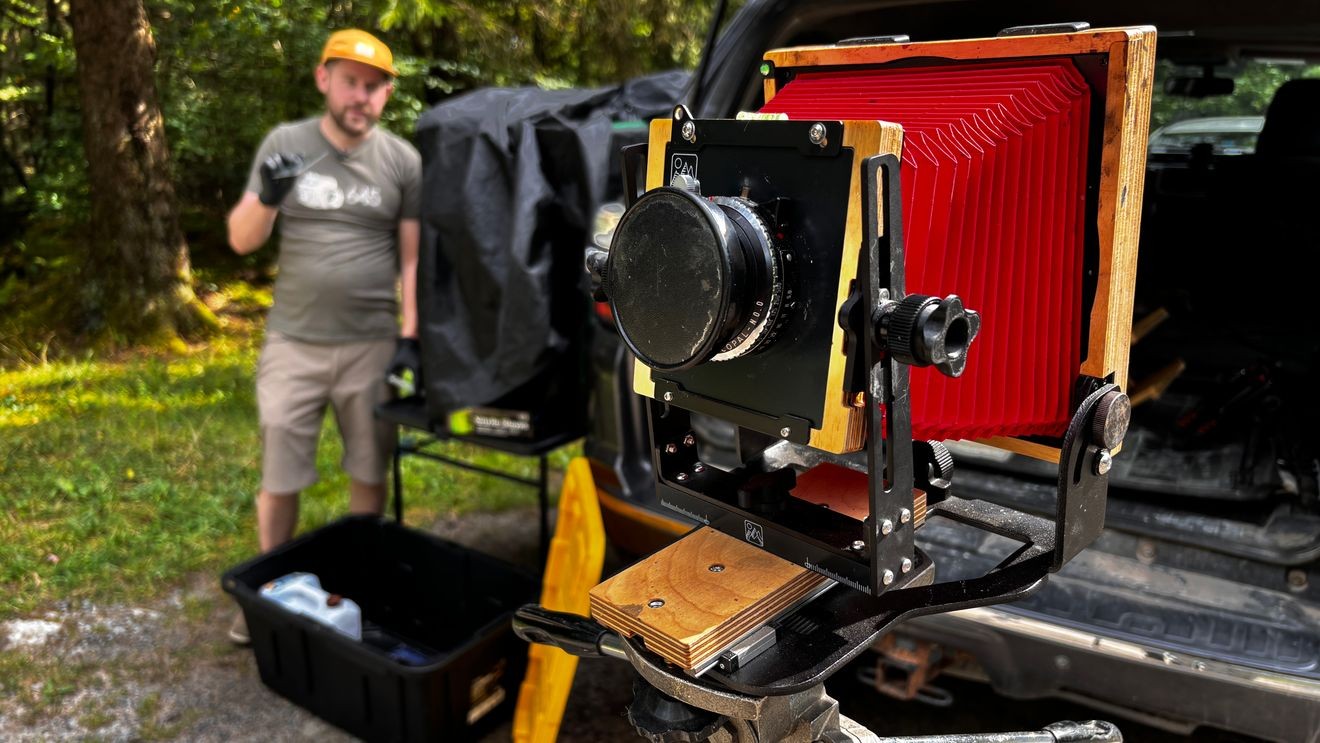
“There’s a lot of places that you can still buy the tools to do this today,” Moody said. “Essentially it’s just a 4×5 view camera, they still make these for people who do large format film photography whether they’re shooting 4×5, 8×10, or 5×7, you can still find these old view cameras, fix them up and use them to this day.”
Moody highly recommends learning from someone proficient in tintype photography before investing in equipment – good advice coming from a man who already possesses a vast knowledge of photography.
“It’s best to take a class and get that hands on experience of someone showing you the dos and don’ts and the proper management of your chemistry,” Moody said. “You could just Google it, but there are things to this day that I am looking up and trying to figure out.”
Although it’s an old method, the tintype “look” is like nothing else.
Ever since Moody began offering them to his clients the response has been phenomenal. Is it nostalgia or something else?
“I think it has to do with the experience,” Moody explained. “You’re watching the photograph get made by hand which is neat. This is a photo, from start to finish, that people can watch happen, they can watch it develop before their eyes. It’s almost like magic but it’s all science.”
If you’re interested in having a portrait made by Mark, you can contact him through his website. Be sure to follow him on Facebook and Instagram as well.