
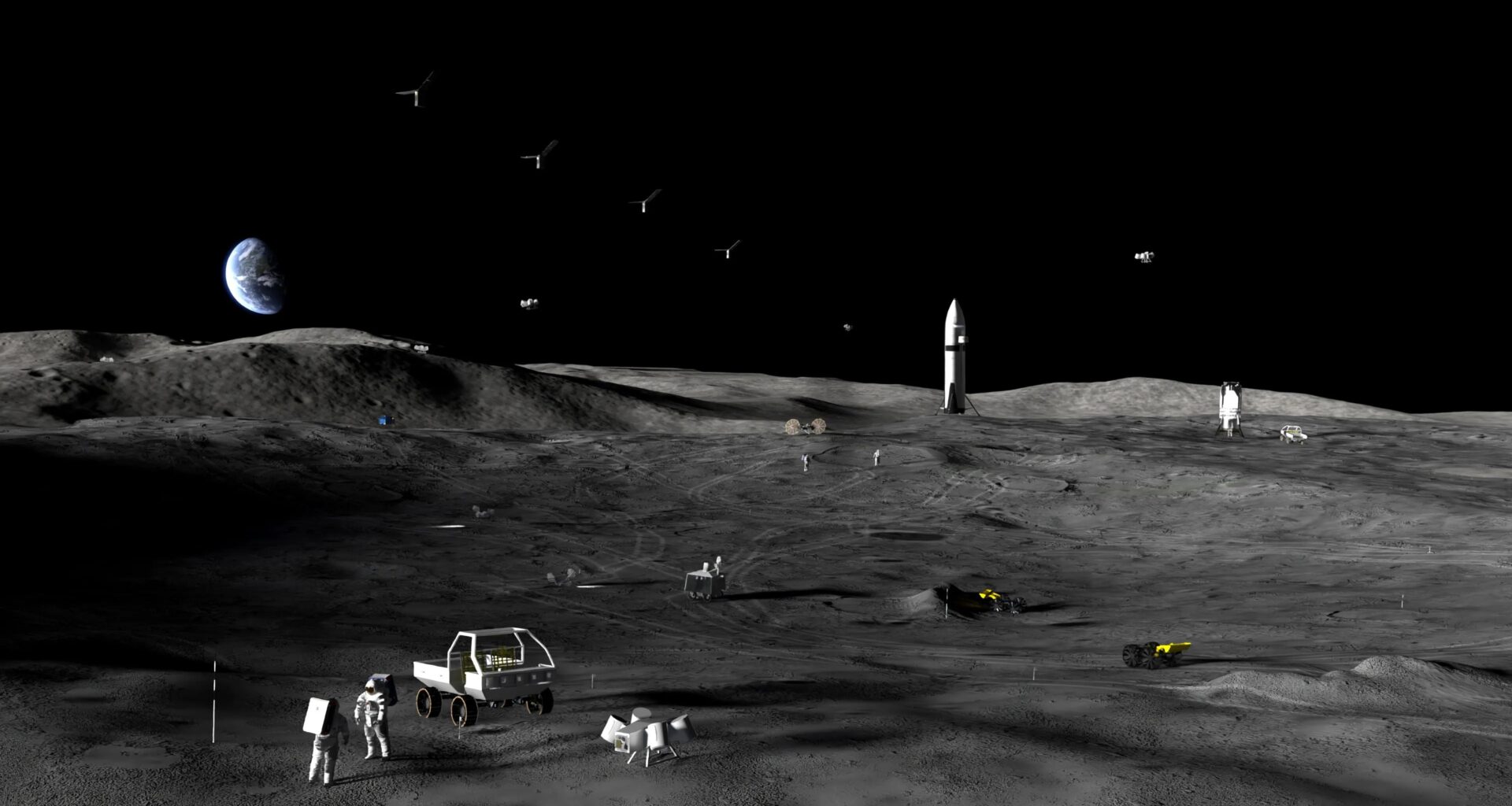
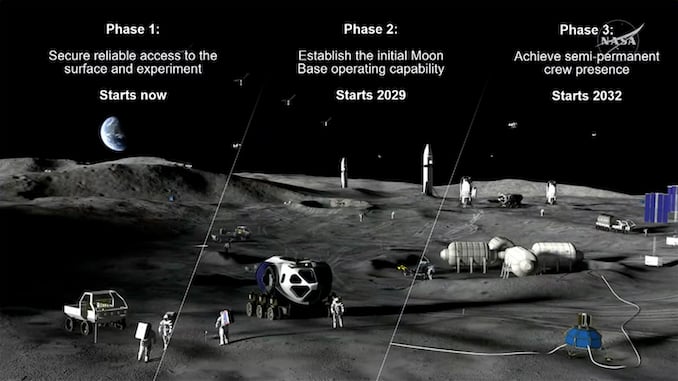
 NASA will build the Moon base in three phases (Credit: NASA.gov)
NASA has unveiled a $20 billion initiative to build a permanent base on the Moon. Called “Ignition,” it aims to test whether humans can sustainably live beyond Earth. The plan, announced on March 24, 2026, marks a major shift from short lunar visits to a long-term human presence on the Moon.
The base will be built near the lunar south pole in three phases. NASA chose the area because scientists believe water ice is trapped inside some of the region’s permanently shadowed craters. The area also has places that receive sunlight for long periods. This could help provide power for a future base.
The first phase will run from 2026 through 2029. It will focus on launching robotic missions to the lunar south pole. These uncrewed flights will deliver rovers and scientific instruments to the Moon. The robots will explore the area and help scientists identify good locations for the base. The missions will test new systems and help NASA learn how to operate on the Moon.
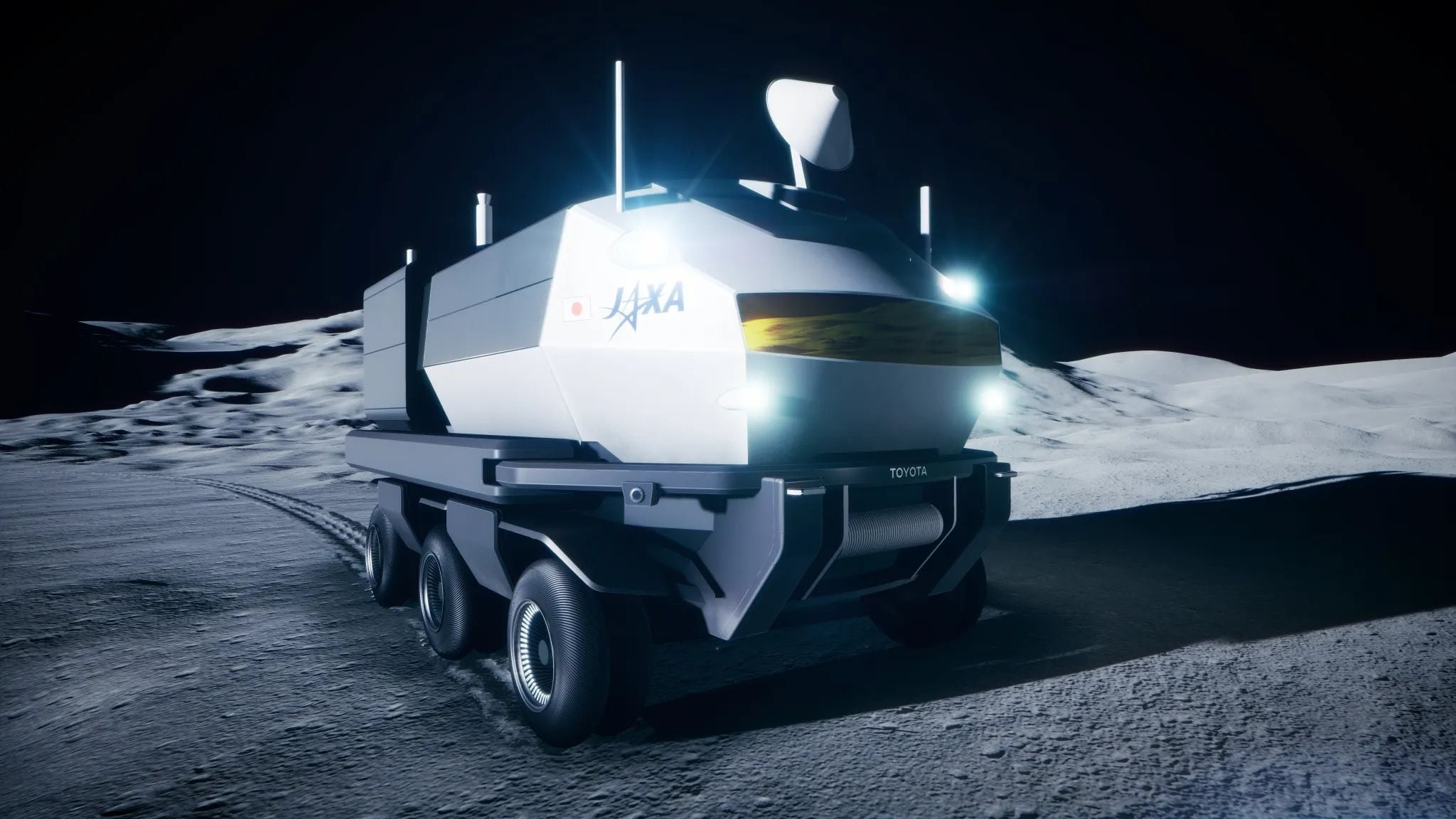 An artist’s concept of JAXA’s rover (Credit: NASA.gov)
The second phase will run from 2029 through 2032. During this time, NASA will begin building the infrastructure needed for longer missions. This will include early power systems, cargo and communications systems, and initial living spaces. International partners will play a major role during this phase. For example, Japan’s space agency, JAXA, is developing a pressurized rover. The vehicle will allow astronauts to live and work inside it while traveling long distances across the lunar surface.
The third and final phase will begin in 2032. It will focus on establishing a permanent lunar outpost where astronauts can live and work for extended periods. NASA will add larger habitats, communications equipment, and transportation systems. A nuclear power plant will also be built to provide steady energy during the long lunar nights.
“The moon base will help NASA learn how to live away from Earth, and possibly later to Mars and other planets,” said NASA Administrator Jared Isaacman.
Resource: NASA.gov, CNN.com, ABCnews.com, WIkipedia.org