
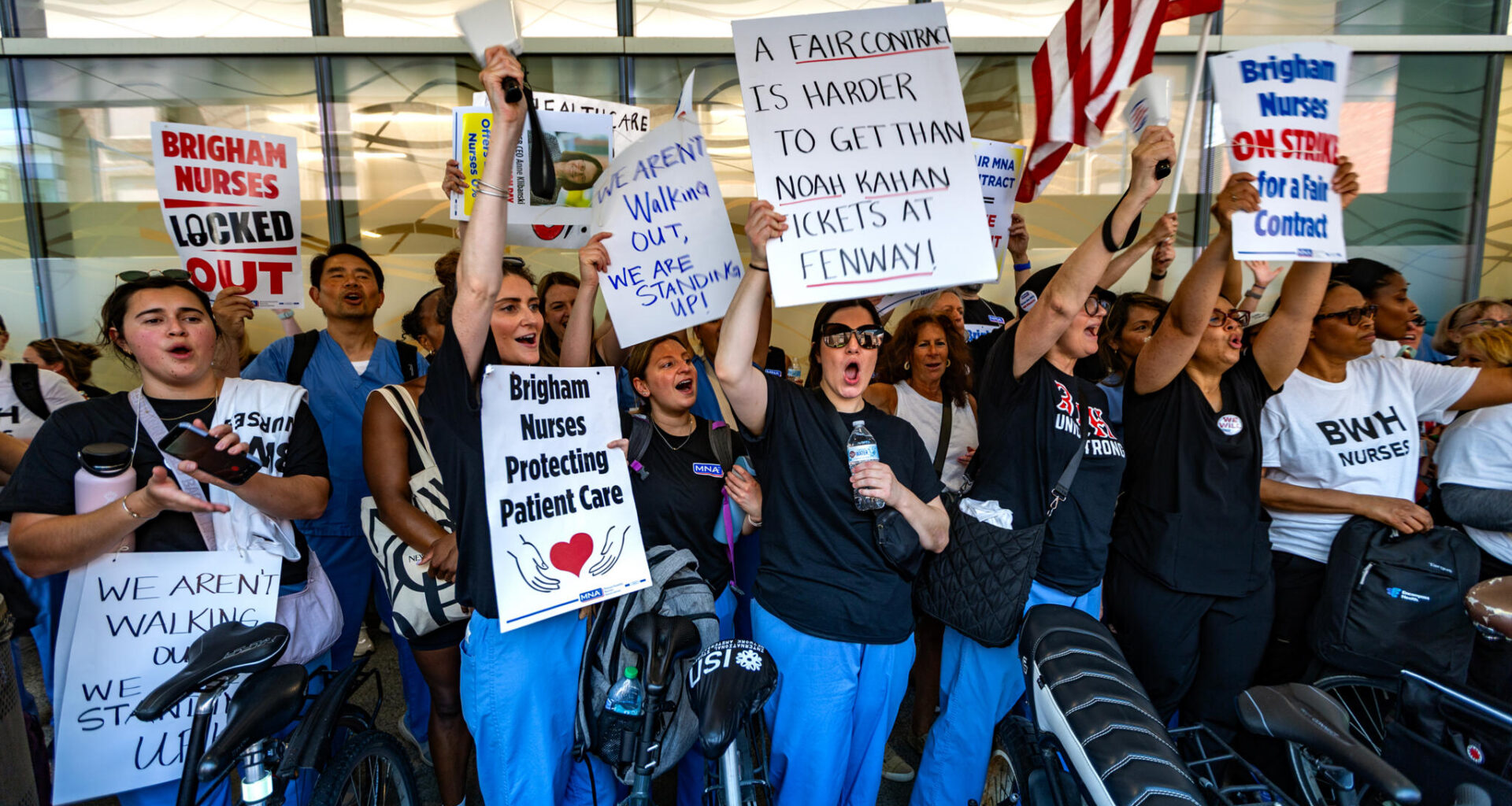
The nurses at Brigham and Women’s Hospital, one of the region’s busiest medical centers, will go on strike Oct. 14, union officials said Friday.
The strike will be open-ended, meaning it’s unclear how long the 4,000 staff nurses would leave their jobs. This would be their second strike of the year.
In July, nurses held a one-day strike, and hospital officials locked them out for four additional days while using temporary workers to care for patients.
Since then, union and hospital officials met only a couple times before reaching a bargaining impasse, according to people involved in the negotiations.
Sarah Bessuille, a Brigham nurse and secretary of the Massachusetts Nurses Association, said hospital leaders are disrespecting nurses by failing to agree on a contract.
“No nurse or healthcare professional ever goes into this profession wanting to strike and leave their patients,” she said. “It’s absolutely devastating to us.”
An open-ended strike could be far more disruptive than the limited five-day action over the summer. Bessuille said nurses remain committed to negotiating with their employer. If both sides agree to a contract deal, nurses will cancel the strike, she said.
“At the end of the day, we want to settle a fair contract,” Bessuille said. “We are not asking for extraordinary things.”
The dispute is centered on wages. Brigham nurses receive 5% pay increases every year for their first two decades on the job. In addition to these step raises, nurses are seeking across-the-board increases, as they have received in past years.
But hospital officials say these additional raises are “not financially sustainable and not supported by the current labor market.” They have refused to include the raises in a new contract.
Nurses say they also want more affordable healthcare options and limits to the hospital’s reliance on temporary workers.
Officials at Brigham and Women’s Hospital — part of the state’s largest hospital network, Mass General Brigham — said they will hire temporary workers to keep the hospital running while staff nurses go on strike.
“We take seriously the union’s decision to issue a strike notice and are fully prepared to continue providing safe, high-quality care for our patients throughout a strike,” said Jessica Pastore, a hospital spokesperson.
She added: “We remain willing to meet with the MNA if the union is ready to make meaningful movement toward resolution on the outstanding issues.”
Meanwhile, about 2,000 nurses at Boston Medical Center are considering a three-day strike over wages and staffing — but they have not set a date.
Striking nurses do not get paid and must cover the costs of their own health insurance. They may apply for unemployment assistance or pick up shifts at other hospitals.